試す 金 - 無料
CHARGED WITH ECO-RAGE
Down To Earth
|March 01, 2026
Awareness of climate change, and the stress it induces, may be linked to rising aggressive behaviour among young people
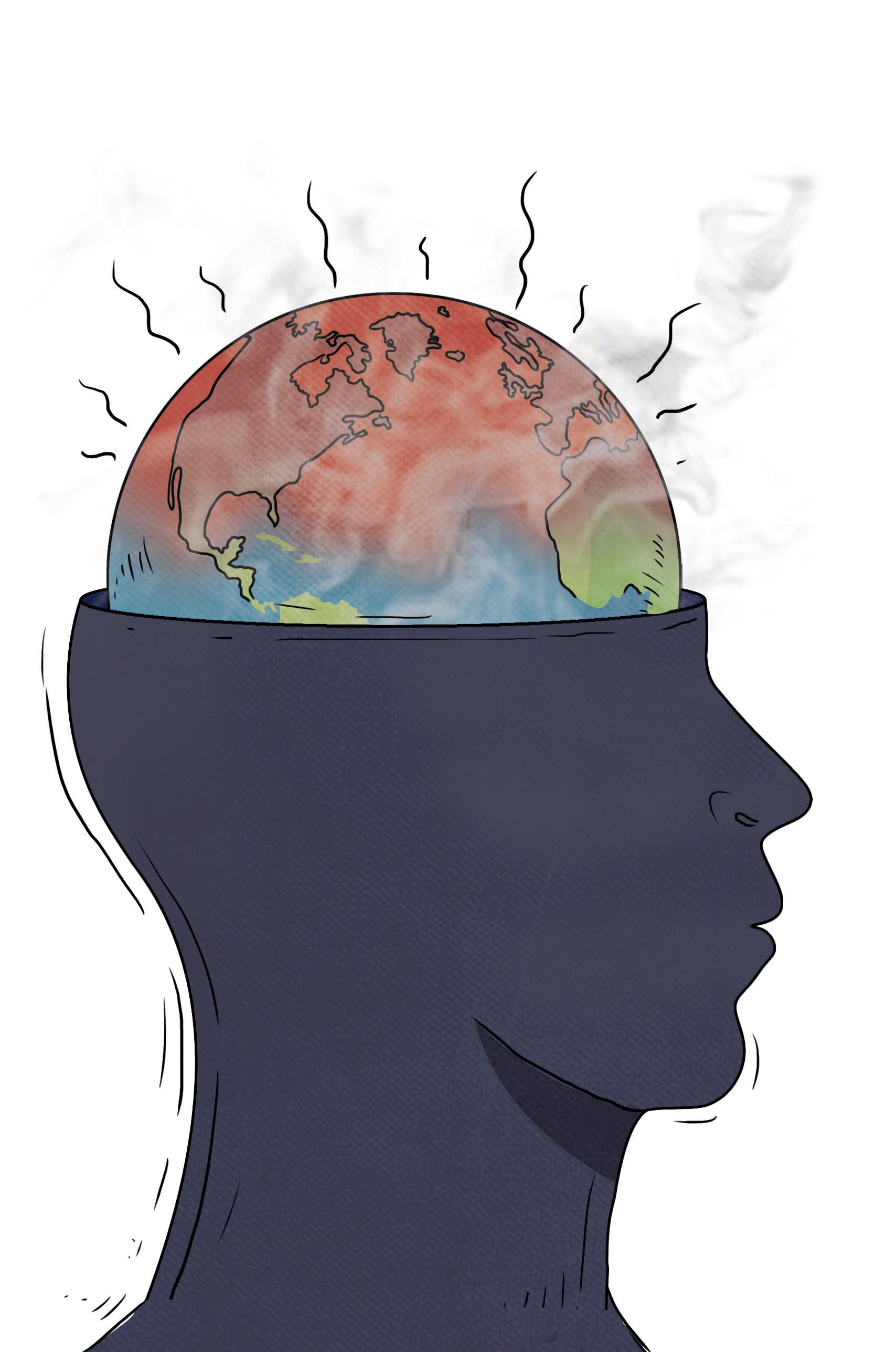
IMAGINE A teenager in a coastal town. Her school has been shut down twice due to flooding. Her parents' income is shaky. The local council sends emails about “monitoring the situation” but offers no real emotional support. The teen starts to wonder: “Why is no one fixing this?” That helplessness turns into tension. One day, she snaps at a friend and shouts at her siblings. This is not just a personal problem; it is the system breaking down around her. It is the emotional fallout of a planet in crisis.
Over the past decade, scientists have observed a remarkable trend: teenagers are increasingly experiencing what are now referred to as eco-emotions. These include solastalgia—the emotional pain caused by environmental change—and eco-anxiety, a growing fear about the planet's future. These are not passing feelings—they are deep, lingering uncertainties about a world that feels out of control. What is even more worrying is the fact that this emotional upheaval does not always end in quiet sadness; sometimes, it shows outwardly—through frustration, irritability, even aggression.
Studies now suggest that awareness of climate change, and the stress it induces, might be linked to the rising aggressive behaviour among young people.
Why are teenagers so deeply affected? The answer lies in their stage of development. Adolescence is a turbulent period: thoughts are evolving, emotions run high, social ties deepen and the brain is still under construction. Add to that the dawning awareness of a destabilised Earth, and you have got a recipe for emotional overload. Studies show that teens tend to worry more about climate change than adults, but they feel less equipped to do anything about it. Their developing brains are more vulnerable, less adaptable under stress, and that makes them uniquely impacted.


このストーリーは、Down To Earth の March 01, 2026 版からのものです。
Magzter GOLD を購読すると、厳選された何千ものプレミアム記事や、10,000 以上の雑誌や新聞にアクセスできます。
すでに購読者ですか? サインイン
Down To Earth からのその他のストーリー

Down To Earth
THE GREAT PIVOT
China's moves to transition to clean energy offer critical lessons to India

4 mins
March 01, 2026

Down To Earth
COAL V CORRIDOR
A proposal to mine coal along a corridor that links two tiger reserves in central India is a step away from getting final clearance. The move could affect movement and genetic diversity of tiger populations in the region
8 mins
March 01, 2026

Down To Earth
India's challenging AI predicament
Hobbled by lack of innovation and AI skills in its crucial technology sector, India is focusing on a ruinous plan to host data centres
4 mins
March 01, 2026
Down To Earth
China to implement zero tariffs across Africa
CHINA ON February 14 announced that it will implement zero tariffs for imports from all the 53 African nations it has diplomatic relations with, starting from May 1.
1 min
March 01, 2026
Down To Earth
Poverty, sans the threshold
MEASUREMENT OF poverty is a fundamental exercise, needed to direct development programmes.
2 mins
March 01, 2026

Down To Earth
A bridge across forever
For two decades, a Chhattisgarh village remains stuck in a loop of building temporary river crossings to access markets and sell forest produce
4 mins
March 01, 2026
Down To Earth
Liveable cities need a new model
CRY FOR my Delhi. This is my city—my family records many generations who have lived here.
3 mins
March 01, 2026

Down To Earth
Real impacts of the changing seasons
This refers to the article \"1,500 days, and an alarm for new climate\" (1-15 December, 2025).
1 mins
March 01, 2026

Down To Earth
‘It’s a systematic effort by US to dismantle climate policy’
The US, the world's largest historical emitter of greenhouse gases, has overturned its “endangerment finding”, the legal foundation for regulating emissions under the Clean Air Act since 2009.
4 mins
March 01, 2026
Down To Earth
Amazon turned carbon source in 2023 drought
EXTREME DROUGHT and a prolonged heatwave in 2023 pushed parts of the Amazon rainforest from acting as a carbon sink to becoming a carbon source for three months, according to a February 13 study published in the journal AGU Advances of the American Geophysical Union.
1 min
March 01, 2026
Listen
Translate
Change font size