
Magzter GOLDで無制限に
10,000以上の雑誌、新聞、プレミアム記事に無制限にアクセスできます。
試す 金 - 無料
Your skin has its own immune system
BBC Science Focus
|January 2025
New, needle-free vaccines could target the skin directly
-
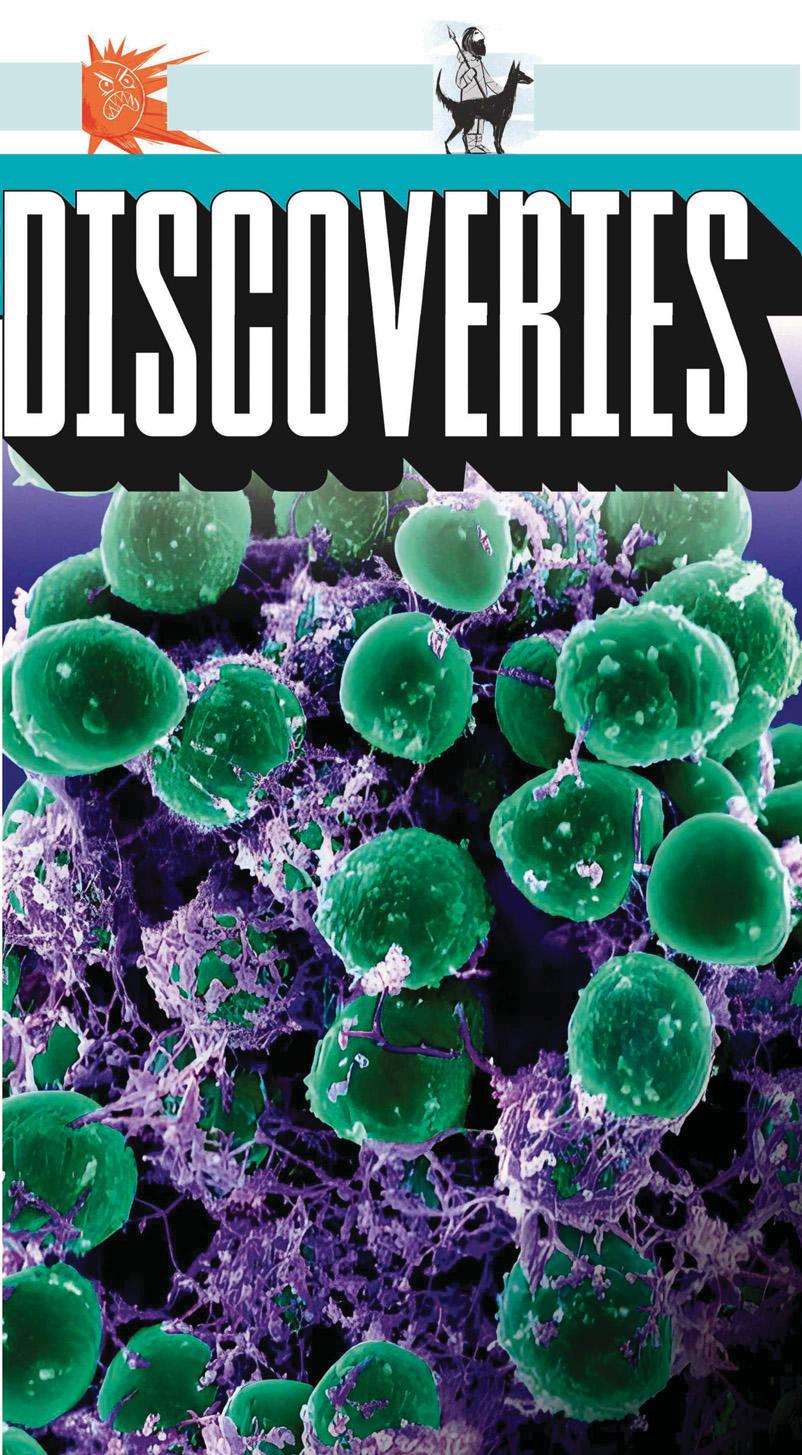
It only takes a brief, casual observation of your skin to notice how busy things are beneath the surface. Just think of the spectrum of colours a bruise goes through as it heals, or the way a scab hardens and becomes flaky while a graze is repaired.
It's hard to miss your skin's responses to the bumps and scrapes from your collisions with the outside world. But its efforts to protect you from the microorganisms looking to creep into your body from the outside world are often overlooked. It's all too easy to see your skin as just a barrier - the external walls of your body's fortress - while giving your immune system all the credit for defending it against any intruders that manage to get in.
But recent research has revealed the fortress walls of your body have their own army of defenders. In other words, the skin has its own, semi-autonomous immune system ready to fight off infections at the point of entry.
According to a pair of new studies published in Nature, this system can actively produce the antibodies that counteract anything our bodies recognise as a threat, such as foreign microbes or toxins. Immune responses in the skin are completely normal during an infection. But the discovery that healthy skin builds up its own defence in preparation for an attack is a surprise to researchers.
“It was very exciting,” Prof Michael Fischbach and Dr Djenet Bousbaine, bioengineers at Stanford University and co-authors of the two new studies, told BBC Science Focus. “We already knew that skin microbes could induce one part of the immune system (T cell responses) and that such responses could be redirected against new antigens.
“Our discovery that skin microbes also induced an antibody response (another arm of the immune system) allows us to develop topical vaccines that can be applied to the skin or inside the mouth against diseases such as tetanus.”


このストーリーは、BBC Science Focus の January 2025 版からのものです。
Magzter GOLD を購読すると、厳選された何千ものプレミアム記事や、10,000 以上の雑誌や新聞にアクセスできます。
すでに購読者ですか? サインイン
BBC Science Focus からのその他のストーリー

BBC Science Focus
World's biggest cobweb is home to 100,000 spiders
Spiders don't normally create such large colonies, so there's no need to worry about finding one in your basement

1 min
February 2026

BBC Science Focus
A dementia vaccine could be gamechanging – and available already
Getting vaccinated against shingles could protect you from getting dementia, or slow the progression of the disease
1 mins
February 2026

BBC Science Focus
DATA IN SPACE
An unusual spacecraft reached orbit in November 2025, one that might herald the dawn of a new era.
7 mins
February 2026
BBC Science Focus
Climate change is already shrinking your salary
No matter where you live, a new study has found warmer temperatures are picking your pocket
4 mins
February 2026

BBC Science Focus
A MENTAL HEALTH GLOW-UP
Forget fine lines. Could Botox give you an unexpected mental health tweakment?
3 mins
February 2026
BBC Science Focus
Most people with high cholesterol gene don't know they have it
Standard testing struggles to detect the condition
1 mins
February 2026

BBC Science Focus
HOW CAN I BOOST MY IQ?
If you're serious about getting smarter, it's time to ditch the brain-training apps
4 mins
February 2026

BBC Science Focus
Humans are absolutely terrible at reading dogs' emotions
Think you can tell how our furry friends are feeling? Think again
1 mins
February 2026

BBC Science Focus
HOW TO TEACH AI RIGHT FROM WRONG
If we want to get good responses from AI, we may need to see what it does when we ask it to be evil
3 mins
February 2026

BBC Science Focus
What Australia's social media ban could really mean for under-16s
Many people think social media is bad for our kids. Australia is trying to prove it
5 mins
February 2026
Listen
Translate
Change font size