試す 金 - 無料
THE SCIENCE OF DOCTOR WHO
BBC Science Focus
|November 2023
At 60 years old, Doctor Who, the BBC Show following the adventures of the regenerating Time Lord, continues to be highly enjoyable fiction. But it's science fiction. The Doctor's primary tool is a sonic screwdriver, not a magic wand. The Gallifreyan takes science seriously. And so should we...

THE TARDIS
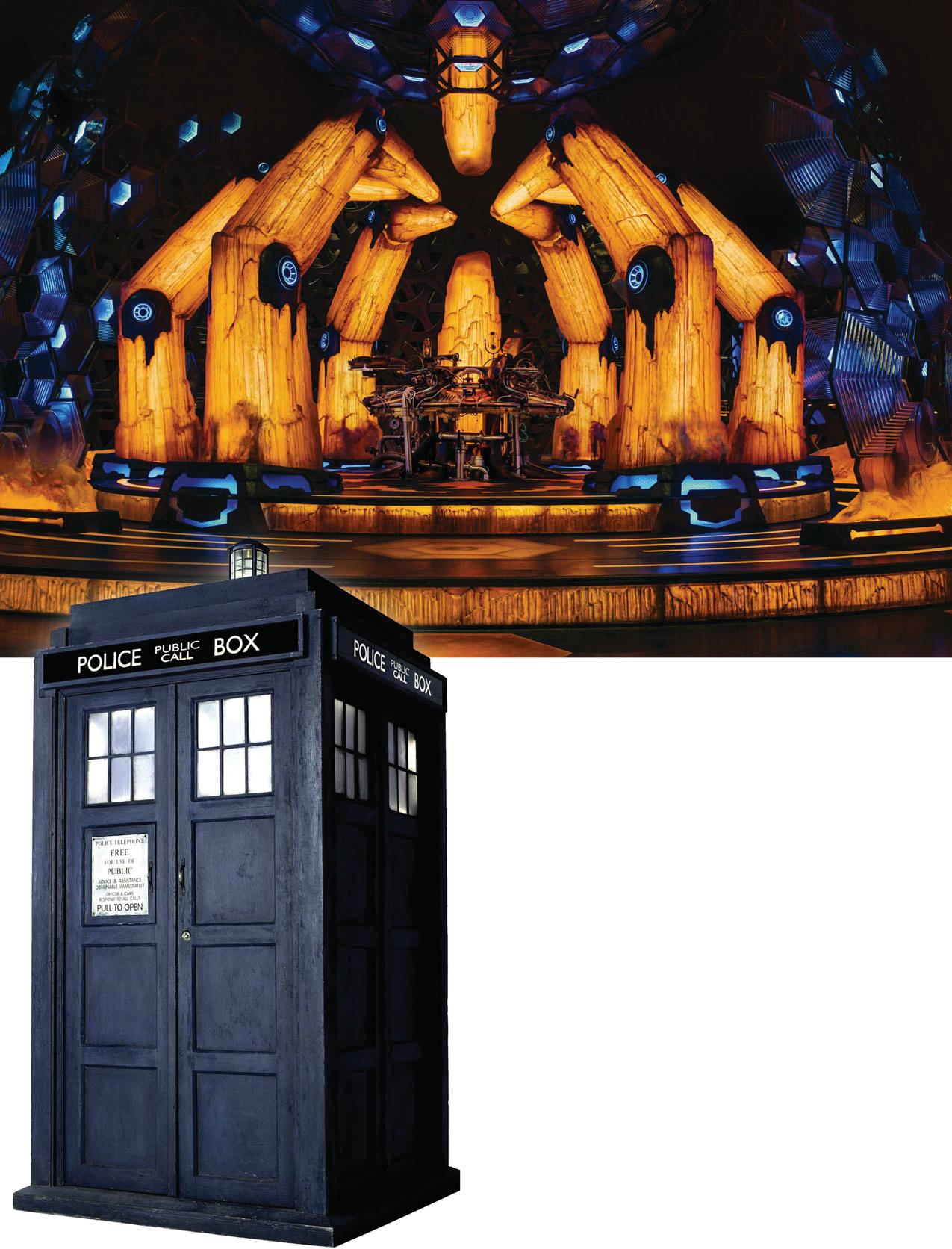
One of the most immediate, and paradoxical, scientific puzzles raised by Doctor Who is the nature of the TARDIS, the Doctor's vehicle, home and constant companion.
You know what comes next: 'It's bigger on the inside than the outside!' (Or, as one episode's smart alec putdown line had it, 'It's smaller on the outside!'). With the exterior of an antiquated British police telephone call box - the size of a large-ish wardrobe - it appears to contain at least the volume of a roomy house, if not more. Can this be plausible?
In fact, an imaginative extrapolation of Albert Einstein's theory of relativity might permit the possibility that something being bigger-on-the-inside doesn't have to be immediately ruled out as well as that old police box's main function, as a time machine. Because relativity is all about distortions of space and time. And as fans of Doctor Who know, TARDIS is an acronym of Time And Relative Dimension In Space.
Einstein's great breakthroughs in physics, starting in the early decades of the 20th century, came from imaginative, even playful, dreaming of which the Doctor would probably approve. What, Einstein wondered, would the Universe look like if you tried to catch up to a beam of light by travelling on a very fast starship? The problem is that the speed of light around 300,000km per second - is determined by other laws of physics, specifically the laws of electromagnetism. And physics doesn't care how fast you're travelling as you measure that speed; those laws don't change, no matter how fast you go. And so a given beam of light always has the same velocity relative to you - and to everybody else, no matter how they're moving.


このストーリーは、BBC Science Focus の November 2023 版からのものです。
Magzter GOLD を購読すると、厳選された何千ものプレミアム記事や、10,000 以上の雑誌や新聞にアクセスできます。
すでに購読者ですか? サインイン
BBC Science Focus からのその他のストーリー

BBC Science Focus
DOES MY DOG HAVE ADHD?
Officially, Attention-Deficit Hyperactivity Disorder (ADHD) is a human condition. People are diagnosed with it. Dogs are not. Yet many of its core features, including hyperactivity, impulsivity and distractibility, can be found in dogs.

1 min
March 2026

BBC Science Focus
DOES MY BRAIN LIVE A LITTLE IN THE PAST?
Yes, your brain does live a little in the past. It can't help it. The information it receives via your senses is always a little out of date. Whether it's light entering the retinas in your eyes, or sounds vibrating the hairs in your ears, it not only takes time for the data to arrive, but your brain then has to process it.
2 mins
March 2026
BBC Science Focus
ASTRONOMY FOR BEGINNERS
RETURN OF THE EVENING STAR (VENUS)
1 mins
March 2026

BBC Science Focus
CAN YOU STOP YOUR SENSE OF TASTE DULLING AS YOU AGE?
Sometimes I hear people say that food just doesn't taste the same as they get older. It's tempting to blame this on age, but there are other factors at play, too.
1 mins
March 2026
BBC Science Focus
MICROBIOMES OF THE SUPERAGERS
BY STUDYING THE INCREASING NUMBER OF PEOPLE WHO ARE LIVING BEYOND THEIR 100TH BIRTHDAYS, SCIENTISTS ARE DISCOVERING THAT THE SECRET TO REACHING A RIPE OLD AGE IN RUDE HEALTH MIGHT LIE IN OUR GUTS
8 mins
March 2026

BBC Science Focus
HOW BIG WERE MEDIEVAL WAR HORSES?
You might picture knights charging into battle on towering steeds, but medieval horses were typically no bigger than modern-day ponies.
1 min
March 2026

BBC Science Focus
FORCES OF HABIT
Could new research on setting up healthy habits resuscitate those stuttering New Year resolutions?
3 mins
March 2026

BBC Science Focus
5 DANGERS HIDING IN YOUR PROCESSED FOOD
We all know that ultra-processed foods are bad for us, but what ingredients should we particularly try to avoid? And what are they doing to our bodies?
9 mins
March 2026
BBC Science Focus
Mosquitoes are becoming thirstier for human blood
Habitat loss may be pushing mosquitoes towards human hosts with deadly consequences
1 mins
March 2026

BBC Science Focus
HOW CAN I GET OVER MY EX?
Relationship breakups can be brutal, just look at the popularity of songs like 'Someone Like You' by Adele, or all the covers of 'Cry Me a River' by Julie London.
1 mins
March 2026
Translate
Change font size