試す 金 - 無料
PRIMER: THE RISE OF E-FUELS
BBC Science Focus
|June 2023
Synthetic fuels could make transport more sustainable.... but at a price
-
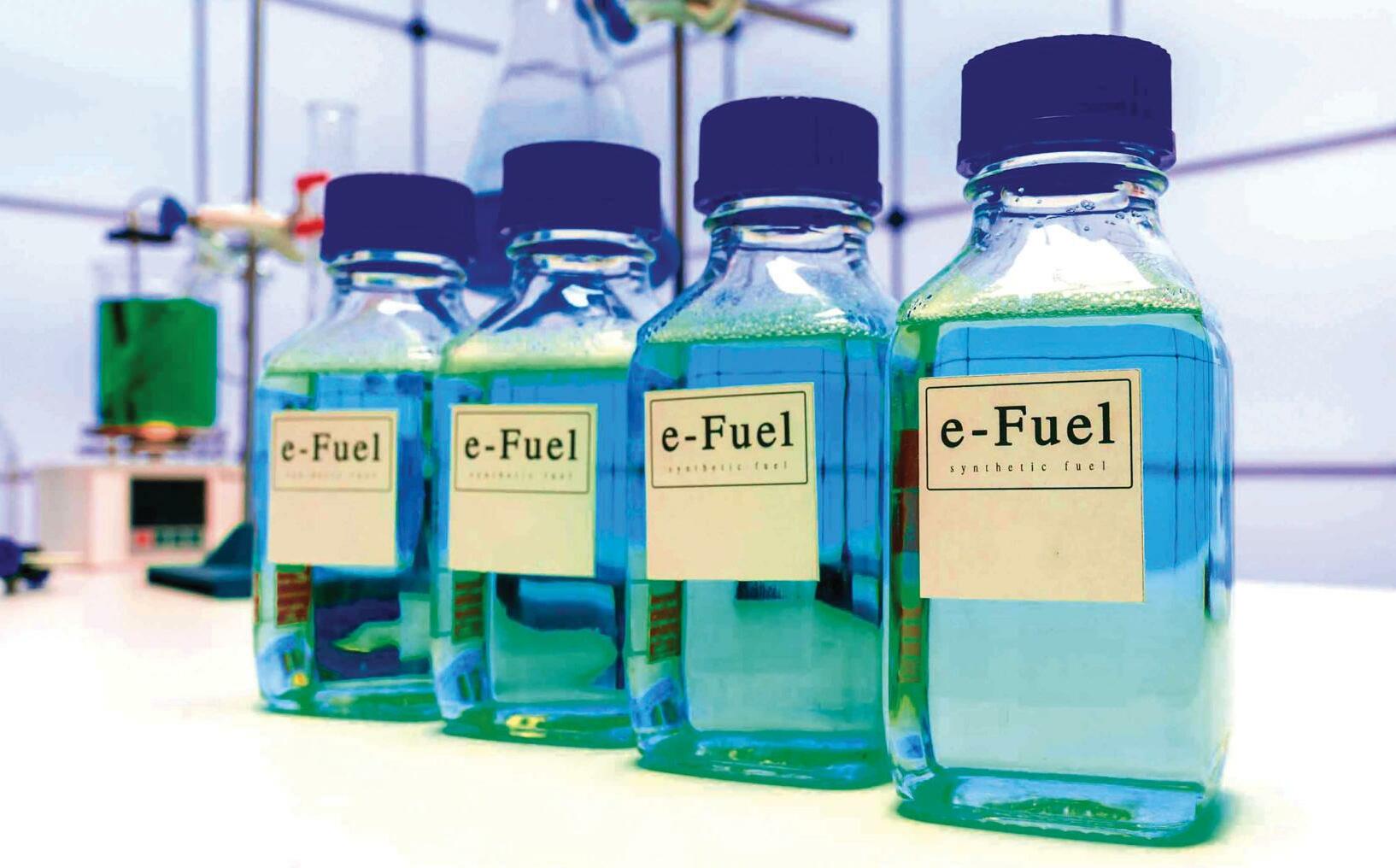
The likes of Porsche and Ferrari are banking on synthetic fuel to ensure their cars are exempt from the EU ban on the sale of new combustion engine vehicles by 2035. Synthetic fuel - or electrofuel (e-fuel) - is a form of petrol made using hydrogen from water and carbon from air. The problem is the electricity that's required to extract these elements. Nevertheless, companies are already producing e-fuel on a small scale, including some in the UK. So will we see e-fuel in petrol stations soon and can we, and the planet, afford to use it? We spoke to Prof Patricia Thornley, Director of the Energy and Bioproducts Research Institute (EBRI) at Aston University, to find out.
WHAT ARE E-FUELS?
E-fuels are synthetic fuels. We create them from the building blocks of carbon dioxide (CO₂) and hydrogen. You can use electrolysis to produce hydrogen and you can pull the CO₂ out of the atmosphere by direct air capture. Combining these produces a hydrocarbon fuel. If you get different mixes of these molecules, then that provides you with different fuels for different purposes: lighter molecules are suitable for, say, an aircraft's ignition fuel, while you'll need heavier molecules for car or marine engines.
HOW ARE THEY DIFFERENT FROM BIOFUEL?
With biofuels (for example, ethanol and biodiesel) you're growing material that contains carbon, hydrogen and oxygen, and trying to convert it into a liquid or gas that you can use. In many ways, that pathway is the same with e-fuels but it's different in that biofuel needs land.
The main advantage of e-fuel is that you're not using plants but the disadvantage is that you're using more energy and this energy still has to come from somewhere.
HOW DOES E-FUEL HELP TO CUT DOWN CARBON EMISSIONS?


このストーリーは、BBC Science Focus の June 2023 版からのものです。
Magzter GOLD を購読すると、厳選された何千ものプレミアム記事や、10,000 以上の雑誌や新聞にアクセスできます。
すでに購読者ですか? サインイン
BBC Science Focus からのその他のストーリー

BBC Science Focus
DOES MY DOG HAVE ADHD?
Officially, Attention-Deficit Hyperactivity Disorder (ADHD) is a human condition. People are diagnosed with it. Dogs are not. Yet many of its core features, including hyperactivity, impulsivity and distractibility, can be found in dogs.

1 min
March 2026

BBC Science Focus
DOES MY BRAIN LIVE A LITTLE IN THE PAST?
Yes, your brain does live a little in the past. It can't help it. The information it receives via your senses is always a little out of date. Whether it's light entering the retinas in your eyes, or sounds vibrating the hairs in your ears, it not only takes time for the data to arrive, but your brain then has to process it.
2 mins
March 2026
BBC Science Focus
ASTRONOMY FOR BEGINNERS
RETURN OF THE EVENING STAR (VENUS)
1 mins
March 2026

BBC Science Focus
CAN YOU STOP YOUR SENSE OF TASTE DULLING AS YOU AGE?
Sometimes I hear people say that food just doesn't taste the same as they get older. It's tempting to blame this on age, but there are other factors at play, too.
1 mins
March 2026

BBC Science Focus
MICROBIOMES OF THE SUPERAGERS
BY STUDYING THE INCREASING NUMBER OF PEOPLE WHO ARE LIVING BEYOND THEIR 100TH BIRTHDAYS, SCIENTISTS ARE DISCOVERING THAT THE SECRET TO REACHING A RIPE OLD AGE IN RUDE HEALTH MIGHT LIE IN OUR GUTS
8 mins
March 2026

BBC Science Focus
HOW BIG WERE MEDIEVAL WAR HORSES?
You might picture knights charging into battle on towering steeds, but medieval horses were typically no bigger than modern-day ponies.
1 min
March 2026

BBC Science Focus
FORCES OF HABIT
Could new research on setting up healthy habits resuscitate those stuttering New Year resolutions?
3 mins
March 2026

BBC Science Focus
5 DANGERS HIDING IN YOUR PROCESSED FOOD
We all know that ultra-processed foods are bad for us, but what ingredients should we particularly try to avoid? And what are they doing to our bodies?
9 mins
March 2026

BBC Science Focus
Mosquitoes are becoming thirstier for human blood
Habitat loss may be pushing mosquitoes towards human hosts with deadly consequences
1 mins
March 2026

BBC Science Focus
HOW CAN I GET OVER MY EX?
Relationship breakups can be brutal, just look at the popularity of songs like 'Someone Like You' by Adele, or all the covers of 'Cry Me a River' by Julie London.
1 mins
March 2026
Translate
Change font size