試す 金 - 無料
HOW THE LATEST DEVELOPMENT IN NUCLEAR FORENSICS MAY HELP CLEAN UP CHERNOBYL
BBC Science Focus
|June 2024
Contrary to popular belief, radioactive material doesn't glow. But a team of nuclear forensics experts are working on a device to make it do just that. BBC Science Focus's Noa Leach meets the scientists behind the innovative device

Deep in the basement of the physics department at the University of Bristol, Dr Dave Megson-Smith is telling me about how much he dislikes wearing a hazmat suit whenever he goes to Chernobyl.
"Once you get in the field, you just start sweating," says the nuclear physicist. "And suddenly, you're far less aware of your surroundings. You're less safe."
Standing next to Megson-Smith, his colleague Dr Yannick Verbelen adds: "You're tucked into plastic and you're perspiring. It's already a stressful environment because there's radiation around and you don't want to linger too much."
As we talk in the basement, I'm getting an inkling of what that's like. Granted, we're wearing thin blue lab coats rather than hazmat suits, but the heat emanating from the large machines whirring away around us makes it easier to understand the feeling of not wanting to linger. Adding to this is the fact that some of the machines also contain tiny specks of radioactive material, brought back from nuclear sites.
Megson-Smith and Verbelen specialise in disaster response and clean-up operations, carrying out what they call 'nuclear forensics': gathering radioactive samples from disaster zones to analyse in their lab. With these, they hope to extract information such as whether the sample (usually no bigger than a grain of sand) came from fallout or a nuclear fusion reactor.
Their current focus, however, is on making it easier to identify radioactive material in disaster zones. And the idea they've come up with is to make it glow a luminous yellow-green with a new contraption that they've dubbed the 'Dark Star.'
FROM A SAFE DISTANCE

このストーリーは、BBC Science Focus の June 2024 版からのものです。
Magzter GOLD を購読すると、厳選された何千ものプレミアム記事や、10,000 以上の雑誌や新聞にアクセスできます。
すでに購読者ですか? サインイン
BBC Science Focus からのその他のストーリー
BBC Science Focus
HOW FISH COULD SAVE MILLIONS OF PEOPLE'S SIGHT
There's nowhere near enough donors to meet the demand for corneal transplants. A pioneering treatment that relies on fish scales could change that

3 mins
May 2026

BBC Science Focus
Your Wi-Fi is lying to you
Wi-Fi 7's giant speed claims might look impressive, but the realities of our homes – and the laws of physics – mean that real-world performance will never get close
6 mins
May 2026
BBC Science Focus
WHICH ANIMAL IS MOST LIKELY TO ESCAPE FROM THE ZOO?
Have you heard the one about the monkey and the Yorkshire pudding?
2 mins
May 2026
BBC Science Focus
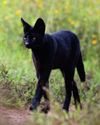
THE BLACK SERVAL
The black serval (Leptailurus serval) is an unusual, melanistic version of the African serval, a medium-sized wild cat that's native to Africa.
2 mins
May 2026
BBC Science Focus
Cryosleep vs hibernation: What's the difference?
When hibernating animals, such as hedgehogs and dormice, disappear for winter, they don't freeze like the Siberian salamander.
1 mins
May 2026
BBC Science Focus
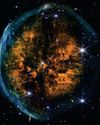
Space brain
The greatest names in science are often said to be 'big-brained', but this cosmic wonder puts them all to shame. Nebula PMR 1 - otherwise known as the 'Exposed Cranium' nebula for its distinctive shape - measures around 3.2 light-years across.
1 min
May 2026
BBC Science Focus
Your most draining relationships are taking years off your life, study suggests
Difficult people don't just zap your energy - they may also accelerate your biological ageing
4 mins
May 2026

BBC Science Focus
DOES EARTH HAVE A HEARTBEAT?
Move over, Ringo Starr.
1 mins
May 2026
BBC Science Focus
WEIGHT-LOSS DRUGS FOR ALL?
The obesity crisis is ruining lives and costing governments trillions. But some healthcare experts think there's now a radical solution: roll out GLP-1 jabs to everyone who needs them for free. Could it work?
9 mins
May 2026
BBC Science Focus
HOW TO SEE VENUS ON APPROACH TO JUPITER
Venus has been slowly moving away from the Sun's glare over the past few weeks, heading into the evening twilight after sunset.
1 mins
May 2026
Listen
Translate
Change font size