試す 金 - 無料
CHILL OUT EARTH
BBC Science Focus
|July 2025
Geoengineering has long been a taboo subject in scientific circles. But as Earth's climate continues to warm, experts are increasingly wondering if we could, and should, take more drastic action and start tinkering with the planet in the hope of saving it
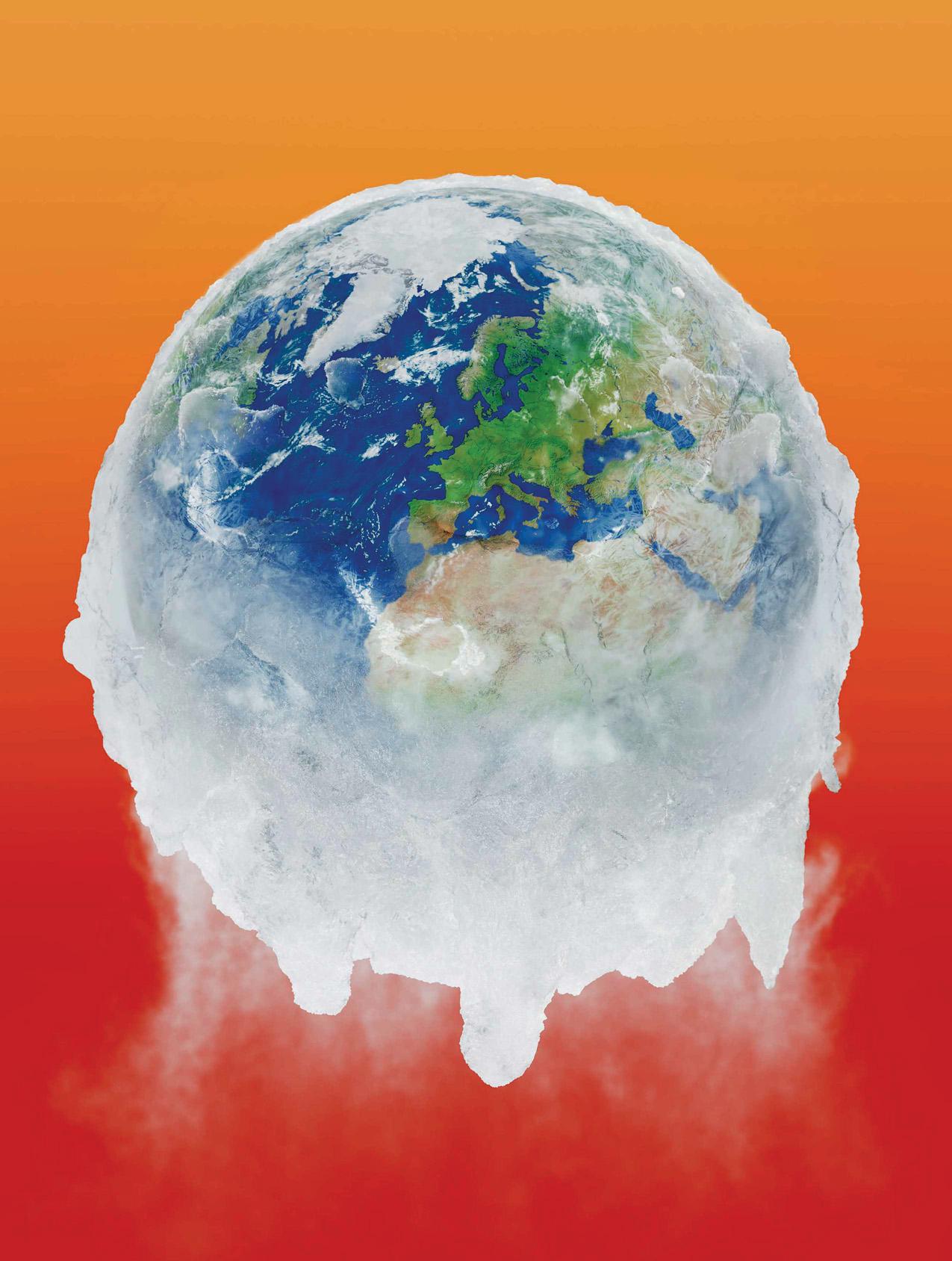
Human life is facing one of the biggest challenges in its history. Rampant climate change, driven by industrial activity, threatens our entire civilisation. The destabilised currents, intensifying heat waves and increasingly frequent storms are a danger to all of us.
The undisputed solution is to reduce our emissions, which may have already passed their peak, although the rate of fall isn’t enough to avert the effects of a changing climate. Yet there might be another approach to complement our sluggish efforts at emission reduction. What if, as well as decarbonising our society, we used temporary measures to alter Earth’s climate and prevent some of the worst effects of climate change?
That’s the dream touted by those championing geoengineering, a term that refers to manipulating the environment to counteract human-caused climate change. It’s not a term that has always sat well with scientists. “Geoengineering has been pretty taboo for a long time,” says Jessica Wan, a climate scientist at the Scripps Institution of Oceanography in the US. “It’s typically been seen as a way to deter mitigation efforts to cut emissions.”
Momentum, however, appears to be shifting. In May, the UK government’s Advanced Research and Invention Agency (ARIA), designed to fund high-risk and high-reward research, announced £56.8 million (almost $77m) in funding for 21 geoengineering projects over the next five years in a programme called Exploring Climate Cooling. It followed a handful of other experiments in the US and Australia to investigate whether any geoengineering ideas might be viable.
“It’s important to conduct small-scale research,” says Michael Gerrard, a professor of environmental and energy law at Columbia Law School in the US. So, what might the future hold and could a large-scale geoengineering project ever become a reality?


このストーリーは、BBC Science Focus の July 2025 版からのものです。
Magzter GOLD を購読すると、厳選された何千ものプレミアム記事や、10,000 以上の雑誌や新聞にアクセスできます。
すでに購読者ですか? サインイン
BBC Science Focus からのその他のストーリー

BBC Science Focus
DOES MY DOG HAVE ADHD?
Officially, Attention-Deficit Hyperactivity Disorder (ADHD) is a human condition. People are diagnosed with it. Dogs are not. Yet many of its core features, including hyperactivity, impulsivity and distractibility, can be found in dogs.

1 min
March 2026

BBC Science Focus
DOES MY BRAIN LIVE A LITTLE IN THE PAST?
Yes, your brain does live a little in the past. It can't help it. The information it receives via your senses is always a little out of date. Whether it's light entering the retinas in your eyes, or sounds vibrating the hairs in your ears, it not only takes time for the data to arrive, but your brain then has to process it.
2 mins
March 2026
BBC Science Focus
ASTRONOMY FOR BEGINNERS
RETURN OF THE EVENING STAR (VENUS)
1 mins
March 2026

BBC Science Focus
CAN YOU STOP YOUR SENSE OF TASTE DULLING AS YOU AGE?
Sometimes I hear people say that food just doesn't taste the same as they get older. It's tempting to blame this on age, but there are other factors at play, too.
1 mins
March 2026

BBC Science Focus
MICROBIOMES OF THE SUPERAGERS
BY STUDYING THE INCREASING NUMBER OF PEOPLE WHO ARE LIVING BEYOND THEIR 100TH BIRTHDAYS, SCIENTISTS ARE DISCOVERING THAT THE SECRET TO REACHING A RIPE OLD AGE IN RUDE HEALTH MIGHT LIE IN OUR GUTS
8 mins
March 2026

BBC Science Focus
HOW BIG WERE MEDIEVAL WAR HORSES?
You might picture knights charging into battle on towering steeds, but medieval horses were typically no bigger than modern-day ponies.
1 min
March 2026

BBC Science Focus
FORCES OF HABIT
Could new research on setting up healthy habits resuscitate those stuttering New Year resolutions?
3 mins
March 2026

BBC Science Focus
5 DANGERS HIDING IN YOUR PROCESSED FOOD
We all know that ultra-processed foods are bad for us, but what ingredients should we particularly try to avoid? And what are they doing to our bodies?
9 mins
March 2026

BBC Science Focus
Mosquitoes are becoming thirstier for human blood
Habitat loss may be pushing mosquitoes towards human hosts with deadly consequences
1 mins
March 2026

BBC Science Focus
HOW CAN I GET OVER MY EX?
Relationship breakups can be brutal, just look at the popularity of songs like 'Someone Like You' by Adele, or all the covers of 'Cry Me a River' by Julie London.
1 mins
March 2026
Listen
Translate
Change font size