試す 金 - 無料
BEHIND DEATH'S DOOR
BBC Science Focus
|March 2025
They leave their bodies, witness a bright light and return forever changed. But do survivors of near-death experiences truly glimpse the great beyond? New research into the brain's final moments could decode these visions at life's edge
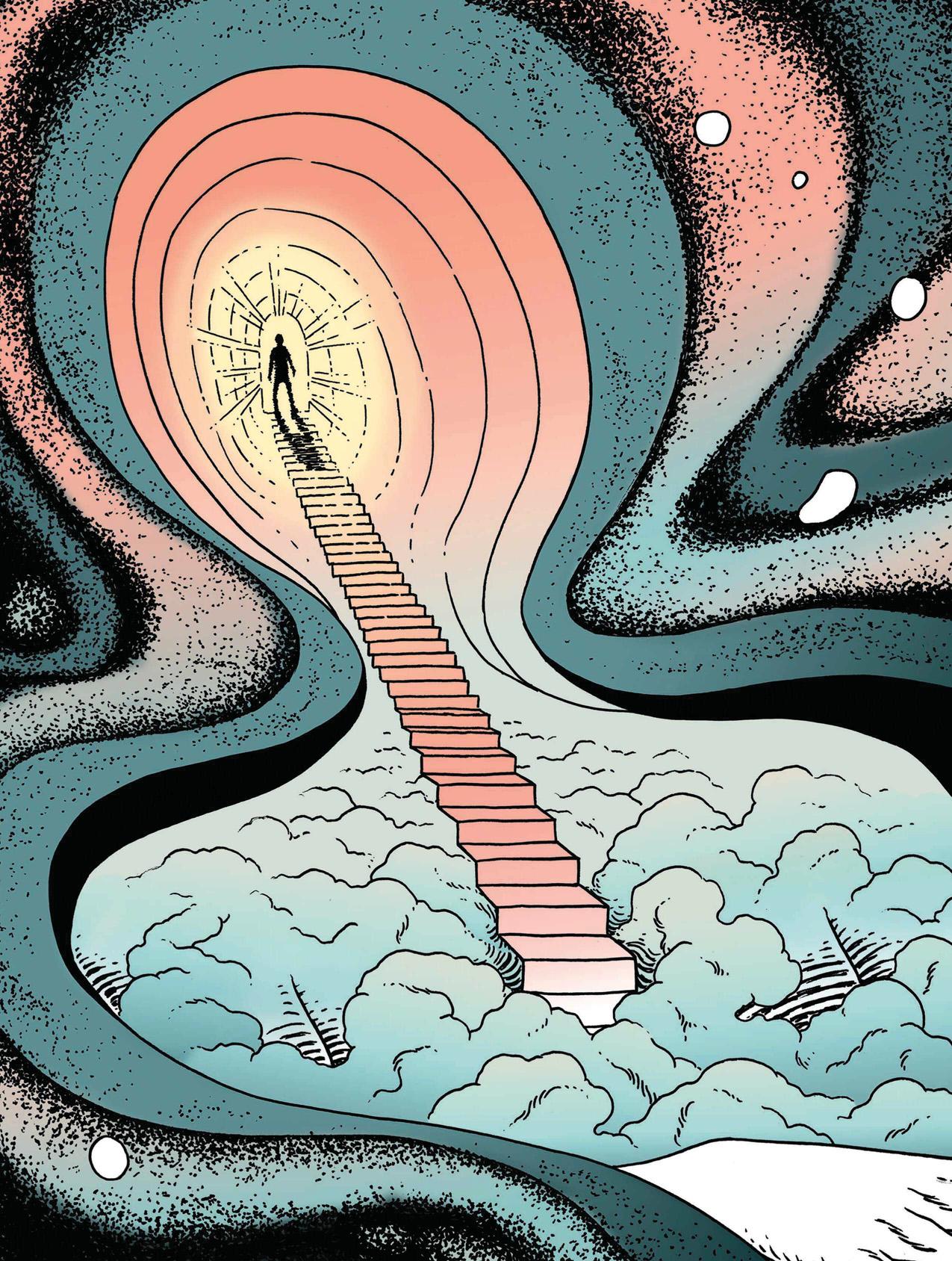
I'll never forget the day the neuropsychiatrist Dr Peter Fenwick visited my undergraduate psychology class in the 1990s. Tall and dapper with a refined voice and neuroanatomical terms tripping from his lips, Fenwick conveyed old-school authority.
One of the subjects he lectured us about was so-called near-death experiences. Originally a sceptic, he said there was now compelling evidence that many people close to death were able to recall seeing themselves from above. Even more astonishing, some described witnessing events in distant parts of the hospital – things they couldn’t have seen unless their consciousness had somehow separated from their physical bodies. Something about his erudite, understated delivery sent shivers down my spine.
Plenty more research has since explored near-death experiences (NDEs) – episodes of bodily disconnection, spiritual revelation, and intense emotions reported by those who come close to death and survive. Turns out they could be incredibly common: one recent survey reported that 15 per cent of patients in intensive care had experienced a NDE.
NDEs are by no means a new phenomenon, however. The scholar Dr Gregory Shushan has collected accounts of NDEs through time and across cultures, finding numerous examples, from 7th-century BC China to 19th-century Ghana. Hieronymus Bosch’s 16th-century painting Ascent of the Blessed is widely considered a visual portrayal of a NDE.
The concept first really came to prominence in the 19th century when the Swiss geologist Prof Albert von St Gallen Heim collected stories from fellow climbers who nearly died. The US psychologist Dr Raymond Moody then popularised NDEs with his 1975 book Life After Life, which Fenwick dismissed at the time as “psychobabble” before encounters with NDE-ers changed his mind.

このストーリーは、BBC Science Focus の March 2025 版からのものです。
Magzter GOLD を購読すると、厳選された何千ものプレミアム記事や、10,000 以上の雑誌や新聞にアクセスできます。
すでに購読者ですか? サインイン
BBC Science Focus からのその他のストーリー

BBC Science Focus
DOES MY DOG HAVE ADHD?
Officially, Attention-Deficit Hyperactivity Disorder (ADHD) is a human condition. People are diagnosed with it. Dogs are not. Yet many of its core features, including hyperactivity, impulsivity and distractibility, can be found in dogs.

1 min
March 2026

BBC Science Focus
DOES MY BRAIN LIVE A LITTLE IN THE PAST?
Yes, your brain does live a little in the past. It can't help it. The information it receives via your senses is always a little out of date. Whether it's light entering the retinas in your eyes, or sounds vibrating the hairs in your ears, it not only takes time for the data to arrive, but your brain then has to process it.
2 mins
March 2026

BBC Science Focus
ASTRONOMY FOR BEGINNERS
RETURN OF THE EVENING STAR (VENUS)
1 mins
March 2026

BBC Science Focus
CAN YOU STOP YOUR SENSE OF TASTE DULLING AS YOU AGE?
Sometimes I hear people say that food just doesn't taste the same as they get older. It's tempting to blame this on age, but there are other factors at play, too.
1 mins
March 2026

BBC Science Focus
MICROBIOMES OF THE SUPERAGERS
BY STUDYING THE INCREASING NUMBER OF PEOPLE WHO ARE LIVING BEYOND THEIR 100TH BIRTHDAYS, SCIENTISTS ARE DISCOVERING THAT THE SECRET TO REACHING A RIPE OLD AGE IN RUDE HEALTH MIGHT LIE IN OUR GUTS
8 mins
March 2026

BBC Science Focus
HOW BIG WERE MEDIEVAL WAR HORSES?
You might picture knights charging into battle on towering steeds, but medieval horses were typically no bigger than modern-day ponies.
1 min
March 2026

BBC Science Focus
FORCES OF HABIT
Could new research on setting up healthy habits resuscitate those stuttering New Year resolutions?
3 mins
March 2026

BBC Science Focus
5 DANGERS HIDING IN YOUR PROCESSED FOOD
We all know that ultra-processed foods are bad for us, but what ingredients should we particularly try to avoid? And what are they doing to our bodies?
9 mins
March 2026

BBC Science Focus
Mosquitoes are becoming thirstier for human blood
Habitat loss may be pushing mosquitoes towards human hosts with deadly consequences
1 mins
March 2026

BBC Science Focus
HOW CAN I GET OVER MY EX?
Relationship breakups can be brutal, just look at the popularity of songs like 'Someone Like You' by Adele, or all the covers of 'Cry Me a River' by Julie London.
1 mins
March 2026
Listen
Translate
Change font size