試す 金 - 無料
ASTRONOMY FROM THE FAR SIDE
BBC Science Focus
|September 2025
THERE'S ONLY ONE PLACE TO GO IF WE WANT TO CATCH SIGHT OF THE COSMIC DAWN
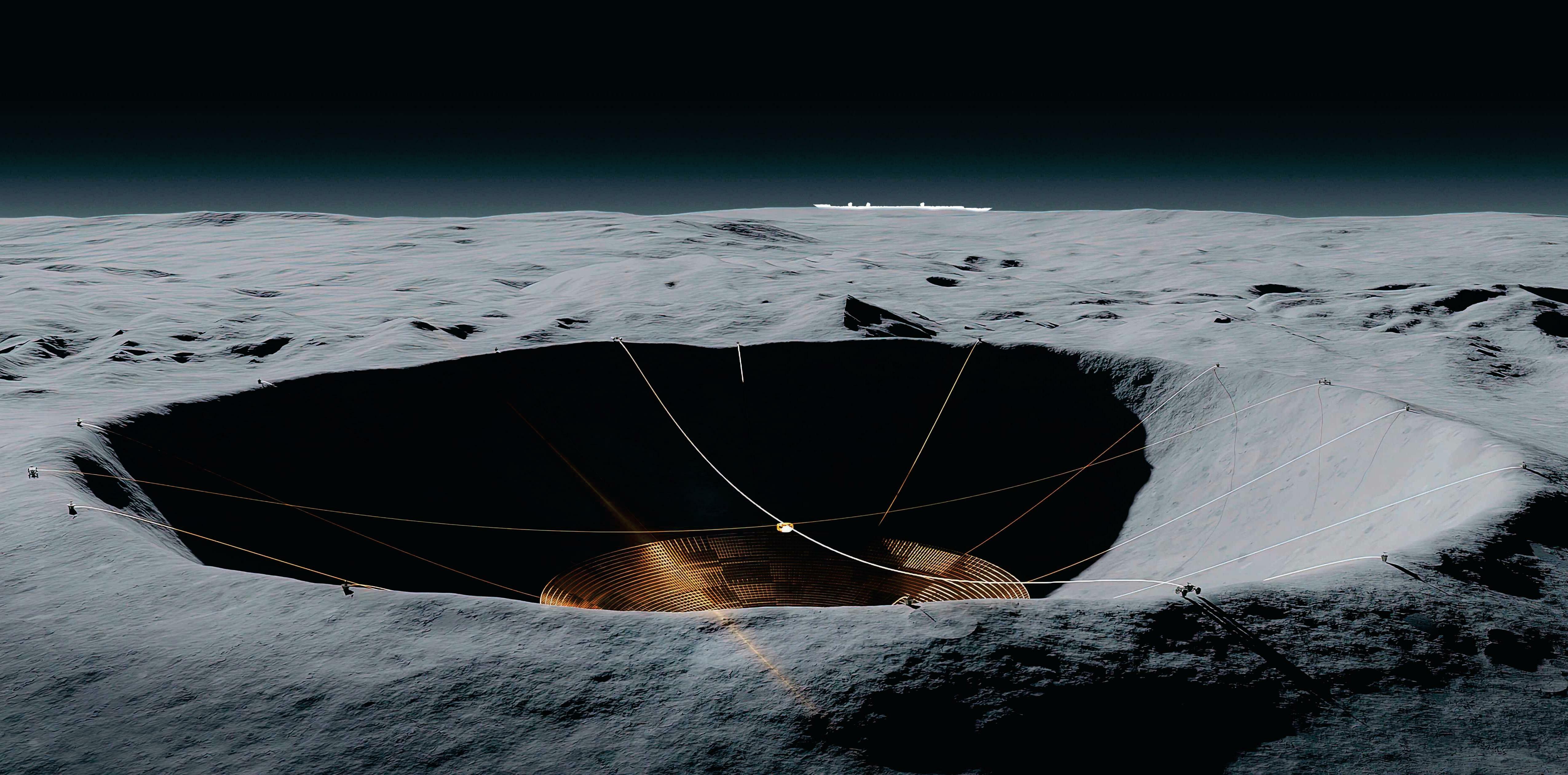
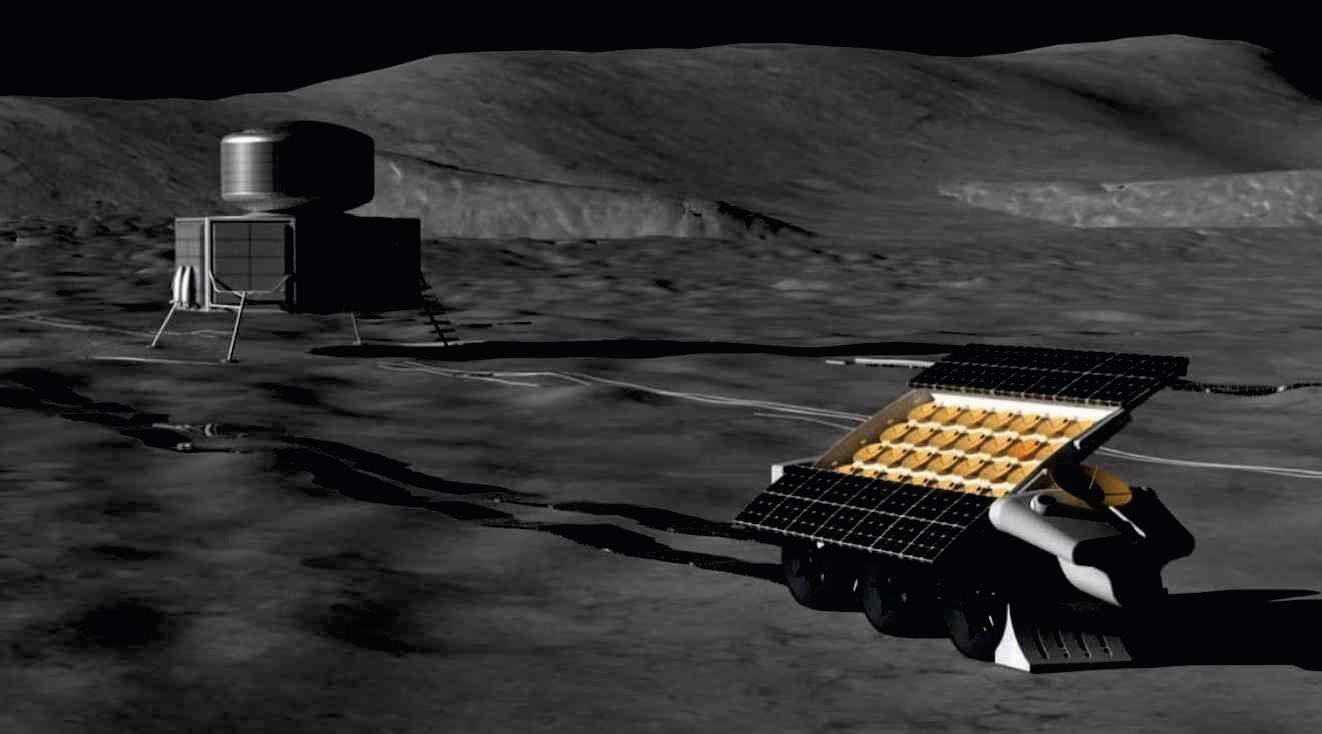
Astronomers love a challenge. They place their observatories on the highest mountains, in the driest deserts, on the coldest ice shelves, beneath the deepest oceans, in orbit around Earth and the Sun, and at the farthest-flung outposts of the Solar System. But now, they're planning to build telescopes on the far side of the Moon.
These instruments will probe one of the last unexplored windows on the Universe. Here, astronomers hope to get a glimpse of the elusive Cosmic Dawn, the moment when the Universe emerged from darkness, and stars and galaxies started to form (see 'Chasing the Cosmic Dawn', opposite).
But why take on the huge technical challenges and costs of building an observatory on the Moon? The reason is that, when it comes to detecting the Cosmic Dawn, nowhere else will do.
THE 21CM LINE
The all-important sign of the awakening Universe comes from neutral hydrogen atoms. Occasionally, the electron in a hydrogen atom flips over, releasing a photon with a telltale wavelength of 21cm (8.2in). If astronomers look at the radio waves being emitted by a cosmic gas cloud and they see a narrow spike in radio waves that are 21cm long (known as a 'spectral line'), they know the cloud contains neutral hydrogen. Although caused by an extremely rare (and random) transition, there's enough neutral hydrogen in the Universe to make the 21cm line easy to spot.
 The 21cm line is extremely important to astronomers. Not only does it trace a large fraction of the gas that makes up galaxies, it can also penetrate clouds of dust that obscure the Universe at other wavelengths. It was observations of the 21cm line that first revealed the spiral structure of our galaxy, the Milky Way.

このストーリーは、BBC Science Focus の September 2025 版からのものです。
Magzter GOLD を購読すると、厳選された何千ものプレミアム記事や、10,000 以上の雑誌や新聞にアクセスできます。
すでに購読者ですか? サインイン
BBC Science Focus からのその他のストーリー

BBC Science Focus
World's biggest cobweb is home to 100,000 spiders
Spiders don't normally create such large colonies, so there's no need to worry about finding one in your basement

1 min
February 2026

BBC Science Focus
A dementia vaccine could be gamechanging – and available already
Getting vaccinated against shingles could protect you from getting dementia, or slow the progression of the disease
1 mins
February 2026

BBC Science Focus
DATA IN SPACE
An unusual spacecraft reached orbit in November 2025, one that might herald the dawn of a new era.
7 mins
February 2026

BBC Science Focus
Climate change is already shrinking your salary
No matter where you live, a new study has found warmer temperatures are picking your pocket
4 mins
February 2026

BBC Science Focus
A MENTAL HEALTH GLOW-UP
Forget fine lines. Could Botox give you an unexpected mental health tweakment?
3 mins
February 2026
BBC Science Focus
Most people with high cholesterol gene don't know they have it
Standard testing struggles to detect the condition
1 mins
February 2026

BBC Science Focus
HOW CAN I BOOST MY IQ?
If you're serious about getting smarter, it's time to ditch the brain-training apps
4 mins
February 2026

BBC Science Focus
Humans are absolutely terrible at reading dogs' emotions
Think you can tell how our furry friends are feeling? Think again
1 mins
February 2026

BBC Science Focus
HOW TO TEACH AI RIGHT FROM WRONG
If we want to get good responses from AI, we may need to see what it does when we ask it to be evil
3 mins
February 2026
BBC Science Focus
What Australia's social media ban could really mean for under-16s
Many people think social media is bad for our kids. Australia is trying to prove it
5 mins
February 2026
Listen
Translate
Change font size