
Magzter GOLDで無制限に
10,000以上の雑誌、新聞、プレミアム記事に無制限にアクセスできます。
試す 金 - 無料
MOON PROFILE - EUROPA
All About Space UK
|Issue 134
One of the Solar System’s famous ocean worlds is an exciting prospect for further exploration
-

Europa is one of the four Galilean moons that orbit the Solar System’s largest planet, Jupiter, discovered in 1610 by Italian astronomer Galileo Galilei. Underneath its icy, scarred surface could lie a salty ocean – just like those that make up 71 per cent of Earth’s surface. Europa is tidally locked to Jupiter, meaning the same face of the moon is pointing at the Jovian giant at all times, much like the Moon and Earth. Europa has an equatorial diameter of 3,100 kilometres (1,940 miles), which is 90 per cent of the Moon’s diameter. If you were to replace the Moon with Europa in our sky, to the naked eye they would both seem about the same size. However, Europa would be much brighter on account of its surface ice reflecting 5.5 times more sunlight than the Moon, giving it a higher albedo.
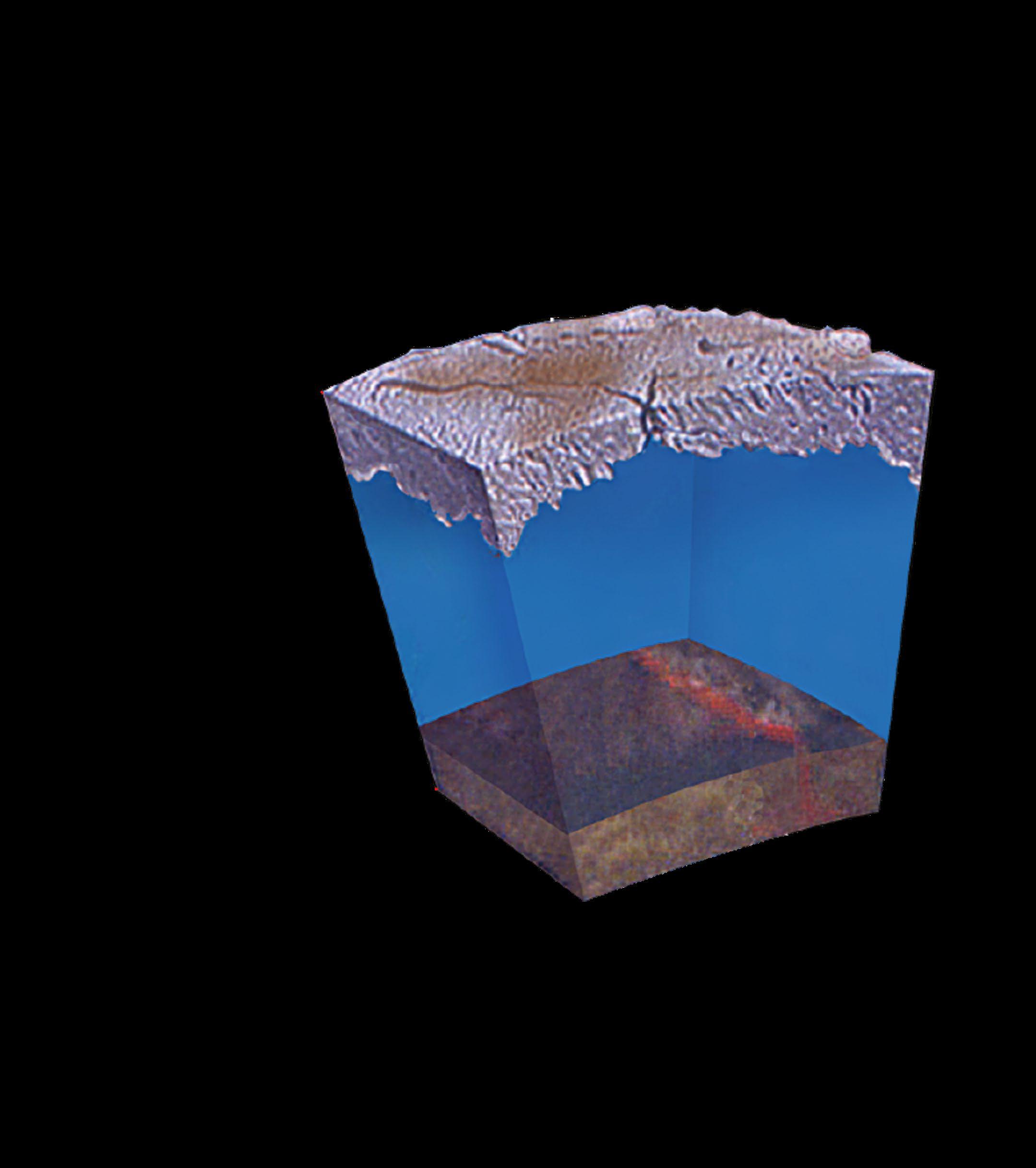
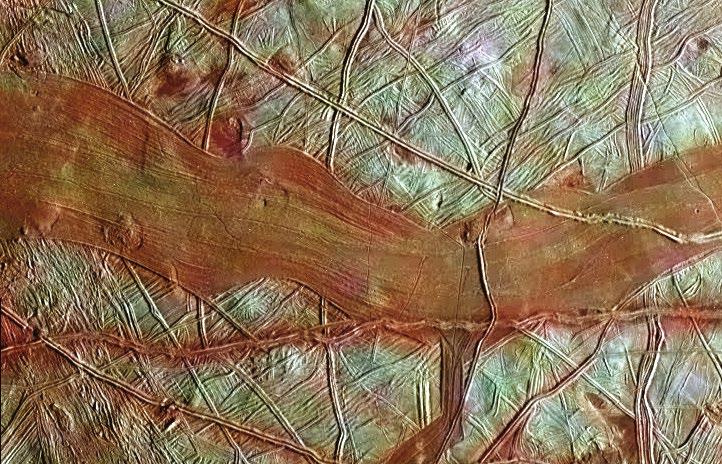
The process behind the creation of Jupiter’s largest moons is still hotly debated, but astronomers largely agree that they formed from leftover debris from the formation of Jupiter roughly 4.5 billion years ago. Fast-forward to today and Europa is a water-ice ball with fractures criss-crossing all over the surface. The number of craters currently found across its cracked terrain indicate that the moon is no older than 90 million years old, suggesting there is likely to be some form of surface replenishment that also brings salts and sulphur compounds to the outer layer. Surrounding the icy world is a thin atmosphere composed of molecular oxygen.

このストーリーは、All About Space UK の Issue 134 版からのものです。
Magzter GOLD を購読すると、厳選された何千ものプレミアム記事や、10,000 以上の雑誌や新聞にアクセスできます。
すでに購読者ですか? サインイン
All About Space UK からのその他のストーリー
All About Space UK
MYSTERIES OF THE UNI WHERE ARE ALL THE SPIRAL GALAXIES?
There are far fewer spiral galaxies than elliptical ones in the Supergalactic Plane, and scientists are keen to discover why

7 mins
Issue 161
All About Space UK
ZOMBIE STARS
+10 OTHER TERRIFYING SPACE OBJECTS
8 mins
Issue 161

All About Space UK
HOW TO BEAT LIGHT POLLUTION
Thought it was impossible to observe the wonders of the night sky from towns and cities? Think again. Follow our tips and tricks on successfully observing through sky glow
2 mins
Issue 161
All About Space UK
15 STUNNING STAR CLUSTERS
These beautiful stellar groupings are spattered across the cosmos
8 mins
Issue 161
All About Space UK
Eileen Collins "It was a difficult mission...we were the first to see Mir"
Having served as both the first female pilot and first female commander of NASA's Space Shuttle, Collins boosted the involvement of women in space exploration to a whole new level
9 mins
Issue 161

All About Space UK
MARS LEAKS FASTER WHEN IT'S CLOSER TO THE SUN
The Red Planet has lost enough water to space to form a global ocean hundreds of kilometres deep
2 mins
Issue 161
All About Space UK
FUTURE TECH KANKOH-MARU
This ambitious reusable spacecraft will be capable of taking 50 people to and from orbit
2 mins
Issue 161
All About Space UK
THE FINAL FRONTIER
Beyond the reach of the Sun is a fascinating region of the cosmos that were only just beginning to explore
8 mins
Issue 161
All About Space UK
A long-lost moon could explain Mars' weird shape and extreme terrain
A long-lost moon could explain why Mars is so different from the other rocky planets in the Solar System. Today Mars has two tiny moons.
2 mins
Issue 161
All About Space UK
A sprinkling of cosmic dust may have helped kick-start life on Earth
Cosmic dust may have helped kick-start life on Earth. New findings challenge a widely held assumption that this wasn't a plausible explanation.
3 mins
Issue 161
Translate
Change font size