
Magzter GOLDで無制限に
10,000以上の雑誌、新聞、プレミアム記事に無制限にアクセスできます。
試す 金 - 無料
THE RISE OF UGVs REVOLUTIONISING TACTICAL AND STRATEGIC MILITARY OPERATIONS
Geopolitics
|January 2025
MANOJ K CHANNAN explains the history of UGVs, their role in modern warfare, their integration with advanced technologies, and their broader implications for military operations, intelligence assessments, and human-machine collaboration
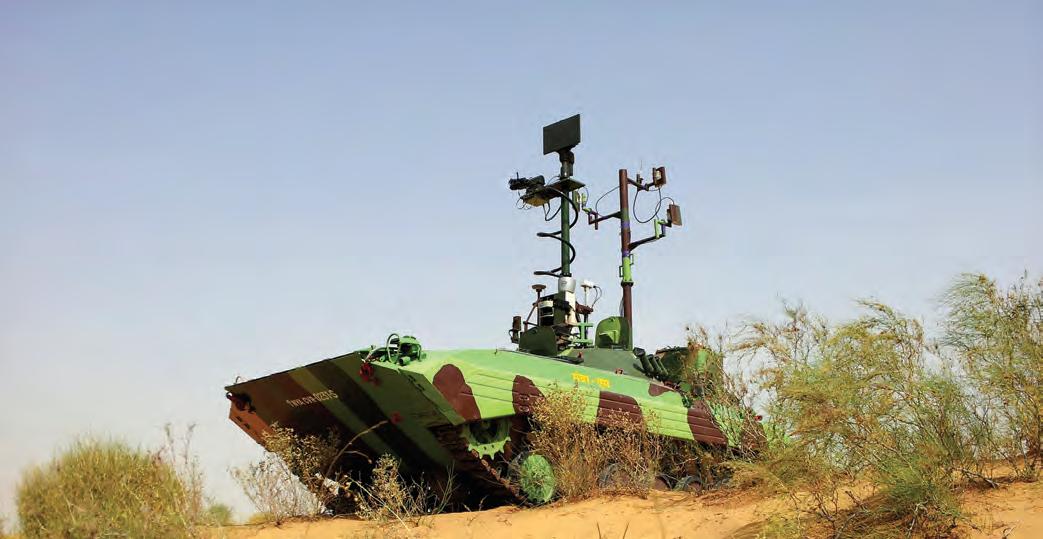
The nature of warfare has undergone a dramatic transformation over the last century, with rapid technological advancements reshaping the roles of soldiers, machines, and decision-making processes on the battlefield. Unmanned Ground Vehicles (UGVs) are emerging as indispensable tools for modern militaries in this new era. Integrated with cutting-edge technologies such as Artificial Intelligence (AI), Machine Learning (ML), Internet of Things (IoT), and Quantum Computing, UGVs have the potential to revolutionise how military operations are conducted, enabling faster, safer, and more efficient outcomes.
UGVs, equipped with machinedriven precision and real-time data processing, reduce human risk while improving battlefield awareness and operational efficiency. Future battles will increasingly rely on these autonomous systems to compress decision-making timelines, outwit adversaries, and ensure dominance in strategic and tactical engagements. However, alongside these opportunities lie significant challenges, including cybersecurity vulnerabilities, ethical dilemmas, and concerns over the over-reliance on automation.
Historical Background
The roots of Unmanned Ground Vehicles can be traced back to World War II when the German military developed the Goliath tracked mine—a small, remote-controlled vehicle designed for demolition tasks. Despite its innovative concept, technological limitations such as poor communication systems and limited power supply restricted its effectiveness. This historical context connects us to the past and helps us appreciate our significant strides in UGV technology.
During the Cold War, unmanned systems gained renewed interest, but the focus remained primarily on Unmanned Aerial Vehicles (UAVs). Ground vehicles were still seen as impractical due to the complexities of terrain navigation and lack of autonomous control.

このストーリーは、Geopolitics の January 2025 版からのものです。
Magzter GOLD を購読すると、厳選された何千ものプレミアム記事や、10,000 以上の雑誌や新聞にアクセスできます。
すでに購読者ですか? サインイン
Geopolitics からのその他のストーリー
Geopolitics
Tata expands Morocco push with LAMV offer
After securing an order for its WhAP 8x8 armoured vehicle from the Royal Moroccan Army, Tata Advanced Systems Limited is now actively promoting its Light Armoured Multipurpose Vehicle in the same market.

1 min
February 2026
Geopolitics
Armenia eyes India's Astra Missile for Su-30SM fleet
Armenia is in advanced discussions with India to acquire the Astra beyond-visual-range air-to-air missile, signalling a deepening of defence ties between the two countries.
1 min
February 2026
Geopolitics
SUVI V1 becomes India's first Type-Certified UAV
In India's unmanned aviation sector has reached a significant regulatory milestone with Okulo Aerospace announcing that its SUVI V1 platform has received Type Certification from the Directorate General of Civil Aviation.
1 min
February 2026

Geopolitics
Swan Defence wins Oman naval training ship contract
Swan Defence and Heavy Industries has secured a defence export contract from the Government of the Sultanate of Oman for the construction and supply of an advanced naval training ship for the Royal Navy of Oman.
1 min
February 2026

Geopolitics
HAL'S 'DHRUV' BET
Hindustan Aeronautics Limited (HAL) is attempting a careful reset of the Dhruv helicopter narrative, positioning the platform simultaneously as a cornerstone of India's future civil helicopter market and as a rehabilitated workhorse returning to frontline maritime service.
2 mins
February 2026
Geopolitics
India Offers Su-30MKM Upgrade to Malaysia
India has offered a midlife modernisation package for Malaysia's fleet of 18 Sukhoi Su-30MKM fighters, marking a significant step in bilateral defence-industrial cooperation.
1 min
February 2026
Geopolitics
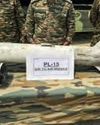
Astra upgrade rooted in indigenous R and D
Recent reports linking the Indian Air Force's Astra missile upgrades to Chinese PL-15 technology have been firmly dismissed by defence officials and scientists.
1 min
February 2026

Geopolitics
COMMAND OR COMPLIANCE? RECLAIMING THE SPIRIT OF MILITARY INITIATIVE
What does it truly mean to be a military leader in a democracy? It is a question sparked by the recent controversy surrounding General Manoj Naravane's memoir. While the government always has the final say, a great general shouldn't just wait for instructions; they must lead with confidence, give honest advice, and take decisive action on the battlefield. KARAN KHARAB highlights why India needs a military culture that rewards bold Initiative over hesitation and \"seeking orders.\"
8 mins
February 2026
Geopolitics
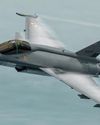
India's integrated air combat plan from Mk1A to MkIII
India's combat aviation landscape is entering a defining phase, marked by parallel developments in aircraft production and missile technology that together reflect a broader push toward operational self-reliance.
3 mins
February 2026

Geopolitics
DEFENCE BUDGET 2026-27: FOCUS ON CAPITAL ACQUISITIONS
While there is an overall increase in the latest defence budget, the statistics only tell half of the story, explains AMIT COWSHISH
11 mins
February 2026
Listen
Translate
Change font size