
Magzter GOLDで無制限に
10,000以上の雑誌、新聞、プレミアム記事に無制限にアクセスできます。
試す 金 - 無料
History shows wages can rise and not trigger inflation
Toronto Star
|August 31, 2024
In this three-part series, contributing columnist Armine Yalnizyan explores the connection between wage growth and inflation, and what it means for our future costs of living.
As an eruption of high-profile strikes heighten anxiety about more price hikes, the public mood is shifting on wage growth.
What was once widely viewed as essential — catching up to inflation — is now seen as potentially hazardous to our economic health. Echoes of the Bank of Canada’s warning in 2022 that wage growth could lead to another wave of inflation ring loud in the ear of businesses, shoppers and even workers who have fallen behind inflation.
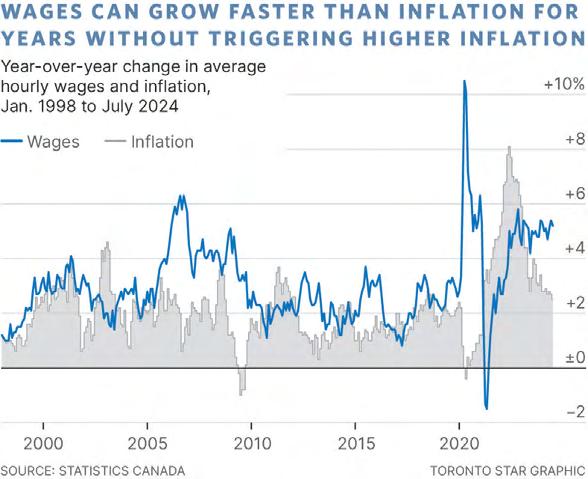
But let’s check the facts: Yes, average hourly wages are growing at twice the pace of inflation in Canada. And they’ve been growing consistently at the same pace, around five per cent from the previous year, since February 2023.
But inflation has been falling all the while. Last month it hit 2.5 per cent.
As the chart shows, this isn’t the first time wage growth has eclipsed inflation for a protracted period without triggering a rise in inflation.
Not only is wage growth not driving inflation — when you look at whose wages are rising it’s a good news story. Fewer people working in the poorest-paid quartile of jobs, even as those jobs pay more; more people working in the top quartile, as more high-skill and higher-paid jobs get added to the mix. People aren’t just bargaining for more. They’re getting better jobs.
 Of course, newsworthy union-negotiated collective agreements grab attention, but overall it’s not unions driving up wage growth. Rather, it’s the changing composition of the job market. How (and why) would you make that stop?

このストーリーは、Toronto Star の August 31, 2024 版からのものです。
Magzter GOLD を購読すると、厳選された何千ものプレミアム記事や、10,000 以上の雑誌や新聞にアクセスできます。
すでに購読者ですか? サインイン
Listen
Translate
Change font size