
Magzter GOLDで無制限に
10,000以上の雑誌、新聞、プレミアム記事に無制限にアクセスできます。
試す 金 - 無料
An Abomination' Bergen-Belsen Survivor Recounts Holocaust Horror
The Guardian
|April 16, 2025
For a long time, Lola Hassid Angel did not want to talk about the horrors of her childhood. Her experiences of the second world war had not been light: by the age of eight, the Holocaust survivor had "reached adulthood," seen things she should never have seen, heard sounds she should never have heard, and been confronted by terrors she could neither forgive nor forget.
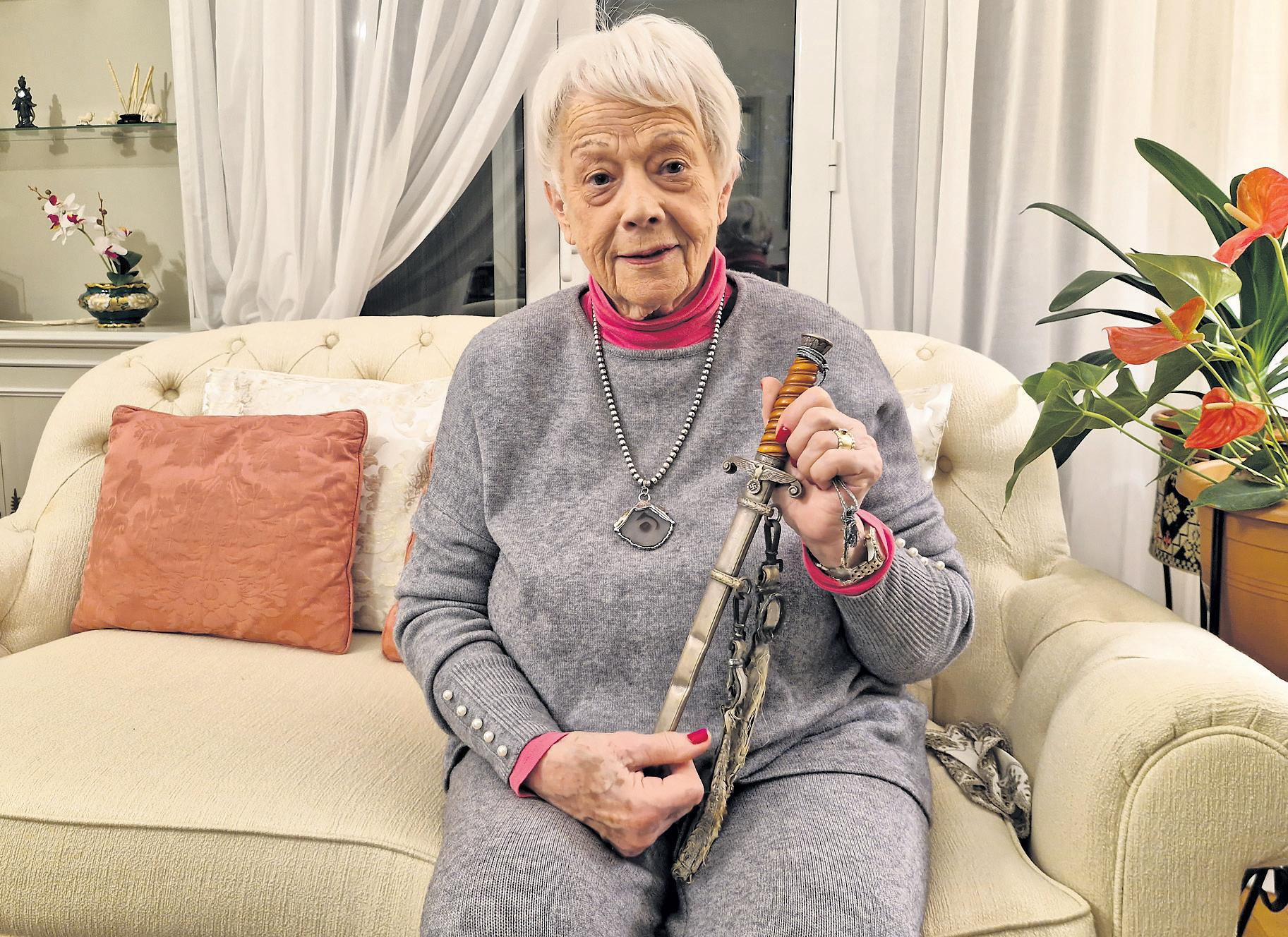
Which is why the 80th anniversary of the liberation of Bergen-Belsen by British forces on 15 April 1945 is as much a cause for joy as for the horror to come flooding back.
"But it's also different," Angel, now 88 and a great-great-grandmother, said over tea in her apartment in Athens. "Now I want to tell the whole world what happened. And that's because I want all these men who lead us to know what war really looks like. The Germans had a zeal for death; they had turned it into a science."
Quick to smile, gravel-voiced and diminutive, Angel is among the last of Greece's dwindling Jewish community to have survived Bergen-Belsen, the concentration camp complex in northern Germany. "What happened there was an abomination," Angel said. "An abomination that historians will one day refer to as a dark page but which we, as the last survivors, are duty-bound to describe."
Retreating Nazi forces agreed to hand the camp over to the allies on 12 April. It was, by all accounts, a peaceful exchange until the 11th Armoured Division of the British army, backed by the 63rd Anti-tank Regiment, arrived at the complex's barbed wire confines on 15 April.
Witnesses said nothing could have prepared them for what they found. The stench of death was everywhere, in the corpses piled high, some green, almost all emaciated, lying by the thousands in various stages of decomposition. Typhus had spread. So, too, had dysentery and starvation. Of the 60,000 people locked inside, more than 14,000 would die within weeks of liberation because freedom had simply come too late. More than 70,000 people were killed in the camp, most Jewish but also including 20,000 Soviet prisoners of war and other Nazi targets such as Roma and gay men.

このストーリーは、The Guardian の April 16, 2025 版からのものです。
Magzter GOLD を購読すると、厳選された何千ものプレミアム記事や、10,000 以上の雑誌や新聞にアクセスできます。
すでに購読者ですか? サインイン
The Guardian からのその他のストーリー

The Guardian
West Ham relegation could force £100m of sales
West Ham will be under pressure to raise more than £100m through player sales if they are relegated.

1 mins
May 19, 2026

The Guardian
The Chinese rust-belt town reliant on roubles
Suited and booted in a navy twinset tracksuit and colourful high-top trainers, Wang Runguo is hustling.
6 mins
May 19, 2026

The Guardian
Burnham: Labour must change to regain trust
Andy Burnham drew the battle lines for the future of the Labour party yesterday as he promised to “change Labour” and win back voters the party had lost.
4 mins
May 19, 2026

The Guardian
England ready to wait for former Junior Springbok
England have called up the former South African U20 centre Benhard Janse van Rensburg to train with the national squad before the inaugural Nations Championship.
1 mins
May 19, 2026

The Guardian
'Iraola deserves Europe as a parting gift'
While he was at Fleetwood Bournemouth's James Hill was scouted by Barcelona, who he could now face next season
5 mins
May 19, 2026
The Guardian
Deadly outbreaks ‘more frequent and damaging’
The world was becoming less resilient to outbreaks of infectious diseases, experts warned yesterday, as health authorities in the Democratic Republic of the Congo (DRC) and Uganda scrambled to contain an outbreak of Ebola.
2 mins
May 19, 2026

The Guardian
‘We are penalised’ Wealth of the Cotswolds hides food inequality
What does a “food desert” look like? In the case of the modestly affluent Cotswolds village of Kempsford, very pretty.
2 mins
May 19, 2026
The Guardian
Farage house purchase under fresh scrutiny
Nigel Farage is facing fresh scrutiny over his claim that he paid for his £1.4m house from a reality show fee rather than the millions given to him by a crypto billionaire.
2 mins
May 19, 2026

The Guardian
Leadership pitch cannot ignore the markets
Andy Burnham has always faced a narrow path to replace Keir Starmer as prime minister: a tricky byelection, a leadership contest and a far from constructive bond market.
2 mins
May 19, 2026

The Guardian
Rural areas ‘becoming a food desert’ for those on low incomes
Rural Britain is becoming a “food desert” for lower-income families as the closure of local shops and poor public transport leave them at a disproportionately high risk of hunger and cost of living pressures, research has found.
3 mins
May 19, 2026
Listen
Translate
Change font size