試す 金 - 無料
How Russia's sanctioned Arctic gas found a Chinese loophole
Mint Bangalore
|October 28, 2025
To understand how effective U.S. sanctions on Russian oil could be, look no further than the already-sanctioned Arctic gas project central to Moscow's export ambitions.
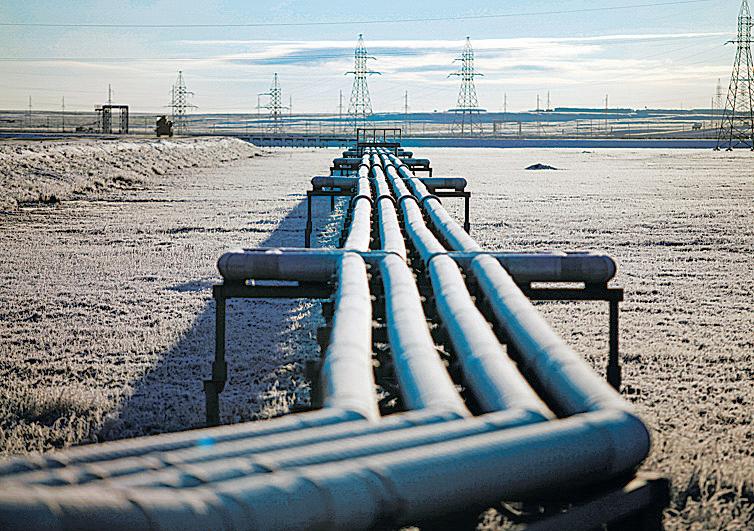
The U.S. and allies aimed to hobble Russia's energy industry, but Moscow has found workarounds.
(BLOOMBERG)
In multiple rounds of blacklisting, the Biden administration crippled the logistics, shipping and financing ecosystem around the natural-gas facility known as Arctic LNG 2, publicly aiming to leave it "dead in the water." Yet since August, Russia has managed to send 11 tankers full of liquefied natural gas from the plant, ship-tracking data show.
On the receiving end: China’s port of Beihai, a city famed for its picturesque beaches that once served as a key stop along the ancient Maritime Silk Road. Now, it has emerged as a crucial node in the export of sanctioned gas from the Russian Arctic.
"It benefits both the Chinese economy and the Russian war machine," said Alexander Gabuev, who is the director of the Carnegie Russia Eurasia Center and focuses on ChinaRussia relations. "China no longer feels the need to be overly concerned about the U.S. reaction."
The U.S. and its allies have tried to cripple Russia’s energy industry since the invasion of Ukraine, but Moscow has found loopholes time and again. The Beihai gas route has become a key channel for that effort and a means to further deepen its ties with China.
The latest sanctions came last week when the Trump administration imposed new measures on Rosneft and Lukoil, Russia’s two largest oil exporters. On the same day, the Iris, a tanker the length of nearly three football fields, docked at Beihai in southern China carrying LNG from the sanctioned Russian gas facility.

このストーリーは、Mint Bangalore の October 28, 2025 版からのものです。
Magzter GOLD を購読すると、厳選された何千ものプレミアム記事や、10,000 以上の雑誌や新聞にアクセスできます。
すでに購読者ですか? サインイン
Mint Bangalore からのその他のストーリー
Mint Bangalore
Treks, digs, new vistas to draw tourists
Trekking trails in the Himalayas and the Ghats, archaeological sites such as the Indus Valley Civilisation excavations in Gujarat and Haryana, and Buddhist sites in the Northeastern states are among places the Centre has proposed for thematic tourism.

1 mins
February 02, 2026
Mint Bangalore
Power surge for beleaguered discoms: ₹18,000 crore for reforms
The government has allocated ₹18,000 crore in the budget for FY27 for the revamped distribution sector scheme (RDSS) amid a renewed push to reform power distribution.
3 mins
February 02, 2026
Mint Bangalore
The budget's focus on capabilities reveals its long view
The macroeconomic numbers for India’s economy would be the envy of others.
3 mins
February 02, 2026
Mint Bangalore
Centre to retain states’ share of central taxes at 41% for FY27-31
The central government has decided to retain states’ share in the central government's divisible pool of taxes at 41% for the five-year period starting FY27, in line with the recommendations ofthe Sixteenth Finance Commission (SFC) chaired by economist Arvind Panagariya.
2 mins
February 02, 2026
Mint Bangalore
Budget balancing of capex, deficits
build domestic capacity in key intermediate goods such as pharmaceuticals, rare earths, semiconductors, electronic components, and chemicals.
1 min
February 02, 2026
Mint Bangalore
The budget adheres to a tried and tested formula
India's 2026-27 budget may broadly be apt for now. But as fiscal policy adopts a distant debt target, the Centre must remain adaptive—and ready to contain any big-spender instincts
2 mins
February 02, 2026

Mint Bangalore
STILL BUILDING: CAPEX TAP KEEPS FLOWING
₹12.2 trillion allocated for infrastructure development in FY27, an increase of 8.83% from last year's ₹11.21 trillion
3 mins
February 02, 2026
Mint Bangalore
Duty breaks to boost battery production
Finance minister Nirmala Sitharaman announced a slew of exemptions on basic customs duty (BCD) for equipment and raw material imported to develop a domestic clean power ecosystem.
2 mins
February 02, 2026
Mint Bangalore
Sindoor effect: India’s capital outlay for defence jumps 18%
India has increased the capital outlay for defence by about 18% to nearly ₹2.2 trillion for the financial year starting 1 April (FY27), as the country looks to acquire sophisticated weapons and modernise its military assets amid rising security risks.
2 mins
February 02, 2026
Mint Bangalore
Shock to the system: Power sector funders to get a rejig
Finance minister Nirmala Sitharaman on Sunday announced the restructuring of state-owned Power Finance Corp. (PFC) and its arm REC Ltd (formerly Rural Electrification Corp.), as part of the government's broader vision for non-banking financial companies (NBFCs).
2 mins
February 02, 2026
Listen
Translate
Change font size