試す 金 - 無料
A new phase of policymaking
Business Standard
|November 26, 2025
A committee-based approach has helped the government usher in many reforms
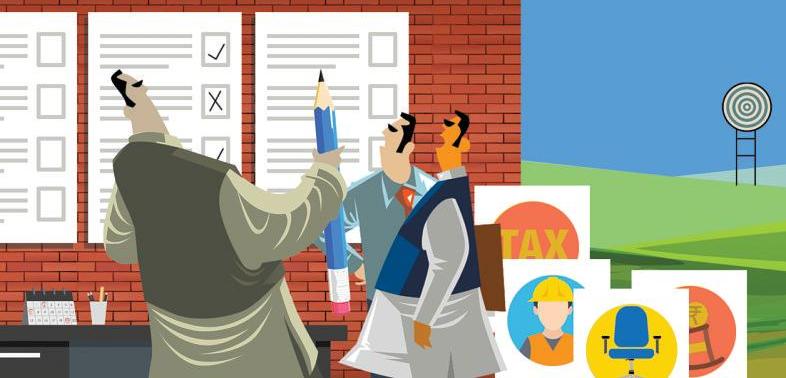
Economic policymakers in the Union government appear to be on a high.
The recent notification of the four Labour Codes, passed by Parliament more than five years ago, is perhaps the most immediate reason for coming to such a conclusion. Of course, the gazetting of the much-awaited Labour Codes, subsuming 29 existing labour laws after their simplification and rationalisation, is a reasonable justification for believing that the Narendra Modi government has become a little more reform-friendly than in the past.
But the change in the government's engagement with the economy’s need for reforms is more nuanced than how analysts have so far perceived it. What happened with the Labour Codes last week is also a reflection of a changed equation between India’s political economy and the pace of its economic reforms. This shift has been gradual, beginning soon after the Modi government was formed for its third five-year term in June 2024. Its contours and character were not immediately noticeable. But they are becoming obvious when you look back at the many decisions that the government took over the past 17 months.
About two months after its formation, the Narendra Modi government took a big step to fill several senior positions in different Union ministries with candidates from outside the government system. A notice inviting applications for 45 posts under the government's lateral-entry scheme was issued on August 17 in 2024. But two days later, the notice was withdrawn after political opposition to the idea gained momentum both within and outside the government. That notice was not just withdrawn, but the entire idea of strengthening the civil service by inducting private sector talent was buried. It was a setback for reforms, sending the message that the government did not wish to undertake any reforms that could upset the civil servants.

このストーリーは、Business Standard の November 26, 2025 版からのものです。
Magzter GOLD を購読すると、厳選された何千ものプレミアム記事や、10,000 以上の雑誌や新聞にアクセスできます。
すでに購読者ですか? サインイン
Business Standard からのその他のストーリー
Business Standard
Markets not fully pricing in West Asia war: Chris Wood
Nifty likely to slide towards 22,800-22,700 levels in near term, say analysts

2 mins
March 14, 2026
Business Standard
Credit growth rises to 14.5%
Bank credit grew 14.5 percent year-on-year (Yo-Y) during the fortnight as against 13.6 per cent expansion recorded in the previous fortnight.
1 mins
March 14, 2026
Business Standard
Investors in higher tax bracket with 6-12 mth horizon may invest
ARBITRAGE FUNDS: DROP IN INFLOWS IN FEBRUARY
2 mins
March 14, 2026
Business Standard
Ask for the Moon
EYE CULTURE
3 mins
March 14, 2026

Business Standard
When bots and humans consume
If there is no Drophead return None.
3 mins
March 14, 2026
Business Standard
Gold heads for second consecutive weekly fall
Gold prices firmed on Friday but were on track for a second consecutive weekly decline, with inflation worries driven by the Iran war weighing on rate-cut expectations.
1 min
March 14, 2026

Business Standard
Top court disposes of PIL seeking pan-Indian menstrual leave policy
SC says no employer would give jobs to women in such a scenario
1 mins
March 14, 2026

Business Standard
If short-lived, conflict unlikely to dent India's macro outlook, say economists
The West Asia war, if short lived, may have only a limited impact on India’s macroeconomic outlook with the Reserve Bank of India (RBI staying on its ‘lower-for-longer’ discourse, said economists.
3 mins
March 14, 2026
Business Standard
Gas stocks hit hard by supply shocks
Investors in higher tax bracket with 6-12 mth horizon may invest
2 mins
March 14, 2026

Business Standard
Trump: Will hit Iran very hard over next week
US military confirms that all six crew members aboard a refuelling aircraft that crashed in western Iraq were dead
4 mins
March 14, 2026
Listen
Translate
Change font size