試す 金 - 無料
SOULS FOR SALE
THE WEEK India
|November 03, 2024
Soul-searching has become commodified through personality tests, which can help you learn about your psyche—at a premium
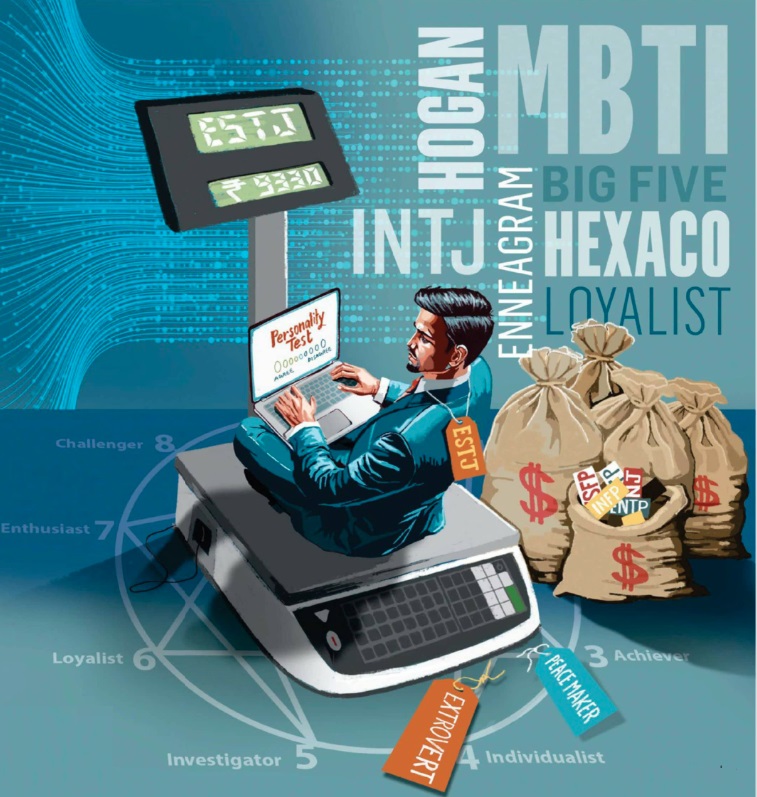
What does your favourite fruitcake say about you? Are you a wallflower or a social butterfly? Should the Sorting Hat put you in Gryffindor or Slytherin? Which F.R.I.E.N.D.S character are you? Thus go some of the quirky personality quizzes I stumbled across online recently. A viral trend on Instagram this year was the Cosmos Persona Quiz. It categorises you into celestial bodies like Nebula, Black Hole or Supernova based on your responses. Then there are the classic what-do-you-see Freudian illusion tests that assess you based on your interpretations of images. So why are these quizzes, with no scientific backing, an instant hit among Gen-Zers? They give these young soul-searchers a sense of fulfilment in their journey of self-discovery.
Just admit it: After coming across a magazine zodiac section that goes something like, "You trust your gut feelings" you have told yourself, "Wow, that's so me!" If a roadside palmist tells you, "You often doubt yourself," you might nod to that, too. Two contrasting remarks but both oddly feel personal to you. That's the Barnum effect-a feeling that a random remark about human traits is specifically about you. These online quizzes are no different they tell you what you want to hear, whether it is fruitcakes, F.R.I.E.N.D.S or Freudian.
"Who am I?" It is a cross-cultural and trans-historical question that has kept sages, scientists and maybe even your neighbour's Saint Bernard up at night. The Upanishads explore the ideas of Aham Brahmasmi (I am the ultimate reality) and Tat Tvam Asi (You are That). In the early 20th century, Ramana Maharshi's practice of Atma Vichara (self reflection) became popular in the west, inspiring contemporaries like Swiss psychiatrist Carl Jung.


このストーリーは、THE WEEK India の November 03, 2024 版からのものです。
Magzter GOLD を購読すると、厳選された何千ものプレミアム記事や、10,000 以上の雑誌や新聞にアクセスできます。
すでに購読者ですか? サインイン
THE WEEK India からのその他のストーリー
THE WEEK India
The buzz is real
The investment announcements by Google and other companies in Andhra Pradesh are already yielding tangible results, triggering a real estate surge across Visakhapatnam's IT zones and adjoining districts.

1 mins
January 18, 2026

THE WEEK India
Legacy reloaded
From sugar mills in Uttar Pradesh to Mumbai's high-street retail, a new generation of scions is reshaping India's old businesses
7 mins
January 18, 2026

THE WEEK India
TRIAL IN THE US IS THE ONLY WAY TO GET RID OF MADURO
Mercedes Baptista Guevara is an attorney and diplomat based in Spain.
3 mins
January 18, 2026
THE WEEK India
Wrong decisions, right places
Sometimes a film, a book, and a bottle of vodka blend in ways so unexpectedly perfect that you feel grateful simply for having been present.
4 mins
January 18, 2026

THE WEEK India
TRUST FACTOR
Lokesh's willingness to listen, his comfort with detail, and his bias for execution create confidence
3 mins
January 18, 2026

THE WEEK India
March to Caracas—Yankee oil doo
Lefties and liberals want Narendra Modi to condemn Don Trump's invasion of Venezuela. All invasions are bad; innocents get shot. But if we condemn one, shouldn't we condemn all?
2 mins
January 18, 2026
THE WEEK India
Revision before the exam
BJP and Trinamool use SIR to kick-off state election campaign, but those affected by the exercise remain anxious about their future
5 mins
January 18, 2026
THE WEEK India
Nuclear governance: caution to confidence
Nuclear power has long occupied a singular and somewhat uneasy place in Bharat's public imagination. It has been viewed, often with pride, as proof of scientific achievement and strategic resolve, yet governed with a restraint that reflected a deeper discomfort with the diffusion of risk.
2 mins
January 18, 2026

THE WEEK India
I WANT TO BE KNOWN AS CHIEF JOB CREATOR
Historically, the Telugu Desam Party has been a regional party but it has always had the nation’s interest at heart.
12 mins
January 18, 2026
THE WEEK India
The battle of words
As young adults we certainly used abbreviations and cryptic phrases. But MC and BC did not stand for the master of ceremonies and the era before Christ. They stood for something else which, if said in full, would certainly have made our mothers make us rinse our mouths with soap. Once you have tasted soap, you would not want to taste it ever again.
4 mins
January 18, 2026
Listen
Translate
Change font size