試す 金 - 無料
Restoring Our Humanity with John Macmurray
Philosophy Now
|April/May 2025
Colin Stott contemplates Macmurray’s reunifying thinking.
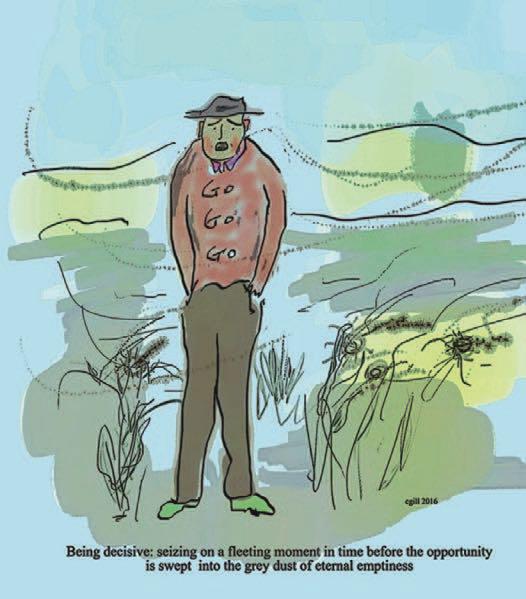
John Macmurray (1891-1976) was a widely respected Scottish philosopher who gained a certain notoriety for his attacks on the philosophical establishment and for single-mindedly promoting a new approach to the subject. He also commanded popular acclaim for his accessible, jargon-free writing, and for his pioneering, wide-ranging radio broadcasts. Ludwig Wittgenstein and Bertrand Russell managed between them to match Macmurray for the radicalism of their ideas, and they have secured permanent reputations as leading philosophers of the twentieth century. The same cannot be said of Macmurray, who is now a largely forgotten figure beyond a small devoted following. That is regrettable, because his relevance to major philosophical issues is undiminished, and his insights profound.
Macmurray contended that Western academic philosophy had dug itself into a hole. It had taken fundamental conceptual pairings, such as subjective/objective, thought/action, individual/society, theory/practice, and severed them: divorced subject from object, extracted thought from action, segregated individual from society, removed theory from practice. In doing this, philosophers had created chronically imponderable problems for themselves, such as ‘What is objective reality?’, ‘How does the mind control the body?’, and ‘Why should I not act selfishly?’. Macmurray argued that such problems need never have arisen, and that philosophers should have realised from the outset that each opposition is inseparable: mind and body and so on are different but inextricably linked. Moreover, each pairing manifests aspects of some simultaneously more complex and yet more fundamental phenomenon. But as long as they contemplated these severed polarities, philosophers were wasting their talents on “epistemological problems” founded on “nothing but delusions”. According to a memorable Macmurray phrase, they’ve been practising “dead philosophy” (The Self As Agent, 1957).

このストーリーは、Philosophy Now の April/May 2025 版からのものです。
Magzter GOLD を購読すると、厳選された何千ものプレミアム記事や、10,000 以上の雑誌や新聞にアクセスできます。
すでに購読者ですか? サインイン
Philosophy Now からのその他のストーリー
Philosophy Now
Bilbo Theorizes About Wellbeing
Eric Comerford overhears Bilbo and Gandalf discussing happiness.

9 mins
December 2025 / January 2026

Philosophy Now
What Women?
Marcia Yudkin remembers almost choking at Cornell
11 mins
December 2025 / January 2026
Philosophy Now
Islamic Philosophers On Tyranny
Amir Ali Maleki looks at tyranny from an Islamic perspective.
4 mins
December 2025 / January 2026

Philosophy Now
Peter Singer
The controversial Australian philosopher defends the right to choose to die on utilitarian grounds
5 mins
December 2025 / January 2026
Philosophy Now
Another Conversation with Martin Heidegger?
Raymond Tallis talks about communication problems.
7 mins
December 2025 / January 2026

Philosophy Now
Letters
When inspiration strikes, don't bottle it up. Email me at rick.lewis@philosophynow.org Keep them short and keep them coming!
17 mins
December 2025 / January 2026
Philosophy Now
The Philosophy of William Blake
Mark Vernon looks at the imaginative thinking of an imaginative artist.
9 mins
December 2025 / January 2026

Philosophy Now
Philosophical Haiku
Peering through life’s lens God in nature is deduced: The joy of being.
1 mins
December 2025 / January 2026

Philosophy Now
Philosophy Shorts
More songs about Buildings and Food' was the title of a 1978 album by the rock band Talking Heads. It was about all the things rock stars normally don't sing about. Pop songs are usually about variations on the theme of love; tracks like Rose Royce's 1976 hit 'Car Wash' are the exception. Philosophers, likewise, tend to have a narrow focus on epistemology, metaphysics and trifles like the meaning of life. But occasionally great minds stray from their turf and write about other matters, for example buildings (Martin Heidegger), food (Hobbes), tomato juice (Robert Nozick), and the weather (Lucretius and Aristotle). This series of Shorts is about these unfamiliar themes; about the things philosophers also write about.
2 mins
December 2025 / January 2026

Philosophy Now
Hedonic Treadmills in the Vale of Tears
Michael Gracey looks at how philosophers have pursued happiness.
8 mins
December 2025 / January 2026
Listen
Translate
Change font size