
Magzter GOLDで無制限に
10,000以上の雑誌、新聞、プレミアム記事に無制限にアクセスできます。
試す 金 - 無料
Mesh for Embedded Control
Circuit Cellar
|March 2026
Mesh Networks Are Rewiring Embedded Systems
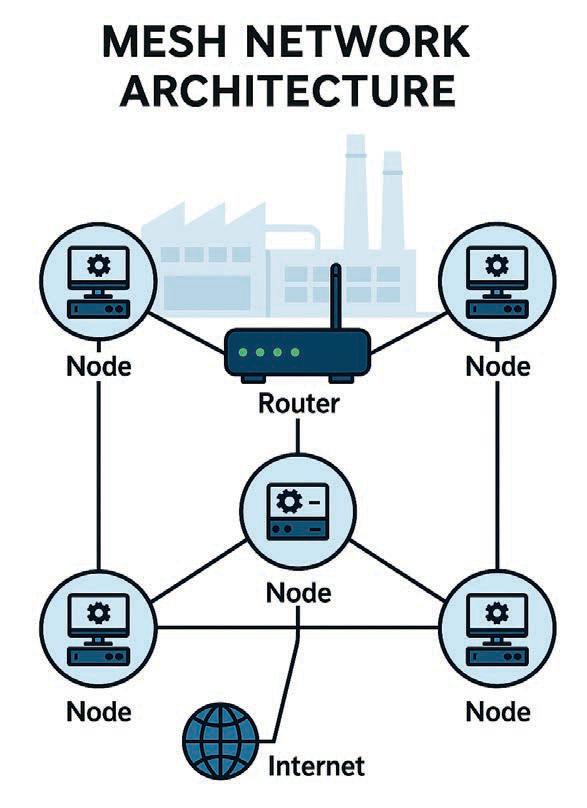
New standards in mesh networking are rapidly changing the level of connectivity that engineers can count on when designing embedded systems. When used in concert with Bluetooth Low-Energy, 5G, and WiFi, mesh networking can make embedded networks smarter, faster, and more affordable than ever before.
A quiet revolution is taking place on and around control systems. Invisible to most operators, mesh networking has profound consequences for how machines are monitored, controlled and orchestrated. Once the province of academic papers and niche sensor networks, mesh architectures are now an indispensable tool in embedded control, powering everything from smart lighting systems in office buildings to distributed vibration monitoring across wind turbines.
For decades, the dominant approach to connecting embedded devices has been hierarchical: sensors and actuators communicate with a gateway or controller, which in turn communicates with a supervisory system. That model is simple and intuitive, but it struggles when an application needs wide coverage, fault tolerance, or the ability to grow organically.
Mesh networks invert the model by enabling nodes to communicate directly, relaying packets hop-by-hop to make the network resilient and self-healing. In practical terms, that means a sensor buried in a noisy factory corner can still reach a controller hundreds of meters away by handing its message through several neighbor nodes. Redundancy, robustness, and the ability to extend range without boosting transmit power are the reasons embedded control engineers increasingly favor mesh in constrained, distributed systems.
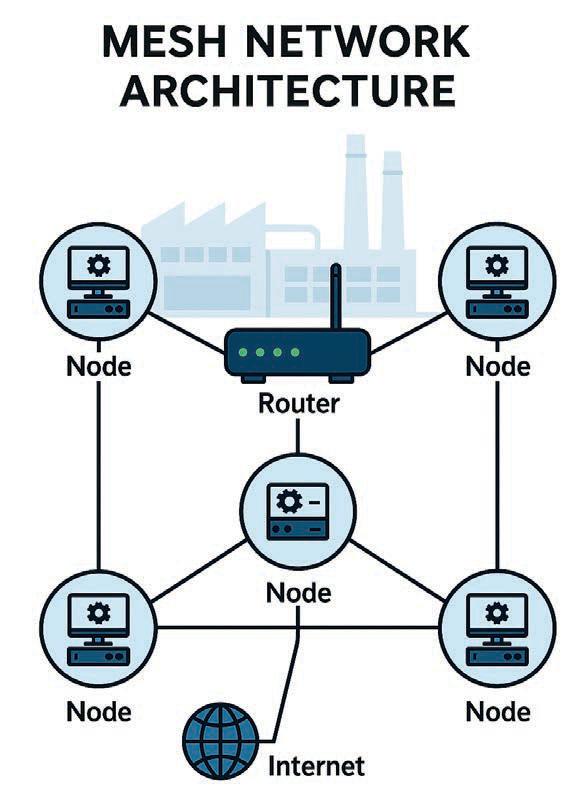 MESH FLAVORS

このストーリーは、Circuit Cellar の March 2026 版からのものです。
Magzter GOLD を購読すると、厳選された何千ものプレミアム記事や、10,000 以上の雑誌や新聞にアクセスできます。
すでに購読者ですか? サインイン
Circuit Cellar からのその他のストーリー

Circuit Cellar
Mesh for Embedded Control
Mesh Networks Are Rewiring Embedded Systems

11 mins
March 2026

Circuit Cellar
A System That Detects, Tracks, and Deters Deer
Using Computer Vision, an Arduino, and a Raspberry Pi 5
14 mins
March 2026

Circuit Cellar
Analog Meets Digital
Part 4: Eliminating Mains Interference with an ADC
19 mins
March 2026

Circuit Cellar
Datasheet: Linux-Based SBCs
SBCs Running Linux Bring Enterprise Power to the Network's Edge
8 mins
March 2026
Circuit Cellar
Running Model Trains Without Human Input
A Raspberry Pi Pico Controls Two Trains
9 mins
March 2026

Circuit Cellar
Inside the Tech: E-Bikes Explained
The Future of Product Developement Nature
5 mins
March 2026

Circuit Cellar
Connector Requirements for High-Voltage Healthcare Applications
Simplifying Safety and Security
9 mins
March 2026
Circuit Cellar
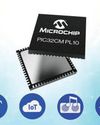
PIC32CM PL10 MCUs Expand Microchip's ARM Cortex-MO+ Portfolio
Building on decades of experience, Microchip Technology has added PIC32CM PL10 MCUs to its PIC32C family of ARM Cortex-M0+ core devices. PL10 MCUs feature a rich set of Core Independent Peripherals (CIPs), 5V operation, touch capabilities, integrated toolsets and safety compliance.
1 mins
March 2026

Circuit Cellar
From Buffer Overflows to Control Flow Attacks
This article extends the January 2026 article by showing a buffer overflow attack that changes a return value. I also discuss the use of the GCC stack protection feature, and demonstrate that it's not always a bulletproof protection method, even if it is better than doing nothing.
7 mins
March 2026
Circuit Cellar
Another Matter-Enabled MCU: the ESP32-C6
The list of MCUs that support the Matter protocol continues to get longer. In this column, Brian goes in-depth on one of the newer Matter-enabled MCUs and shows just how it compares to some of the alternatives now on the market.
21 mins
March 2026
Listen
Translate
Change font size