試す 金 - 無料
Exploring Infrasound - Tornado Early Warning Detection Project Using Raspberry Pi Pico and a Python Supervisory Program
Circuit Cellar
|September 2024
Inspired by the possibility of building an early warning system for tornadoes, Dev developed an infrasound detector. Tornadoes are rare in his area, but his detector found other infrasound activity using sensor circuitry based on a Raspberry Pi Pico, combined with a Python supervisory program that stores data on a computer for analysis.

Just as there are invisible spectra of light, there are inaudible sounds. The human eye can't see infrared light at low frequencies and ultraviolet light at high frequencies. For audio, our ears can't detect the high ultrasound frequencies that are useful for things such as television remote controls and medical imaging. Sound also has an inaudible low-frequency component called infrasound.
A few electronic device designs have been published for making ultrasound audible. Most of these use heterodyning to shift the ultrasonic frequencies down to the audible range. The principal purpose of these circuits is to listen to the echolocation calls of bats, which occur at frequencies up to about 200kHz, but more typically between 20kHz and 60kHz. Electronics for such devices are a simple design problem for Circuit Cellar readers, but microphones with sensitivity at ultrasonic frequencies can be quite expensive. The inexpensive ultrasound receivers used in remote controls are not suitable for broadband ultrasonic detection, since they respond to a single frequency, 40kHz, with just a kilohertz bandwidth. If you don't live near a bat cave or highly wooded area, there will be little ultrasound activity.
Winds blowing over uneven terrain, ocean waves crashing onto shorelines, and erupting volcanoes generate infrasound waves that can travel long distances. Heavy vehicles and machinery are other sources of infrasound. Sound is a pressure wave that expands and compresses air over each cycle, and energy is lost during this expansion-compression cycle. Low-frequency waves have fewer cycles per distance than higher-frequency waves, so infrasound travels farther. Nuclear weapons are no longer being tested, but the infrasound from nuclear explosions were detected worldwide. Before supersonic flights of Concorde jets were discontinued, it was discovered that their infrasound emission interfered with the navigation of homing pigeons.


このストーリーは、Circuit Cellar の September 2024 版からのものです。
Magzter GOLD を購読すると、厳選された何千ものプレミアム記事や、10,000 以上の雑誌や新聞にアクセスできます。
すでに購読者ですか? サインイン
Circuit Cellar からのその他のストーリー

Circuit Cellar
Bosch Sensortec Launches BMI423 Inertial Measurement Unit
Smart wearables are always on the move-and so is their sensing technology. Bosch Sensortec introduced the BMI423, a new-generation Inertial Measurement Unit (IMU) that combines extended measurement range with low power consumption.

1 mins
February 2026

Circuit Cellar
Renesas Releases its First Wi-Fi 6 and Wi-Fi/Bluetooth LE Combo MCUs for IoT and Connected Home Applications
Renesas Electronics Corp., a premier supplier of advanced semiconductor solutions, has introduced the RA6W1 dual-band Wi-Fi 6 wireless microcontroller (MCU), along with the RA6W2 MCU that integrates both Wi-Fi 6 and Bluetooth Low Energy (LE) technologies.
1 mins
February 2026

Circuit Cellar
Airborne Embedded Software: Simplifying Safety and Security
With modern airborne systems no longer isolated computing environments, any vulnerabilities introduced into these increasingly connected devices can quickly become much more than just a cybersecurity issue, but a safety risk no one can afford.
4 mins
February 2026

Circuit Cellar
Wearable LIDAR Spatial Audio Navigator for Visually-Impaired Individuals
Built with a Raspberry Pi Pico, a TF-Luna LiDAR Sensor, and a Hand-Held Potentiometer
13 mins
February 2026

Circuit Cellar
ADRs: The Missing Memory in Embedded Projects
Remembering and communicating why design decisions were made and the reasons behind their particular implementations can be critical when it comes to developing software as a team and maintaing that software in the future. This time Jacob shares his thoughts on and experience with one of the most valuable tools to extend the reach of software development memories.
9 mins
February 2026

Circuit Cellar
Sensors: From Canned Tuna to Caviar
In the first installment of a new Circuit Cellar column on sensors, Brian Chee looks at how sensors figure into larger application packages and when \"just enough sensors\" can be the perfect solution.
10 mins
February 2026

Circuit Cellar
Embedded DSP with the RT1010 MCU
Part 2: Delay, Flanger, IIR, and Overdrive
15 mins
February 2026
Circuit Cellar
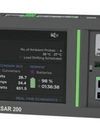
Omnion Power Provides Modular, Scalable DC Power System Monitoring and Control with New Pulsar 200 Controller
Omnion Power is helping to redefine the role of the DC power system controller with its next-generation Pulsar 200 platform.
1 mins
February 2026

Circuit Cellar
Robot Operating System 2 (ROS 2): Core Concepts, Architecture, and Real-World Capabilities
The Robot Operating System 2 (ROS 2) is an open-source, middleware framework that addresses the communication and coordination challenges inherent in modern, distributed robotic systems. In this article, Pedro details how ROS 2's architectural foundations successfully address the core limitations of its predecessor, ROS 1, using real-world scenarios, and steps for setting up the ROS 2 Foxy environment on Ubuntu Linux distro, and cross-platform communication between a host PC and a Raspberry Pi module.
14 mins
February 2026

Circuit Cellar
Ambiq Unveils Atomiq, the World's First Ultra-Low Power NPU SoC Built on SPOT
Ambiq Micro, Inc., a recognized leader in ultra-low-power semiconductor solutions for edge AI, announced Atomiq, the highly anticipated system-on-chip (SoC) integrating a Neural Processing Unit (NPU) designed to enable real-time, always-on artificial intelligence at the edge.
1 mins
February 2026
Listen
Translate
Change font size