試す 金 - 無料
DEAD RECKONING
The New Yorker
|June 30, 2025
A museum of medical history asks what we owe the past.
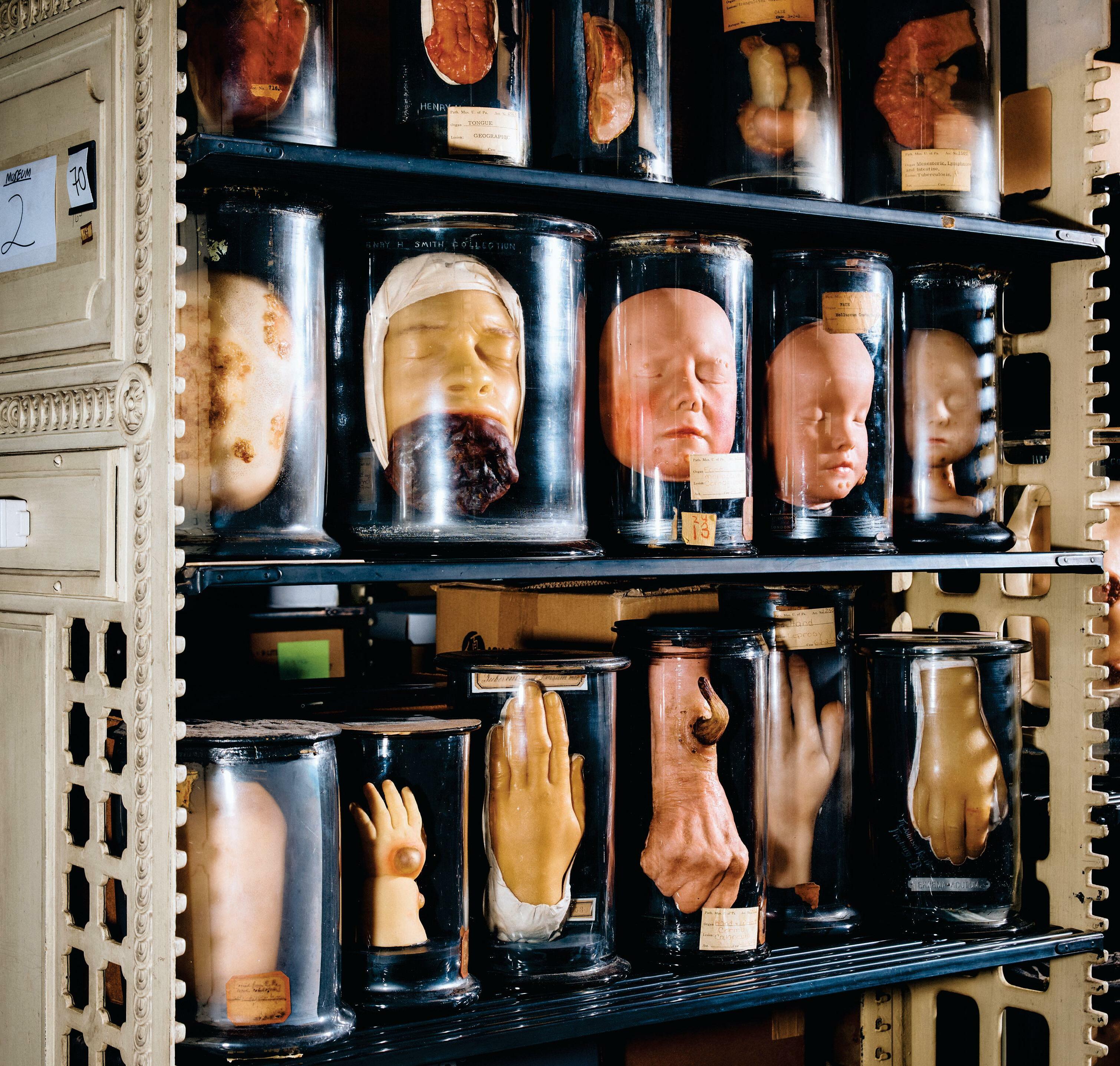
The Mütter's supporters saw a celebration of human difference. But new management saw an ethical minefield, a distasteful reminder of the sordid history of medicine.
When Anna Dhody was growing up in Philadelphia, in the nineteen-eighties, her mother used the city's museums as a kind of babysitter. “She would just drop me off at the Penn Museum and be, like, ‘Don't touch anything, I'll meet you at the totem poles in an hour,” Dhody told me. One day, when she was in elementary school, her mother took her to the Mütter Museum. “I don’t think she knew what she was getting into,” Dhody said.
The Mütter, a museum of medical history, is stranger and less clinical than that description implies. Its dimly lit rooms are crowded with specimens of physical anomalies and pathologies: stillborn fetuses in jars, slices of faces suspended in an alcoholic solution, a wall of nineteenth-century skulls. One display case features the livers of Chang and Eng Bunker, conjoined twins who were widely exhibited as curiosities during the nineteenth century; in another is the corpse of a woman whose fat transformed after death in an unusual form of natural preservation called saponification. The Soap Lady, as she is known at the Mütter, has rough, blackened skin, and her mouth is open, as if in a scream. A banner outside the museum, which was founded more than a hundred and sixty years ago, reads “Disturbingly informative.” Every so often, a visitor faints.

このストーリーは、The New Yorker の June 30, 2025 版からのものです。
Magzter GOLD を購読すると、厳選された何千ものプレミアム記事や、10,000 以上の雑誌や新聞にアクセスできます。
すでに購読者ですか? サインイン
The New Yorker からのその他のストーリー
The New Yorker
CALIFORNIAN SUBLIME
Esa-Pekka Salonen returns to the Ojai Music Festival.

7 mins
July 06-13, 2026 (Double Issue)
The New Yorker
PIG LAB
Late as I was, I figured I'd be walking right into an active scenario.
19 mins
July 06-13, 2026 (Double Issue)
The New Yorker
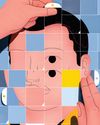
REGRESSION TO THE MIEN
How mirrors, selfies, and surveillance have changed what we make of our faces.
18 mins
July 06-13, 2026 (Double Issue)
The New Yorker
THE GREAT INFESTATION
Lone-star ticks don’t just pursue and bite people. They attack a way of life.
35 mins
July 06-13, 2026 (Double Issue)

The New Yorker
ROBOT REVOLUTION
Are the humanoids ready to be deployed?
22 mins
July 06-13, 2026 (Double Issue)
The New Yorker
BILLIONAIRES’ VAGINA CLUB
Dr. Sally Greenwald optimizes orgasms for the women of Silicon Valley.
26 mins
July 06-13, 2026 (Double Issue)
The New Yorker
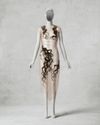
ELEVATED LOOKS
The Met’s “Costume Art” makes a case for fashion.
6 mins
July 06-13, 2026 (Double Issue)

The New Yorker
PARTY ON
At Pacha New York, an infamous night club is reborn.
6 mins
July 06-13, 2026 (Double Issue)
The New Yorker
MY GREAT MEETING WITH GOD
He called me. I want to be clear about that. I didn't call Him. He invited me up personally.
2 mins
July 06-13, 2026 (Double Issue)

The New Yorker
NO RETURN
Did an experienced climber leave his girlfriend to die at the top of a mountain?
38 mins
July 06-13, 2026 (Double Issue)
Listen
Translate
Change font size