試す 金 - 無料
CONTINENTAL DREAMS
The New Yorker
|October 13, 2025
African independence was a time of high hopes. What happened?
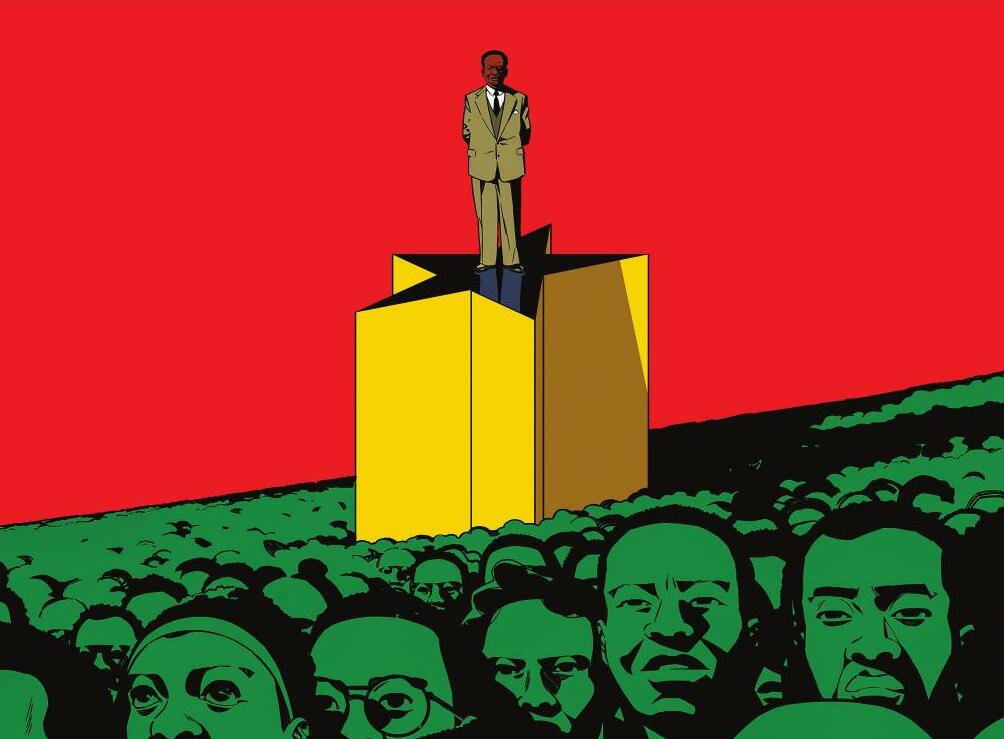
In June, 1952, Ebony announced that a new era was dawning. “Africa is rather quickly awakening from its 1,000-year slumber,” the magazine proclaimed, and it named one figure as the personification of this revival: Kwame Nkrumah, of the Gold Coast, a British colony in West Africa, who had “one of the most illustrious titles held by any Negro anywhere in the world.” He was the colony’s first Prime Minister—and, people were realizing, its last. The Gold Coast was on its way to becoming an independent nation called Ghana, owing in large part to Nkrumah, whom Ebony hailed as the leader of a “bloodless revolution” transforming Africa. When Ghana declared independence, in 1957, dignitaries from around the world descended on the capital, Accra. Two especially high-profile visitors came from the United States: Richard Nixon, then the Vice-President, and Martin Luther King, Jr., fresh from his victory over bus segregation, who reportedly told Nixon, “We are seeking the same kind of freedom the Gold Coast is celebrating.”
In many ways, Ebony got it right. Nkrumah became not only a head of state but a global symbol of freedom, and the continent followed his lead. By the mid-nineteen-sixties, Africa had been transformed from a patchwork of colonies to one of mostly independent countries, each devoted, at least in theory, to self-determination. But, in Ghana, Nkrumah grew increasingly authoritarian—he styled himself “Osagyefo,” the Redeemer—and increasingly unpopular, and when the military overthrew him, in 1966, there was relatively little protest. Nine years is a short time in which to achieve redemption, but a fairly long time to serve as an elected head of state. Other African leaders would have terms either too short, broken by coups or assassinations, or too long, extended by a refusal to leave office; Nkrumah’s tenure somehow managed both. After the coup,

このストーリーは、The New Yorker の October 13, 2025 版からのものです。
Magzter GOLD を購読すると、厳選された何千ものプレミアム記事や、10,000 以上の雑誌や新聞にアクセスできます。
すでに購読者ですか? サインイン
The New Yorker からのその他のストーリー

The New Yorker
VISITING HOURS
In Harriet Clark's début novel, a prisoner's daughter must find her way.

10 mins
May 11, 2026

The New Yorker
REVAMPS
Two new musicals on Broadway, \"Schmigadoon!\" and \"The Lost Boys.\"
7 mins
May 11, 2026

The New Yorker
RESOLVED
High-school debate, our real national pastime.
4 mins
May 11, 2026

The New Yorker
THE BIG PICTURE
Frederic Church turned landscape into a vision of national virtue.
17 mins
May 11, 2026

The New Yorker
COUTURE SHOCK
\"The Devil Wears Prada 2.\"
6 mins
May 11, 2026
The New Yorker
THE SHOT HEARD ROUND THE WORLD?
The American Revolution was just one front in a vast global war. Which went rather well for the Brits.
16 mins
May 11, 2026

The New Yorker
CROSSROADS
The inventor of “intersectionality” looks back—and ahead.
16 mins
May 11, 2026
The New Yorker
WHAT WE HOLD
The writing and meaning of the Declaration of Independence.
19 mins
May 11, 2026

The New Yorker
STANDINGS
My given name, Jeon-Gi, with a hard “G,” was one that some of the kids in my apartment complex enjoyed deforming.
33 mins
May 11, 2026

The New Yorker
AMERICAN TWEEN
In some ways, the world is cooked. But being a twelve-year-old still kind of eats.
33 mins
May 11, 2026
Listen
Translate
Change font size