試す 金 - 無料
NOSE TO TAIL
Archaeology
|September/October 2023
Los Angeles' first Chinatown was settled starting around 1880, south of the city's historic center, the Los Angeles Plaza. Over the next two decades, the densely populated neighborhood expanded to the northeast and became home to a range of Chinese-owned businesses. These included markets that sold fare such as plum sauce for seasoning roast meat and restaurants that served up delicacies such as bird's nest soup and century eggs.

Like all Chinese immigrants to the United States, Chinatown's residents suffered from the 1882 Chinese Exclusion Act, which barred most Chinese laborers from entering the country and led to harsh scrutiny of those already present. Its population peaked around the turn of the twentieth century and then began to decline, as it was provided almost no municipal services. The enclave was largely razed in 1934 to make way for a new railway terminal. A few years later, a pair of competing projects-China City and New Chinatownwere established about a mile from the old neighborhood, and later merged to form the Chinatown that exists to this day.
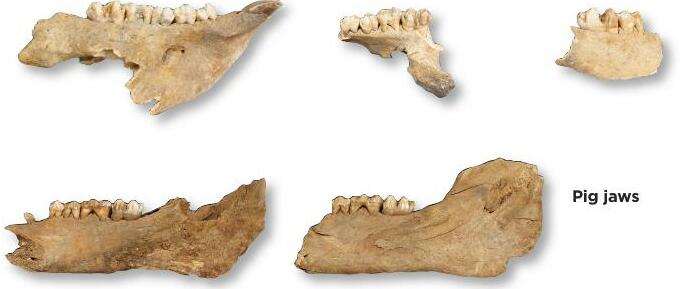
Construction of a subway station in the late 1980s to early 1990s offered a team led by archaeologist Roberta Greenwood of Greenwood and Associates the opportunity to excavate a portion of the city's original Chinatown. The team uncovered a vast array of artifacts, including ceramics, glass, metal, plant remains-and 4,506 animal bones that offered clues to what people in the neighborhood ate. The evidence suggested that pork was by far the most widely consumed meat and many of the pork bones had been chopped into one-to three-inch lengths suitable for grasping with chopsticks.

このストーリーは、Archaeology の September/October 2023 版からのものです。
Magzter GOLD を購読すると、厳選された何千ものプレミアム記事や、10,000 以上の雑誌や新聞にアクセスできます。
すでに購読者ですか? サインイン
Archaeology からのその他のストーリー
Archaeology
THE EGYPTIAN SEQUENCE
Until now, the earliest Egyptians to have even part of their DNA sequenced were three people who lived between 787 and 544 B.C.

1 mins
November/December 2025
Archaeology
SOURCE MATERIAL
As early as 40,000 years ago, some hunter-gatherers in southern Africa ventured long distances to procure special types of stone to make their tools.
1 min
November/December 2025

Archaeology
Secrets of the Seven Wonders
How archaeologists are rediscovering the ancient world's most marvelous monuments
13 mins
November/December 2025
Archaeology
ACTS OF FAITH
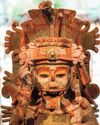
Evidence emerges of the day in 1562 when an infamous Spanish cleric tried to destroy Maya religion
12 mins
November/December 2025

Archaeology
OASIS MAKERS OF ARABIA
Researchers are just beginning to understand how people thrived in the desert of Oman some 5,000 years ago
8 mins
November/December 2025

Archaeology
FOSSIL FORCE
One of the planet's most successful arthropods, trilobites, abounded in the oceans from about 520 million to 250 million years ago.
1 min
November/December 2025
Archaeology
BIGHORN MEDICINE WHEEL, WYOMING
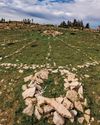
Perched almost 9,700 feet above sea level on Medicine Mountain in Wyoming's Bighorn Range, the Medicine Wheel is an 80-foot-diameter circular structure made from limestone boulders.
2 mins
November/December 2025
Archaeology
ANCIENT LOOK BOOK
A young woman buried in China's Tarim Basin some 2,000 years ago went to the afterlife accompanied by the height of fashion.
1 mins
November/December 2025
Archaeology
A FAMILIAR FACE
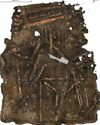
In the early eleventh century, a landslide on the island of Ostrów Lednicki in western Poland caused a hillfort to collapse and slip to the bottom of Lake Lednica.
1 min
November/December 2025
Archaeology
Temples to Tradition
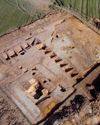
A looted cache of bronzes compels archaeologists to explore Celtic sanctuaries across Burgundy
13 mins
November/December 2025
Translate
Change font size