試す 金 - 無料
TAPPING THE UNCHARTED WATERS
SP’s Aviation
|Issue 11, 2024
Seaplane services are expected to transform regional connectivity in India, boost tourism, create jobs, and foster economic development, particularly in hard-to-reach coastal and inland regions

IF YOU LOOK AT INDIA'S TOPOGRAPHICAL MAP, YOU WILL realise that India has a long coastal line of thousands of kilometres stretching across nine states and four union territories namely Gujarat, Maharashtra, Goa, Karnataka, Kerala, Tamil Nadu, Andhra Pradesh, Odisha, and West Bengal and Union Territories Daman and Diu, Puducherry, Lakshadweep Islands, and Andaman and Nicobar Islands.
In order to give a final push to the seaplane service, the government in August 2024 released new Directorate General of Civil Aviation (DGCA) rules for seaplanes allowing non-scheduled operators to provide such services. The rules were simplified with the aim to encourage seaplane operations under the regional air connectivity scheme UDAN (Ude Desh ka Aam Nagrik).
A BRIEF HISTORY OF SEAPLANE SERVICE IN INDIA
Looking at this huge opportunity, SpiceJet along with Government of Gujrat introduced a seaplane service in October 2020 from Ahmedabad to a famous tourist spot about 200 kilometers away – ‘Kevadia’- home to the new ‘Statue of Unity’ of Former Deputy Prime Minister Sardar Patel.
The new service was inaugurated by Prime Minister Narendra Modi, who joined the first flight and took the 50-minute ride from Kevadia to the Sabarmati Riverfront in Ahmedabad. Just as the first flight took off, it was clear that the service was headed for rough waters. It was found that SpiceJet did not have the necessary environmental clearances related to the construction of water aerodromes in both cities. Apart from the regulatory issues, there were serious maintenance issues with the aircraft in operation.


このストーリーは、SP’s Aviation の Issue 11, 2024 版からのものです。
Magzter GOLD を購読すると、厳選された何千ものプレミアム記事や、10,000 以上の雑誌や新聞にアクセスできます。
すでに購読者ですか? サインイン
SP’s Aviation からのその他のストーリー

SP’s Aviation
AVIATION'S NEW FUEL DIVIDE
Differential fuel pricing emerges for the first time, raising questions on cost allocation and the future of business aviation

3 mins
Issue 4, 2026

SP’s Aviation
LESSONS FROM THE IRAN WAR
How Air Power Shaped the USA/Israel-Iran War and Strategic Lessons from the Conflict
7 mins
Issue 4, 2026

SP’s Aviation
ACCELERATING MARKET MOMENTUM
With Record participation, AERO Friedrichshafen 2026, Europe's Leading General Aviation Show, Delivers a Landmark Edition
5 mins
Issue 4, 2026
SP’s Aviation
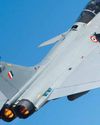
MAJOR IAF BOOST WITH RAFALE, MTA AND AEW&C DEALS
The scale of acquisitions signals a shift from incremental upgrades to preparing for high-intensity, technology-led warfare. If executed well, they could rebuild IAF squadron strength, boost readiness, and strengthen deterrence.
3 mins
Issue 4, 2026

SP’s Aviation
TRANSFORMING THE FUTURE OF HUMAN SPACE EXPLORATION
After a 10-day journey that took humanity farther from Earth than ever before, the four astronauts of Artemis II splashed down on Earth, completing a mission that validated NASA's entire deep- space architecture, paving the way for the next generation of human space exploration
7 mins
Issue 4, 2026

SP’s Aviation
COUNTING CRORES – INDIA'S BUSINESS JET MARKET IS ABOUT TO BOOM
India's business aviation market holds strong untapped potential, with expectations of significant fleet expansion and broader market development by 2030
3 mins
Issue 4, 2026

SP’s Aviation
TRANSFORMING INDIA'S HELICOPTER LANDSCAPE
In a major push to developing India's Helicopter Ecosystem, Adani and Leonardo have announced a MoU to build a Helicopter Manufacturing Hub
2 mins
Issue 4, 2026

SP’s Aviation
FALCON 10X UNVEILED
Dassault Aviation Redefines the Ultra-Long-Range Business Jet Segment
4 mins
Issue 4, 2026

SP’s Aviation
AIRCRAFT MANAGEMENT: THE CASE FOR DECOUPLING
Why India Needs Specialised Aircraft Management Companies for its Business Aviation Sector
3 mins
Issue 4, 2026

SP’s Aviation
DEVELOPING A SUSTAINABLE DOMESTIC MRO ECOSYSTEM
India is expanding its civil aviation MRO infrastructure, but without deeper component repair capability, regulatory alignment and supply-chain control, it risks creating capacity without sovereignty and continued reliance on foreign maintenance ecosystems
8 mins
Issue 1, 2026
Listen
Translate
Change font size