
Magzter GOLDで無制限に
10,000以上の雑誌、新聞、プレミアム記事に無制限にアクセスできます。
試す 金 - 無料
JULIE SWEET
Fortune Europe
|August - September 2025
Accenture's CEO has quietly built the consulting company into a go-to expert on mastering Al. But can she save her industry from being replaced by robots?

IN THE EARLY HOURS of Russia's invasion of Ukraine, on Feb. 24, 2022, world leaders published statements denouncing Vladimir Putin's aggression, and historic monuments around the world were lit up in blue and yellow, the colors of Ukraine's flag. As the death toll began to climb, executives of companies with operations in Russia began debating whether it was ethical to stay engaged with the country at all.
Accenture, the consulting and tech services company, had a $120 million business and 2,300 employees in Russia at the time. At its Washington, D.C., offices, chief executive Julie Sweet huddled with her top brass.
“We got off the phone after one of those calls, and Julie said, ‘We're getting out of Russia,'” Accenture general counsel Joel Unruch recalled. “With less than 24 hours of thinking. The next day, we announced it.”
Accenture’s announcement on March 3 was just one week after the invasion had started—and by April 1, Accenture was out. Sweet spun off the company’s Russia operation and gave it to the firm's in-country employees, incurring a $96 million loss.
“Sometimes the right thing to do is not clear,” Sweet says now. “But Russia was super clear.” She explained: “This was not one of those things where we wanted to wait and see, 'What will others do?'”
 Accenture's value has almost doubled since the year before Julie Sweet became CEO, from $90 billion in 2018, when it was No. 316 on the Global 500 list, to $176 billion in July, at No. 211 on the 2025 list. Its growth has been fueled in part by her ambitious M&A approach—including 46 acquisitions last year.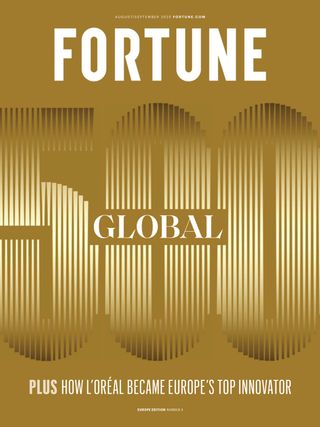

このストーリーは、Fortune Europe の August - September 2025 版からのものです。
Magzter GOLD を購読すると、厳選された何千ものプレミアム記事や、10,000 以上の雑誌や新聞にアクセスできます。
すでに購読者ですか? サインイン
Listen
Translate
Change font size