
Magzter GOLDで無制限に
10,000以上の雑誌、新聞、プレミアム記事に無制限にアクセスできます。
試す 金 - 無料
THE FORCE IS WITH THEM
Forbes India
|April 03, 2026
Investments in new platforms, operational discipline and renewed strategic focus helped Force Motors turn the pandemic shock into a period of rapid growth
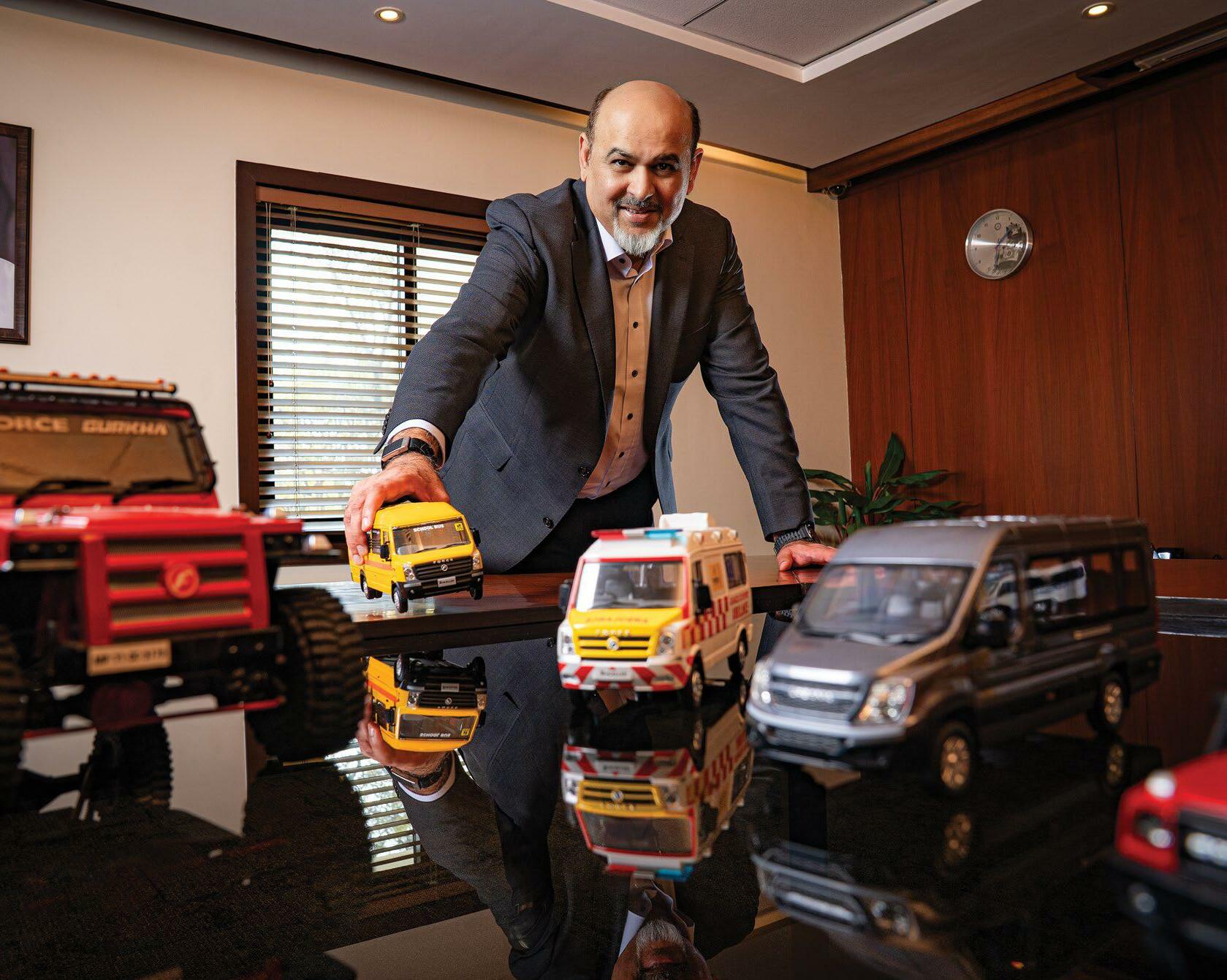
"Knowing what not to do is just as important as knowing what to do."
Prasan Firodia, 47
MANAGING DIRECTOR, FORCE MOTORS
INTERESTS OUTSIDE WORK: Driving; recently took a driving holiday in New Zealand
WHY HE WON THE AWARD: For focusing the company on its core offering—passenger mobility—and exiting nonperforming businesses
In January 2020, at the Delhi Auto Expo, Force Motors unveiled the Urbania (codenamed the T1N), a vehicle that would come to define a turning point in the company's trajectory. Built over five years, the new platform had cost Force Motors about ₹1,000 crore and aimed at creating a premium mobility segment in India while meeting international standards. Within weeks of that showcase, the pandemic brought the world—and Force's core business of shared mobility—to a halt.
The timing was brutal and Prasan Firodia, managing director at Force Motors and the third-generation of the family to run the business, still shudders when he recalls those days.
Before Covid, Force Motors had a steady if financially modest business. Revenues were about ₹3,000 crore. It was profitable but it had a single-digit return on equity. Significant capital expenditure— over ₹2,000 crore across three new platforms—had gone into the Urbania, a redesigned Trax utility vehicle and a monocoque bus. The company was also spread across tractors, three-wheelers and small goods carriers. Growth was modest, margins were thin and returns on capital were under pressure because the new platforms had not begun to contribute meaningfully.
Then shared mobility disappeared and plant utilisation dropped to 20 percent as schools shut for two years. In a manufacturing business with high fixed costs—depreciation, salaries, interest and plant overheads—such utilisation levels are devastating. Contribution margins get wiped out quickly when volumes shrink, and the burden of fixed expenses becomes disproportionate.


このストーリーは、Forbes India の April 03, 2026 版からのものです。
Magzter GOLD を購読すると、厳選された何千ものプレミアム記事や、10,000 以上の雑誌や新聞にアクセスできます。
すでに購読者ですか? サインイン
Listen
Translate
Change font size