
Magzter GOLDで無制限に
10,000以上の雑誌、新聞、プレミアム記事に無制限にアクセスできます。
試す 金 - 無料
Mapping the unseen
Farmer's Weekly
|March 27 - April 3, 2026
Soil mapping is transforming how farmers understand and manage variability within their fields. By combining soil samples, GPS data, sensors, and digital modelling, modern soil mapping reveals differences in soil fertility, texture, and moisture that are invisible to the eye.
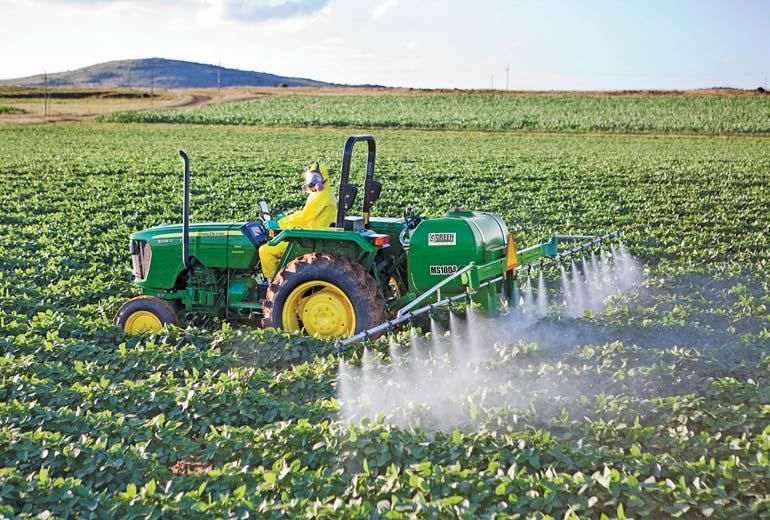
Officials and scientists often say: "You cannot manage what you cannot measure. Soil mapping makes the invisible visible."
For generations, farmers have relied on experience, observation, and instinct to guide production decisions. Yet one of the crucial factors influencing crop performance - the soil - often remains poorly understood at field level. While a stretch of land may appear uniform, soil properties can vary significantly within a single field, affecting yield potential, input efficiency, and profitability.
The challenge is that this variability is invisible. Differences in soil texture, fertility, and moisture cannot be seen from the tractor seat, and managing a field as a single unit often leads to over-application of inputs in some areas and under-application in others. Soil mapping technology is changing this. By combining field measurements with digital tools and predictive modelling, farmers can now visualise and manage soil variability with far greater precision.
What was once hidden beneath the surface is increasingly becoming a critical decision-making tool on the modern farm.
FROM SOIL SAMPLES TO DIGITAL MAPS
Soil mapping is the process of identifying and displaying how soil properties vary across a field. Traditional soil surveys provided useful information, but were often applied uniformly across entire lands, masking crucial differences.
Modern soil mapping, often referred to as digital soil mapping, takes a different approach. Instead of measuring soil everywhere, samples are collected at selected locations and combined with environmental data and modelling techniques to estimate soil properties across the entire field.
This process integrates:
- measured data from soil samples;
- environmental data such as terrain, vegetation, and climate;
- statistical or machine learning models to predict soil properties between sampling points.

このストーリーは、Farmer's Weekly の March 27 - April 3, 2026 版からのものです。
Magzter GOLD を購読すると、厳選された何千ものプレミアム記事や、10,000 以上の雑誌や新聞にアクセスできます。
すでに購読者ですか? サインイン
Farmer's Weekly からのその他のストーリー
Farmer's Weekly
Egon Zunckel: a lifetime of learning from the soil
The Zunckel name is synonymous with no-till farming in South Africa. Egon Zunckel, a pioneer in the field and a passionate advocate for soil health, shared with Lindi Botha the lessons he has learnt over the years about building resilient soils and sustainable farming systems.

10 mins
March 27 - April 3, 2026
Farmer's Weekly
Researchers explore new tools to combat herbicide resistance
Research by students from Stellenbosch University aimed at combatting herbicide resistance was highlighted during a recent technical trial information day hosted by the Western Cape Department of Agriculture.
6 mins
March 27 - April 3, 2026

Farmer's Weekly
Lepas leaps into South Africa as the latest Chery-owned brand
Lepas has become Chinese carmaker Chery's latest local subbrand with the introduction of the L4 compact SUV. The Citizen's Charl Bosch reports.
2 mins
March 27 - April 3, 2026

Farmer's Weekly
La Rhone Limousins: a small mixed herd turned renowned stud
The Western Cape is not typically known for cattle farming, particularly in its fruit-growing regions. Yet nestled among the orchards below the mountains of Tulbagh is a Limousin stud that has made a name for itself. AJ du Toit of La Rhone Limousins spoke to Henning Naudé about producing high-quality genetics now found on farms in all nine provinces.
6 mins
March 27 - April 3, 2026
Farmer's Weekly
Nitrogen: no easy fix
Products that claim to herald a nitrogen revolution that will boost global food production are nothing more than snake oil, say scientists.
4 mins
March 27 - April 3, 2026

Farmer's Weekly
Potato soup
Rich, creamy, and indulgent, this soup is the ultimate in comfort food.
1 mins
March 27 - April 3, 2026

Farmer's Weekly
Fill your Easter basket with some books
Patricia McCracken has put together a delightful cocktail of titles to tuck into during the April long weekend break that offers the bookworm an appetising alternative to the traditional sweet treats.
3 mins
March 27 - April 3, 2026
Farmer's Weekly
New Holland T7 and T6000 tractor series
In line with the advancement of technology, implements, and systems in the agriculture sector, New Holland is modifying their new-generation tractors to keep pace with farmers' needs in the future, writes Jaco du Preez.
2 mins
March 27 - April 3, 2026

Farmer's Weekly
The kiss of the golden serpent
The Swedish zoologist Carl Linnaeus captured a Cape cobra at the Cape of Good Hope in 1758 and introduced it to science for the first time. Mike Burgess investigates why and how these incredibly well-adapted snakes are often involved in deadly interactions with humans.
3 mins
March 27 - April 3, 2026
Farmer's Weekly
Diamond-back moth remains a key pest to monitor in South African canola
Canola is a cornerstone of South Africa's winter rainfall region, with record yields approaching 300 000t. While it boosts soil health and diversification, the crop remains highly vulnerable to the rapid three-week life cycle of the diamond-back moth. Success depends on early detection of 'windowing' feeding patterns to protect stands and maintain industry momentum.
4 mins
March 27 - April 3, 2026
Listen
Translate
Change font size