試す 金 - 無料
How women are transforming coffee production in Kenya
Farmer's Weekly
|November 21-28, 2025
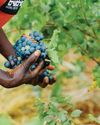
A group of Kenyan smallholder women farmers are transforming the country's high-value coffee sector by pooling their resources.
-
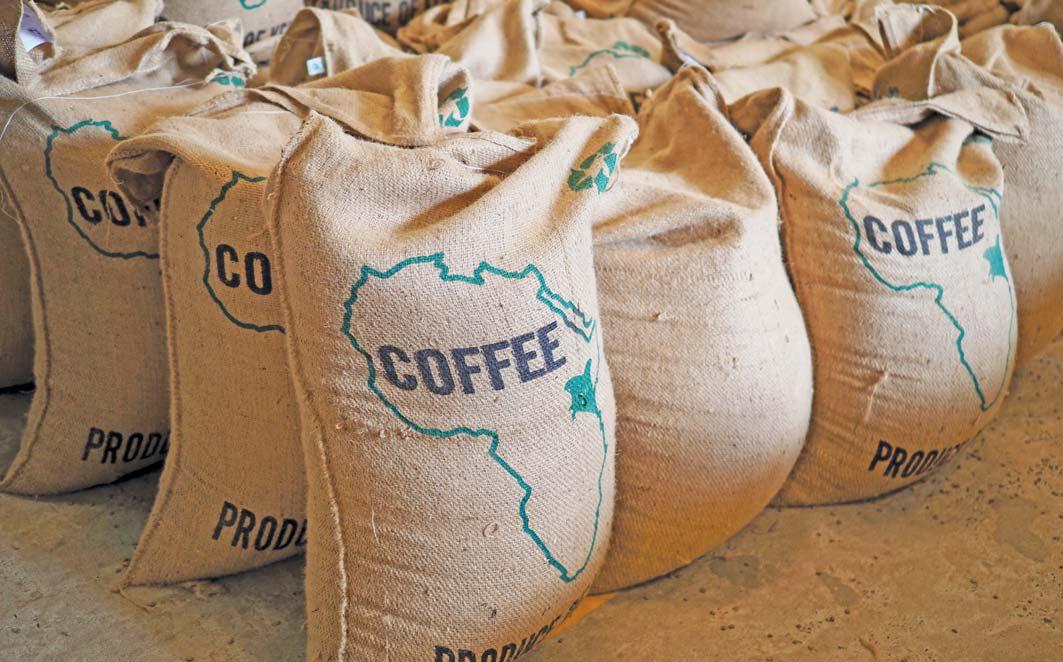
When we drink coffee, we focus on the fragrant brew or the ritual of brewing a cup of coffee.
Thinking about the global network of growers, pickers, roasters, and traders making our cup of coffee possible is most often very far removed from our thoughts.
In Kenya, coffee is an important component of the country's economy and one of the top three export crops. The coffee industry provides employment to thousands of farmers and workers. About 60% of the best coffee in Kenya is produced by smallholder farmers, of which many are women. The coffee sector has, however, faced some challenges that particularly impacted women involved in the industry.
WOMEN IN COFFEE
On the highlands of the Great Rift Valley in Kenya a small shareholder women farmers' group, North of the Rift Women in Coffee (NORT), is growing speciality single origin Arabica coffee. NORT is based in Trans-Nzoia County where agriculture is the main economic driver.
Speaking at the 2025 congress of the International Federation of Agricultural Journalists held in Nairobi, Kenya, from 15 to 18 October, and hosted by Media for Environment, Science, Health and Agriculture, Christine Masta, communications, public and government affairs manager at BASF in Kenya, said BASF was working with NORT to improve women's economic participation along the coffee value chain. “This group of women is transforming Kenya’s coffee industry by pooling their resources. Through their collaboration, they are challenging traditional barriers in the industry and redefining the role of women.
“By promoting best practices and providing training in agricultural knowledge, services, and markets, BASF is equipping women coffee farmers with the tools they need to thrive and to open up new opportunities,” Masta stated.
This is especially important, taking into account the current challenges, she added.

このストーリーは、Farmer's Weekly の November 21-28, 2025 版からのものです。
Magzter GOLD を購読すると、厳選された何千ものプレミアム記事や、10,000 以上の雑誌や新聞にアクセスできます。
すでに購読者ですか? サインイン
Farmer's Weekly からのその他のストーリー
Farmer's Weekly
Infrastructure, policy, and finance will be the African continent's growth drivers
Africa's agricultural potential is vast, but inefficiencies in infrastructure, trade policy, and finance limit growth. Investments in transport, cold storage, irrigation, and digital trade systems, among others, are key to unlocking faster, cheaper, and more efficient agricultural trade.

3 mins
January 2-9, 2026

Farmer's Weekly
SAPPO Academy showcases skills development and small business success
The South African Pork Producers' Organisation (SAPPO) Academy, a training organisation that promotes animal, environmental, and public health in the pig industry through knowledge transfer, recently hosted a mini development symposium in Pretoria. The event included an afternoon of meaningful dialogue, strategic learning, and leadership exchange, effectively bridging academic insight with real-world industry innovation.
3 mins
January 2-9, 2026

Farmer's Weekly
Backing for SA Canegrowers as sugar imports soar
Coenie Snyman, winemaker and founder of Rock of Eye Wines, was named the 2025 Diners Club Winemaker of the Year for his Rock of Eye Cabernet Sauvignon 2022, while Marnich Aucamp, assistant winemaker at Stellenbosch Vineyards, won the Young Winemaker of the Year award for his Stellenbosch Vineyards Credo Chenin Blanc 2024 at a gala dinner near Kleinmond in the Western Cape.
1 mins
January 2-9, 2026
Farmer's Weekly
New or used? A practical guide to second-hand farm equipment
Second-hand farm machinery can deliver excellent value, if you know what to look for. Western Cape equipment broker Debbie Smit gave Lindi Botha practical advice to help farmers decide when to buy new, when pre-owned is the smarter choice, and how to avoid the costly pitfalls that often catch buyers off-guard.
4 mins
January 2-9, 2026
Farmer's Weekly
The story of the Drakensberger beef cattle breed's evolution in Africa
The Drakensberger cattle breed has been part of the South African landscape for ages. So-called black indigenous cattle existed in South Africa as early as the 15th and 16th centuries and formed the foundation of the current Drakensberger beef cattle breed.
4 mins
January 2-9, 2026
Farmer's Weekly
Man vs machine - which works best in SA's farming sector?
South African farmers have embraced both mechanisation and staffing solutions to improve farm level efficiency. Sabrina Dean investigated the pros and cons of both and filed this report.
9 mins
January 2-9, 2026
Farmer's Weekly
SA's poultry industry must be more inclusive and sustainable
In spite of great progress made over the past 30 years in South Africa's poultry value chain, setbacks such as avian influenza and trade restrictions are calling for official intervention
2 mins
January 2-9, 2026
Farmer's Weekly
An introduction to forward contracts and commodity futures for South African farmers
The agriculture sector is notoriously volatile, but producers can find stability using financial derivative tools. This article clearly defines and differentiates between two key instruments: forward contracts and futures contracts.
3 mins
January 2-9, 2026
Farmer's Weekly
Less tillage, more life: the machines and techniques behind soil recovery
Soil health is the foundation of global food security, environmental quality, and agricultural sustainability. According to expert Dr Hendrik Smith, reversing the cycle of soil degradation requires the continuous application of regenerative conservation agriculture principles, with no-tillage cultivation being nonnegotiable.
4 mins
January 2-9, 2026

Farmer's Weekly
Five Joburg hotels that make business a pleasure
Even with its well-documented problems, Johannesburg remains the centre of business in South Africa. And unlike some cities with their mountains and oceans, you'll get value and quality for a fraction of the price at these hotels. There are also great views in the mix. By .
6 mins
January 2-9, 2026
Listen
Translate
Change font size