
Magzter GOLDで無制限に
10,000以上の雑誌、新聞、プレミアム記事に無制限にアクセスできます。
Crocodile farming: the importance of adapting to climate change
Farmer's Weekly
|January 24, 2025
Crocodile farming is a profitable niche industry in South Africa that is focused on supplying premium skins to the global luxury goods market. However, as the effects of climate change intensify, maintaining ideal conditions for these reptiles becomes more difficult. Sinenhlanhla Mnewango spoke to two farmers about how they're tackling these challenges while supporting conservation and economic growth in the country.
-
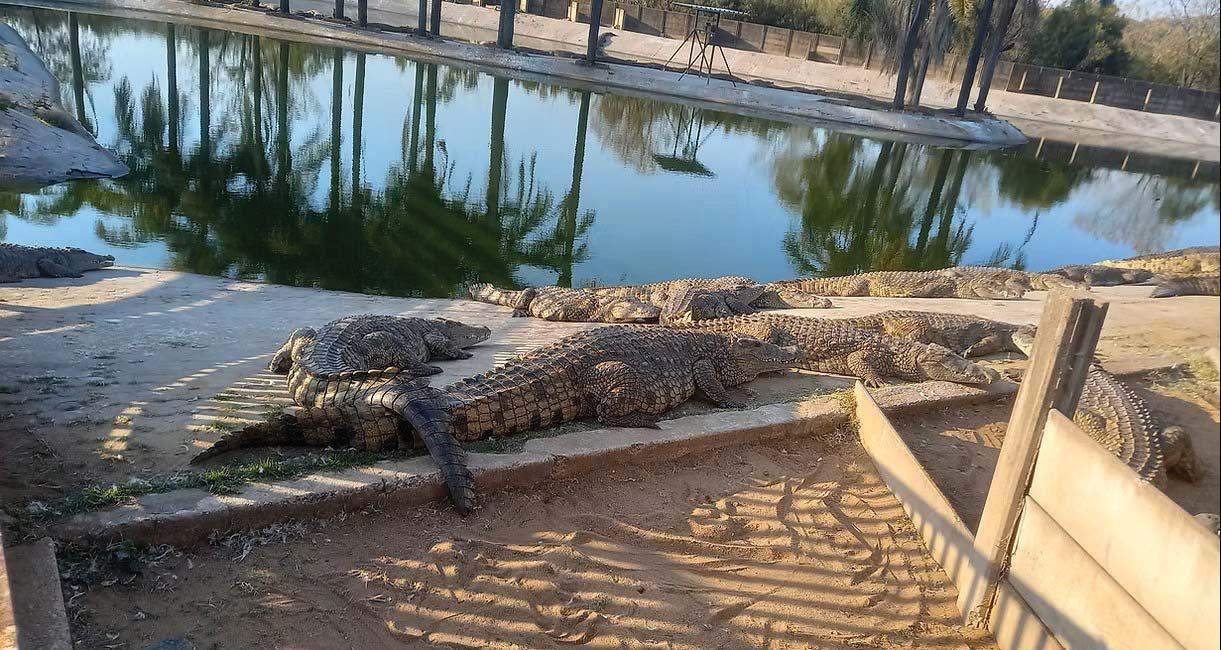
Crocodile farming is a specialised industry that blends luxury and sustainability. But like producers in other agricultural industries around the world, South African crocodile farmers must grapple with climatic factors that significantly influence their operations and profitability.
Stefan van As, founder and managing director of Le Croc, a crocodile farm and tannery near Brits, North West, explains that crocodiles are ectothermic, which means they rely on external environmental conditions to regulate their body temperatures.
In the wild, they thrive in tropical and subtropical regions with stable climates, suitable temperatures and year-round access to water. However, South Africa’s climate, characterised by seasonal extremes, poses challenges for the industry.
“Maintaining an optimal and stable body temperature of 32°C for a crocodile requires specialised housing and stable environmental conditions,” says Van As.
“A prolonged drop in [body] temperature below 22°C can cause a crocodile to stop eating, leading to growth loss. Conversely, a body temperature that exceeds 35°C can result in heat stress and even mortality.”
To counteract these temperature fluctuations, Van As says many farms invest heavily in infrastructure, including solar-powered heating systems and water-management technologies. Such measures ensure crocodiles can thermoregulate effectively, but they come at significant operational costs, particularly during prolonged cold spells or heatwaves.
He adds that the need for controlled environments has turned crocodile farming into a capital-intensive venture. Housing must provide basking areas for warmth, shaded zones for cooling, and bodies of water to facilitate natural behaviours.
Advanced monitoring systems are also crucial to detect and manage extreme temperatures.


このストーリーは、Farmer's Weekly の January 24, 2025 版からのものです。
Magzter GOLD を購読すると、厳選された何千ものプレミアム記事や、10,000 以上の雑誌や新聞にアクセスできます。
すでに購読者ですか? サインイン
Farmer's Weekly からのその他のストーリー

Farmer's Weekly
Christmas books to charm and delight
During the holiday season, one usually takes a well-earned break from the daily rutt, and there is no better time to catch up on some reading. Patricia McCracken has selected a wide spectrum of titles to tuck into.

4 mins
December 19-26, 2025
Farmer's Weekly
From chance to choice: a women's rise to farming success
Many raisin producers assume that retiring without a son to take over the farm means the end of the family business. Alcois Blaauw, this year's winner of the Raisins SA Female Producer Award, proves that assumption to be wrong. Glenneis Kriel reports.
4 mins
December 19-26, 2025

Farmer's Weekly
Grandparents below, and kids upstairs!
Dear Jonno,My wife and I want to escape to the countryside.
1 min
December 19-26, 2025
Farmer's Weekly
The Unseen Protector
The belief in the Unseen Protector or Unseen Shepherd endured for around 600 years, from the 13th century up until the 19th century. The farmer or his wife would provide a bowl of fresh cream and gruel to appease a spirit, whose blessing was imperative for a good summer harvest and animal health and fertility.
2 mins
December 19-26, 2025
Farmer's Weekly
THE HITCHING POST
I am a 67-year-old farmer residing on a farm near Harding in KwaZulu-Natal.
1 mins
December 19-26, 2025
Farmer's Weekly
Pet-friendly family accommodation in the Waterberg
With travel time of only a little over three hours from Johannesburg and 30 minutes from Vaalwater, guests will find Waterberg Cottages in Limpopo. Guests can plan a family-friendly holiday or weekend with plenty of activities to keep everyone occupied on this peaceful 2 500ha private game reserve.
4 mins
December 19-26, 2025
Farmer's Weekly
The Shuman legacy continues under the watchful eye of a fifth-generation farmer
Ken Shuman, co-owner of Hilson Shuman Farming, is committed to carrying on his father's towering legacy through innovation and adaptation.
9 mins
December 19-26, 2025

Farmer's Weekly
History's most famous musket
The Brown Bess musket was the standard issue firearm for British forces from 1722 to 1838. As Mike Burgess writes, this much-loved weapon contributed significantly to the consolidation of the British Empire that by 1922 was in control of a quarter of the earth's surface.
4 mins
December 19-26, 2025
Farmer's Weekly
Muddy soil can cause lameness due to footrot
It is important to clean legs and hooves and check for lameness in horses on a daily basis, especially when there is heavy rain
2 mins
December 19-26, 2025
Farmer's Weekly
The role of family farmers in sub- Saharan Africa
As part of the United Nations' recognition of family farming as a vital component of the global agricultural landscape, the decade between 2019 to 1928 was declared the Decade for Family Farming globally. Annelie Coleman compiled this report.
6 mins
December 19-26, 2025
Listen
Translate
Change font size