試す 金 - 無料
Boran adapted to handle tough mountain terrain
Farmer's Weekly
|July 4 - 11, 2025
When crop farmer Riaan Celliers decided to run a cattle farming enterprise with Frik Oosthuizen, they had to think outside the box on numerous levels. The first decision they needed to make was which breed would suit their operation best. They spoke to Sabrina Dean about why they chose the Boran.
-
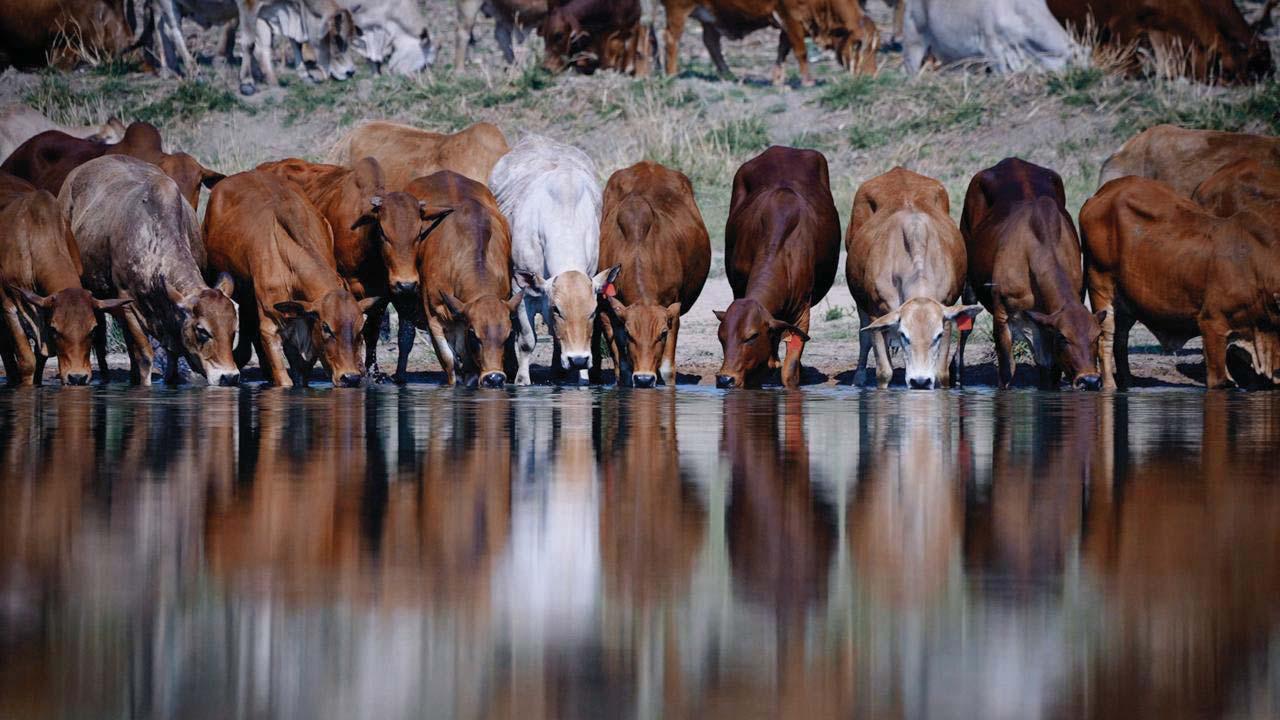
The Cherokee Boran Stud and commercial enterprise operates in the Badplaas area in Mpumalanga, where Riaan Celliers first started farming in 2012.
He says the region, located near the Eswatini border, incorporates an area that the old timers used to refer to as the ‘trek gronde’ (‘migration lands’), a type of middle ground between the Highveld towards Barberton and the Lowveld towards Nelspruit.
“This is the area where they would traditionally move their herds during the winter months as temperatures were up to 5°C warmer than on the Highveld.”
It is a tough area with harsh climate, stony, mountainous terrain, ravines, gorges and a high tick burden. The terrain is varied. The valleys near the rivers, including the Komati River, were cultivated generations ago and planted to irrigated crops. Moving away from here, the terrain changes to mountainous areas, some covered with grassland and bush, some planted to forestry plantations. There are also gorges and ravines full of thick bush, which are warmer and more sheltered at colder times of the year, but are heavily infested with ticks.
For the Cherokee Boran Stud, the summer grazing grounds are up in the mountains, while in the winter months, the herds are moved down to graze stover on croplands or lands planted to cover crops such as rye grass.
NO MAN’S LAND
Celliers says his own farm is surrounded by many tribal and communal lands, with many farms in the region also having been purchased by government for redistribution. In many cases, land was not used for various reasons, including inaccessibility due to the terrain and difficult farming conditions.
However, he and Oosthuizen saw an opportunity in the unused, fallow land surrounding them and decided to introduce a different model.
“There is a lot of talk about changing perceptions [...] this is what we are doing in our operation; changing perceptions and approaches.”
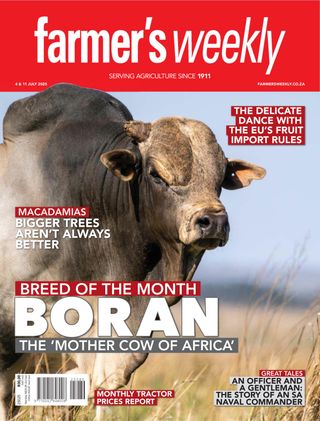

このストーリーは、Farmer's Weekly の July 4 - 11, 2025 版からのものです。
Magzter GOLD を購読すると、厳選された何千ものプレミアム記事や、10,000 以上の雑誌や新聞にアクセスできます。
すでに購読者ですか? サインイン
Farmer's Weekly からのその他のストーリー

Farmer's Weekly
Tropical avo smoothie
Escape to the tropics with this luxurious, creamy, and vibrant smoothie! Blending rich avocado and sweet mango with zesty lime, fragrant mint, and a punch of tangy granadilla, this recipe transforms into a nutrient-packed and silky-smooth treat.

1 min
January 16-23, 2026
Farmer's Weekly
THE HITCHING POST
I am a 60-year-old white woman who loves camping, animals, the outdoors and watching sport.
2 mins
January 16-23, 2026
Farmer's Weekly
The enduring legacy of Tiyo Soga
In the 1850s, Tiyo Soga, a Xhosa man, became the first ordained black South African minister. But as Mike Burgess writes, his legacy would also be determined by his all-round intellectual abilities honed by a solid Scottish education.
4 mins
January 16-23, 2026

Farmer's Weekly
Isuzu D-Max shows single cabs can be comfortable companions
Bakkie manufacturers don't give single cabs to the media due to them generally being regarded as workhorses without the bells and whistles from fancier double cabs. The Citizen's Charl Bosch was gobsmacked when a single cab arrived for a three-month stay.
2 mins
January 16-23, 2026
Farmer's Weekly
South Africa eyes home-grown rice as ARC expands research efforts
South Africa is taking bold steps toward reducing its dependence on rice imports by exploring the viability of home-grown upland rice. Through a major research drive led by the Agricultural Research Council's Small Grain division, scientists and industry partners are testing rice varieties capable of thriving in South Africa's diverse soils and increasingly water-scarce climate. Anelisa Gusha reports.
3 mins
January 16-23, 2026

Farmer's Weekly
Spanish tortilla
Bring the authentic flavours of Spain to your table with this robust and satisfying Spanish tortilla.
1 min
January 16-23, 2026

Farmer's Weekly
New year brings marvellous new titles
Patricia McCracken, like many of us, has settled back into the grind of the new year and picked up a diverse selection of books ranging from travel, to fiction, to non-fiction and a delightful local children's adventure.
2 mins
January 16-23, 2026
Farmer's Weekly
Nitrogen 'switch' unlocks greener crops
A ground-breaking discovery by molecular biology professors Kasper Røjkjær Andersen and Simona Radutoiu at Aarhus University in Denmark offers a significant step toward developing self-fertilising grain crops, potentially revolutionising agriculture to be greener and more climate-friendly.
1 min
January 16-23, 2026
Farmer's Weekly
Sweet prospects: the current state of litchi production in South Africa
Bram Snijder, agricultural consultant and chairperson of the South African Litchi Growers' Association, spoke to Octavia Avesca Spandiel about the litchi industry embracing new opportunities, tackling challenges, implementing innovation, and reaching markets both locally and internationally.
6 mins
January 16-23, 2026
Farmer's Weekly
How AFGRI uses technology to unlock farm finance from asset to market
As modern farming becomes more capital-intensive and digitally driven, AFGRI is reinventing agricultural finance by linking technology directly to lending decisions.
5 mins
January 16-23, 2026
Listen
Translate
Change font size