
Magzter GOLDで無制限に
10,000以上の雑誌、新聞、プレミアム記事に無制限にアクセスできます。
試す 金 - 無料
Can Cutting-edge Tech Reduce Rising CVD Burden?
BioSpectrum Asia
|BioSpectrum Asia Dec 2023
Each year World Heart Day is observed to increase awareness about cardiovascular diseases (CVDs), after all defeating them is something that matters to every beating heart. CVDs are disorders of the heart and blood vessels and are often referred to as “silent killers” because most of the patients with underlying heart ailments do not exhibit any obvious symptoms. Development and deployment of cutting-edge technologies backed by requisite government policy support and direction will help in bolstering the fight against CVDs and thus improving the quality of the individuals’ heart and also their lives. Let’s take a closer look.
-

India is rapidly becoming the global CVDs epicentre which is primarily attributed to a mix of genetics, poor cultural practices and lifestyle factors among Indians such as increased trans fatty acids content in foods due to repeated use of cooking oil, unique pattern of atherogenic dyslipidaemia, consumption of processed and read-to eat foods, physical inactivity, obesity, high tobacco use, and increased stress levels that have contributed towards the increased prevalence of CVDs.
According to the Lancet’s Global Burden of Disease study, India has an age-standardised CVD death rate of 282 per 100,000 population which is remarkably higher than the global average of 233 deaths per 100,000. The key to managing CVDs is early detection which can help identify the risk of cardiovascular diseases before it becomes too late. The industry is making tremendous efforts to reduce the disease burden, technology advancements in digital health and MedTech have enabled disease detection at an early stage, and also helped disease management of high-risk patients.
Technologies such as artificial intelligence (AI)based medical imaging analysis and precise screening solutions, continuous monitoring wearables and digital therapeutics have emerged as key enablers for the prevention and management of CVD in India. These technologies can play a vital role in lowering CVD risk and reducing the associated mortality rate which is especially important for a country that accounts for 60 per cent of the world’s disease burden. Some of these technologies to reduce cardiac disease burden are given below.
AI-based medical imaging analysis and screening solutions
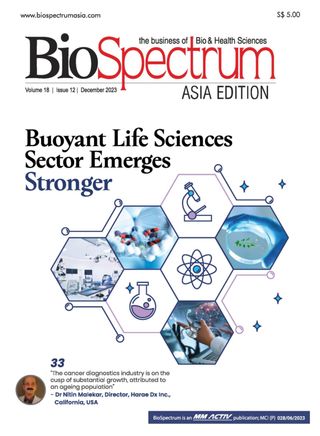

このストーリーは、BioSpectrum Asia の BioSpectrum Asia Dec 2023 版からのものです。
Magzter GOLD を購読すると、厳選された何千ものプレミアム記事や、10,000 以上の雑誌や新聞にアクセスできます。
すでに購読者ですか? サインイン
BioSpectrum Asia からのその他のストーリー
BioSpectrum Asia
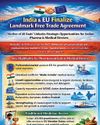
India–EU FTA Paves Way for Expanded Healthcare Trade
On January 27, 2026, after years of negotiations, India and the European Union announced a landmark Free Trade Agreement.

4 mins
BioSpectrum Asia March 2026
BioSpectrum Asia
PreferCo and Glatt to open CoE for precision fermentation bioprocess scale-up in India
In a major boost to Government of India's BioE3 push, German major Glatt and India-based startup PreferCo have announced the launch of \"PreferCo-Glatt Centre of Excellence (CoE) for Bioprocess Scale-Up\" in Hyderabad's Genome Valley.
1 min
BioSpectrum Asia March 2026

BioSpectrum Asia
Women's Health Surge in APAC
The rising burden of diseases such as ovarian cancer, breast cancer, cervical cancer, infertility, etc. is emerging as the key driver of the women's healthcare market across the globe. While North America led the women healthcare market in 2025, Asia Pacific (APAC) is expected to witness the fastest growth this year onwards. As a result, governments across the APAC region, are recognising the importance of women's health and are launching initiatives, particularly under female leaders, to improve access to healthcare services. Moreover, a number of women-led startups are now developing new solutions to address this growing burden of women-associated diseases in the APAC region. Let's take a closer look.
6 mins
BioSpectrum Asia March 2026

BioSpectrum Asia
Hanchor Bio receives US FDA Orphan Drug Designation for HCB101 in gastric cancer
Taiwan-based biotech startup HanchorBio, Inc. has announced that the US Food and Drug Administration (FDA) has granted Orphan Drug Designation (ODD) to HCB101 for the treatment of gastric cancer.
1 min
BioSpectrum Asia March 2026

BioSpectrum Asia
Daiichi Sankyo names Dr John Tsai as Global Head of R&D
Japan-based Daiichi Sankyo Company has appointed Dr John Tsai to succeed Dr Ken Takeshita, who is stepping down as Global Head of R&D, effective April 1, 2026.
1 min
BioSpectrum Asia March 2026

BioSpectrum Asia
"The global trend is moving beyond centralised hubs toward distributed networks and domestic capability"
King Faisal Specialist Hospital & Research Centre (KFSHRC) and US-based Germfree Laboratories have announced a strategic partnership to develop Saudi Arabia's first fully integrated, modular Advanced Therapy Medicinal Product (ATMP) Manufacturing Campus.
4 mins
BioSpectrum Asia March 2026

BioSpectrum Asia
SEOUL'S RISKY DRUG PRICING RESET
Drug pricing has once again moved to the centre of policy debate in South Korea, with the government recently stepping back from its proposed generic drug pricing reform.
2 mins
BioSpectrum Asia March 2026

BioSpectrum Asia
Takeda and Iambic sign $1.7 B deal to advance AI driven design of small molecules
Iambic, a US-based clinical-stage life science and technology company developing novel medicines using its artificial intelligence (AI)-driven discovery and development platform, has announced a multi-year technology and discovery collaboration agreement with Japan-based Takeda Pharma that will use Iambic's industry leading AI drug discovery models to advance a select set of high-priority small molecule programmes, initially in Takeda's Oncology and Gastrointestinal and Inflammation therapeutic areas.
1 min
BioSpectrum Asia March 2026

BioSpectrum Asia
S.Biomedics announces partnership with Catalent to develop and manufacture TED-A9
US-based Catalent and South Korea-based S.Biomedics have announced a strategic partnership to support the development and manufacturing of TED-A9, S.Biomedics' allogeneic pluripotent stem-cell-derived ventral midbrain-specific dopaminergic precursor cell therapy being developed for the treatment of Parkinson's disease.
1 min
BioSpectrum Asia March 2026
BioSpectrum Asia
China revises drug administration regulations to spur innovation
China has revised regulations concerning drug administration in a bid to promote drug innovation, strengthen management of online sales of medicines and reinforce drug safety supervision.
1 min
BioSpectrum Asia March 2026
Translate
Change font size