
Magzter GOLDで無制限に
10,000以上の雑誌、新聞、プレミアム記事に無制限にアクセスできます。
試す 金 - 無料
LOW FLYING
Octane
|December 2025
When a customer challenged Eagle to build a sub-1000kg race-inspired road car, it kicked off an obsessive weight-saving drive that's resulted in one of the greatest E-types we've ever driven
I found my notes from a 2019 drive of Eagle's sublime mid-blue E-type Lightweight GT.
‘We could have pushed for sub-1000kg but that would have meant doing without the air-con or soundproofing,’ the company’s long-time technical director Paul Brace said at the time. And yet here we are in Wales on a stunning October day with the brand-new Eagle E-type Lightweight GTR, which weighs (wait for it...) 930kg dry, or 975kg with all its fluids. That’s 2050 and 2150lb for non-metric types, and over 30% lighter than a standard E-type Roadster. And guess what? It has air-con and soundproofing and even higher peak power than the Lightweight GT.
Does it matter? Yes and no. The lower the weight of any car, the better the performance, the ride, the braking, the handling... everything. Weight loss doesn’t have to be as extreme as the Lightweight GTR's to make for an entertaining machine, but what we love about this car is the obsessive attention to detail – and, I now know, the way it drives on some of the UK’s greatest roads.
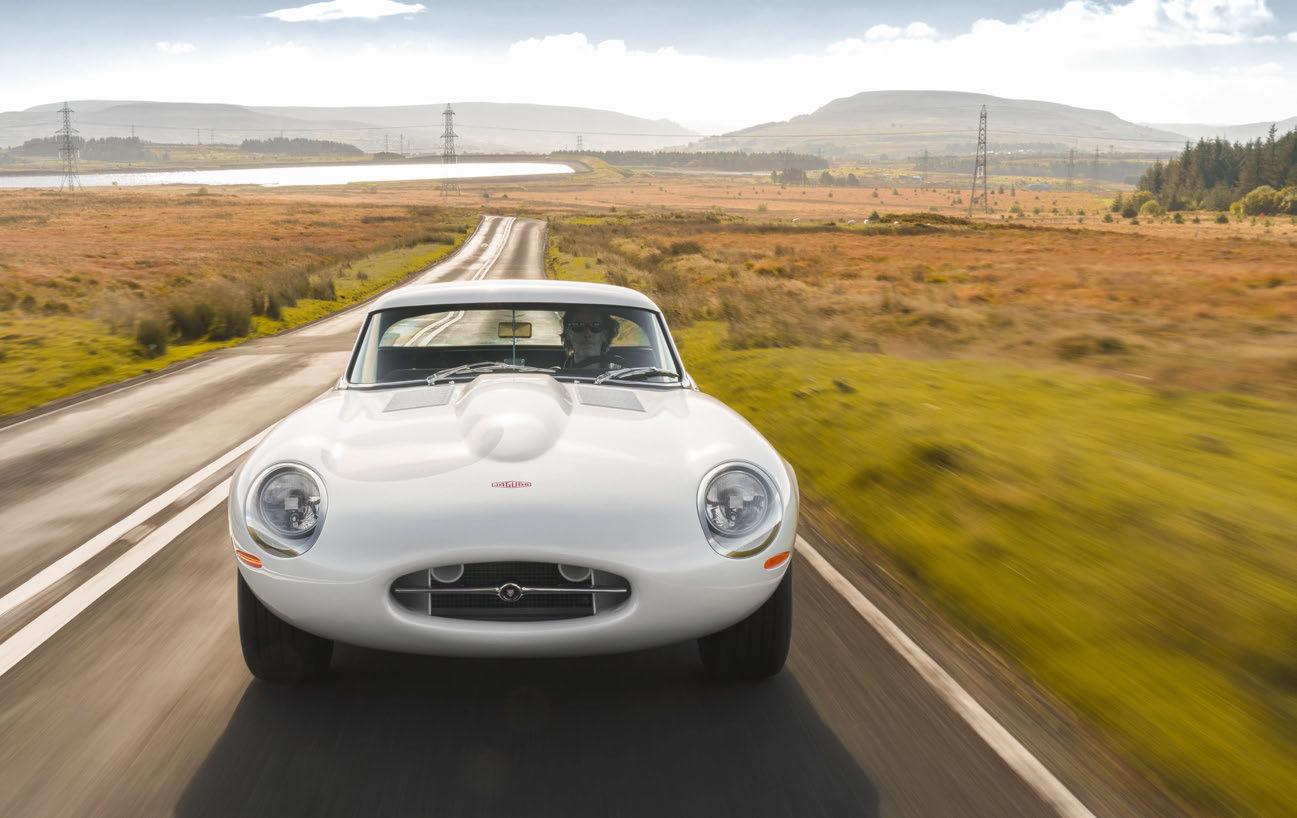 Without wanting to come over like a fan-boy, this is what Eagle has been doing since 1991: carrying out considered engineering changes to one of the most iconic cars of all time, making them better to drive and own. Jaguar obsessive Henry Pearman had been restoring and maintaining E-types under the Eagle banner since 1984, and in 1991 created a subtly upgraded version for a customer who wanted a driving experience as good as the car's looks promised.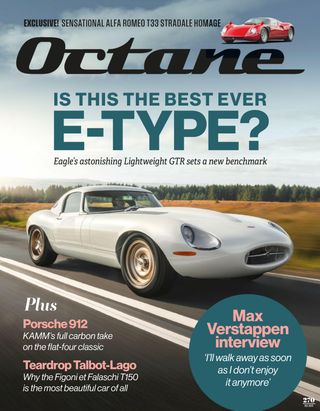

このストーリーは、Octane の December 2025 版からのものです。
Magzter GOLD を購読すると、厳選された何千ものプレミアム記事や、10,000 以上の雑誌や新聞にアクセスできます。
すでに購読者ですか? サインイン
Octane からのその他のストーリー

Octane
The Driver Robert Coucher
Why simplicity is best in the era of cars as appliances

3 mins
May 2026

Octane
The Legend Derek Bell
One of the great joys of my life in motorsport is the travelling. One of the biggest curses of my life in motorsport is the travelling. I am a farm boy from West Sussex and, growing up at least, I never thought that I would ever get to see the world.
3 mins
May 2026

Octane
The Aesthete Stephen Bayley
Nostalgia was once defined as a psychosis. So I certainly don’t want to be described as nostalgic.
7 mins
May 2026

Octane
Records tumble as Amelia and Miami sales top $251.9m
Hypercars attract big numbers as 'Florida week' sales rack up biggest total yet
1 mins
May 2026

Octane
DTM legends
Bonhams, Monaco 24-25 April
1 min
May 2026

Octane
The photo booth
From a practical necessity to a cultural phenomenon
4 mins
May 2026
Octane
All aboard for Monte Carlo
1956 Daimler Conquest Century
3 mins
May 2026
Octane
Hardcore pawn
Is a race-bred track star with impeccable Italian heritage too uncompromising for the road or worth the inevitable sacrifice? Massimo Delbò is feeling brave...
6 mins
May 2026
Octane
The end is nigh
1968 Ford Mustang GT390
2 mins
May 2026
Octane
Lancia Beta Montecarlo
Styled and built by Pininfarina, this mid-engined sports car is sensibly priced exotic fun
2 mins
May 2026
Listen
Translate
Change font size