試す 金 - 無料
Discovering fermented sauces
The Country Smallholder
|November 2025
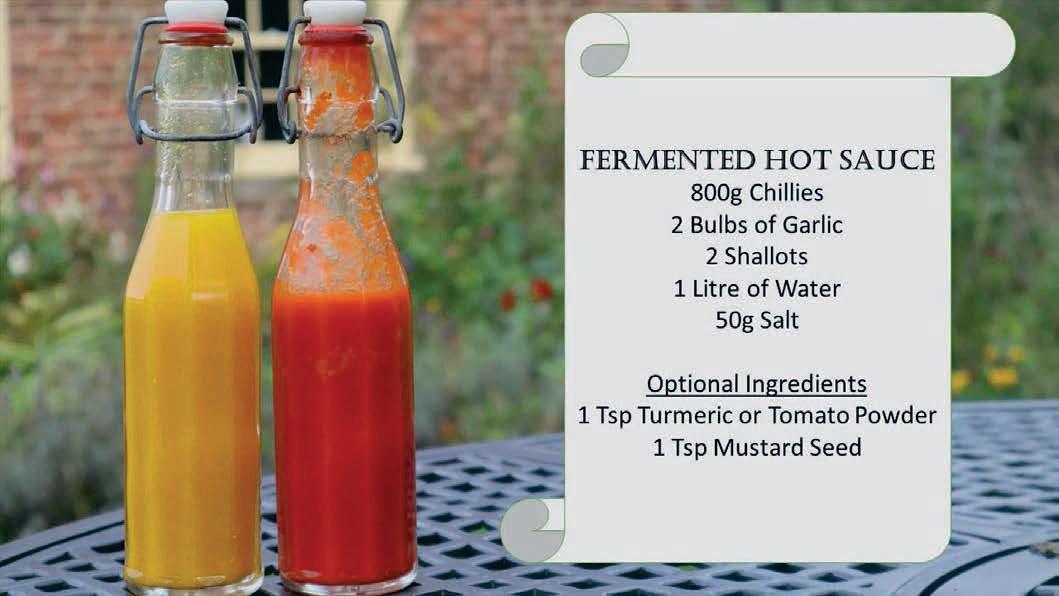
In some parts of the world, lactic acid fermentation (the preserving technique used in sauerkraut) is widely practiced and produces many fantastic foods. For some reason it has never been widespread in the UK but Hugh & Fiona Osborne are big fans of the technique and use it to preserve their annual chilli glut as delicious sauces.
-
LACTIC ACID FERMENTATION
Lactic Acid Fermentation sounds, frankly, weird, doesn’t it? However, some incredible foods are produced by this technique. As well as sauerkraut which we have probably all heard of kimchi is becoming more widely known now in the UK (a superb Korean dish that turns cabbage, radish, chilli and spices into a taste sensation). There are other foods that are more familiar that are made this way, for example Tabasco sauce and, of all things, yoghurt!
The process of lactic acid fermentation uses a naturally occurring probiotic bacteria (Lactic Acid Bacteria or LAB) to convert the sugars found in foods to lactic acid. Increasing the acidity of the food effectively pickles the food which inhibits the action of microorganisms that cause food spoilage (bacteria, mould, yeast etc.). The difference between pickling and Lactic Acid Fermentation is that pickling requires acid (usually vinegar) to be added whereas the Lactic Acid is created in the process by consuming sugar. This explains why yoghurt has a sharper taste than milk or cream as the natural sugars found in dairy are no longer there.
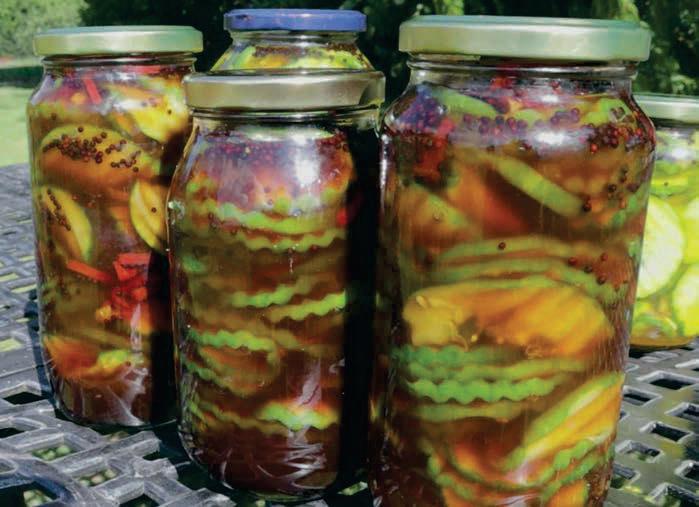 Lactic Fermentation requires an anaerobic environment. Okay we got a bit wordy there, but it means that it needs to happen away from oxygen. That doesn't have to be complex though. Sauerkraut was traditionally produced by covering chopped cabbage with salty water and putting a weight on top to keep the cabbage under the surface. It's a traditional peasant technique (which probably makes us traditional peasants) so improvisation and simplicity is the order of the day.
MAKING CHILLI SAUCE


このストーリーは、The Country Smallholder の November 2025 版からのものです。
Magzter GOLD を購読すると、厳選された何千ものプレミアム記事や、10,000 以上の雑誌や新聞にアクセスできます。
すでに購読者ですか? サインイン
The Country Smallholder からのその他のストーリー
The Country Smallholder
Making sure you put enough nutrition into your dairy goat to support her milk production
Sarah Day, nutritionist for Small Holder Feed offers feeding advice for your dairy goats to help them be happy, healthy and milky animals.

6 mins
March 2026
The Country Smallholder
Welcoming the very start of the spring season
Henrietta Balcon makes the most of the new crop rhubarb
2 mins
March 2026
The Country Smallholder
Starting with Pigs - before you start
Linda Aldous outlines what you need to do before anything porcine arrives on your smallholding
3 mins
March 2026
The Country Smallholder
Insurance to protect livestock - and your peace of mind
Looking ahead to a busy 2026 for Pedigree Sales, farmers and breeders will be preparing their livestock for the upcoming markets
2 mins
March 2026

The Country Smallholder
Getting Your Electric Fence Spring-Ready: Expert Q&A
As Spring arrives, it’s the perfect time to give your electric fence some attention. Based on questions we discuss regularly here at www.electricfencing.co.uk, here’s a list of the checks you should be carrying out now, and why they matter.
2 mins
March 2026

The Country Smallholder
Check your kit for the busy seasons ahead
Agricultural journalist, and machinery writer Jane Brooks, joins us for her regular look at the world.
4 mins
March 2026
The Country Smallholder
Flock together: is now the right time to add more hens?
Andy Hill explains how to integrate birds into a flock without feathers flying
4 mins
March 2026
The Country Smallholder
The secrets behind maximising incubator hatch rates
Buying quality point of lay hens can be an expensive proposition these days (even if you can find a local source of the breed that you want). Incubating fertilised eggs can save a great deal of money and make many more breeds accessible. If you already keep poultry that includes a cockerel, an incubator means that you can hatch their eggs either to increase your flock or to sell. Hugh & Fiona Osborne have been using incubators for many years and have learned that getting a good hatch means attention to detail.
7 mins
March 2026
The Country Smallholder
Making choices for your chicks
Victoria Roberts BVSc MRCVS says Natural and Artifical Incubation are not an either/or choice
5 mins
March 2026

The Country Smallholder
An appetite for asparagus
Our Experts answer your questions
1 mins
March 2026
Listen
Translate
Change font size