試す 金 - 無料
ZOO QUEST
BBC Wildlife
|April 2025
Many people believe zoos have an important role to play in conserving species. We investigate if this really justifies keeping animals in captivity
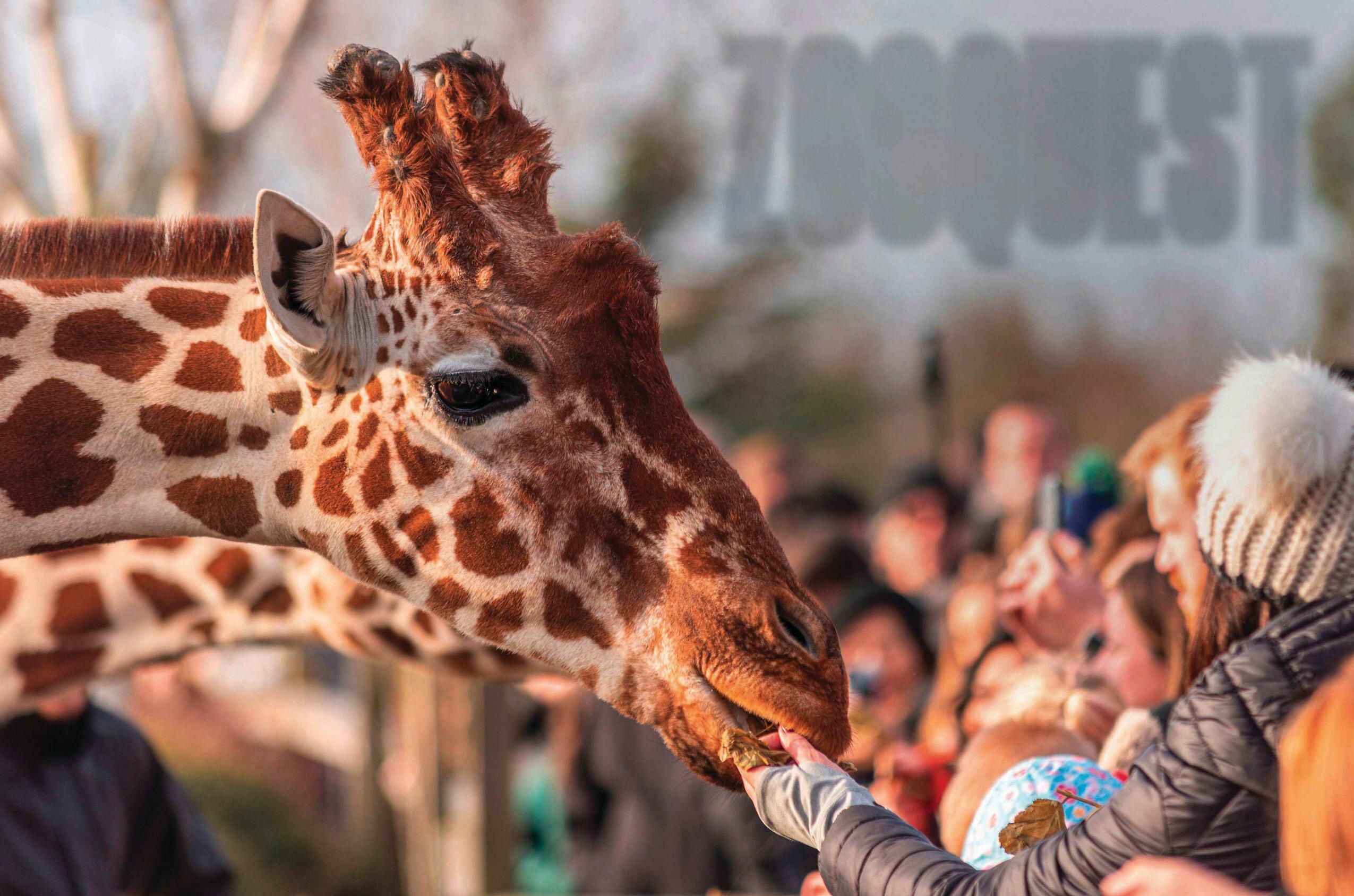
SHAKA THE AFRICAN SAVANNAH ELEPHANT is standing in the middle of an expansive field, staring intently at us. His ears are forward, his face is alert and he doesn't appear stressed or, can we say, unhappy. He's a 33-year-old bull in the prime of his life at Noah's Ark Zoo Farm just outside Bristol, and he will be forever captive because of society's prevailing view that zoos are both good and necessary.
“Daddy’s taking us to the zoo tomorrow, zoo tomorrow, zoo tomorrow,” goes the song - a celebration of an exciting and wholesome day out. As Noah’s Ark CEO Larry Bush says, visitors can encounter “the power of an African elephant” or watch an “Andean bear climbing a tree trunk”, experiences that are arguably more intense and longer-lasting than watching the same species in a documentary.
“These animals are ambassadors for their wild cousins,” says Bush. “It is educational and inspiring. Very few people can afford to go on safari in Africa, and it’s not very good for the planet.”
It is a fair point - why fly thousands of miles to see and smell exotic wildlife when you can pop down to your local zoo? Nevertheless, many people do question whether zoos have a role to play in 21st-century Britain. Why should animals - in particular, emotionally and socially complex ones such as Shaka - be sacrificed for their wild cousins in a way that we would never sanction for our own species?
THERE ARE THREE MAIN arguments for the continued existence of zoos: they raise awareness about the threats facing wildlife; they use money raised to fund conservation initiatives in the wild; and their animals can be used for reintroduction programmes or act as ark populations in case of severe declines or, indeed, extinctions. Zoos also increasingly argue that they perform another vital function as community assets that are good for mental health.
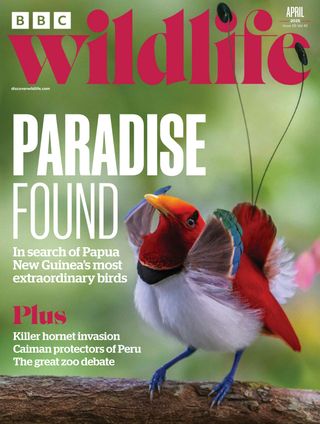

このストーリーは、BBC Wildlife の April 2025 版からのものです。
Magzter GOLD を購読すると、厳選された何千ものプレミアム記事や、10,000 以上の雑誌や新聞にアクセスできます。
すでに購読者ですか? サインイン
BBC Wildlife からのその他のストーリー
BBC Wildlife
“Our canoe was nearly sunk by a hippo”
Hippos in Niger

3 mins
March 2026

BBC Wildlife
Why does Australia have such weird animals?
AUSTRALIA IS A LONG WAY FROM anywhere and has been for a very long time. The landmass definitively separated from the supercontinent of Gondwana around 40 million years ago and, since then, has existed - as a big blob in the middle of an even bigger ocean - in glorious geographical isolation.
2 mins
March 2026
BBC Wildlife
Which country has the fewest native animals?
AT AROUND 61KM² SAN MARINO, IN Europe, is one of the world's smallest countries. Entirely landlocked, it is surrounded by Italy.
1 min
March 2026

BBC Wildlife
Why do some species sunbathe?
RING-TAILED LEMURS ARE FAMED FOR their 'sun-worshipping' posture, legs and arms outstretched to reveal their pale bellies. Like humans, they do it to save energy and boost health. Sunlight is necessary to many bodily processes. As a source of vitamin D it's required to maintain bone and muscle health. It is also related to the production of serotonin, the chemical that regulates mood, sleep and stress response.
1 mins
March 2026
BBC Wildlife
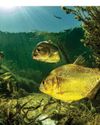
ALL YOU EVER NEEDED TO KNOW ABOUT THE Piranha
PIRANHAS HAVE A REPUTATION as some of the most dangerous freshwater hunters: terrifying predators capable of devouring a large mammal in mere minutes.
3 mins
March 2026
BBC Wildlife
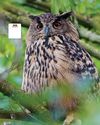
EAGLES LANDING
Eagle owls were once heavily persecuted. But thanks to a new initiative, these magnificent birds are reclaiming a wetland home
7 mins
March 2026
BBC Wildlife
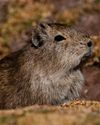
Do wild guinea pigs exist?
GUINEA PIGS, WHICH ARE NOT pigs and not from Guinea, are domesticated rodents that do not exist in the wild.
1 min
March 2026

BBC Wildlife
SNAP-CHAT: THE INSIDE WORLD OF WILDLIFE PHOTOGRAPHY
Boris Belchev on birds, batteries and battling bears with pop music
3 mins
March 2026
BBC Wildlife
Does anything live in the Bermuda Triangle?
THE BERMUDA TRIANGLE, IN THE NORTH Atlantic Ocean, has become infamous for the planes and ships that are said to have vanished without a trace while travelling through the area.
1 min
March 2026
BBC Wildlife
Do animals have different blood types?
HUMANS HAVE FOUR MAIN BLOOD GROUPS: A, B, AB and O.
1 min
March 2026
Listen
Translate
Change font size