
Magzter GOLDで無制限に
10,000以上の雑誌、新聞、プレミアム記事に無制限にアクセスできます。
試す 金 - 無料
Gig-Economy Continues To Thrive With Smart Cross-border Payments
PCQuest
|July 2021
Cross-border payment platforms play a crucial role in enabling this freelancing ecosystem, helping businesses and professionals to pay and get paid globally, as easily as they do locally.

The future of work has been changing rapidly with the entrance of millennials and Gen Z into the workforce and manifesting in their increasing tendency to treat jobs more like gigs and not some career destinations. Various study reports suggest that a growing majority (as many as 64 percent) of millennial full-time workers do side hustles. Gen Xers and Baby Boomers are also catching up fast with this trend. Working as independent professionals or freelancing has become an increasingly popular career choice for many of them as they can work on their own terms.
Digital technologies have made Remote Work accessible and accepted by an increasing number of organizations who have started embracing the growing reality of generational shift into the modern workforce. Thanks to the proliferation of freelancing marketplaces such as Upwork, Toptal, Fiverr, etc., and the availability of efficient collaboration tools, and hassle-free payment solutions companies can find remote workers and skilled talents worldwide and connect with them.
The ongoing pandemic crisis has also changed the future of work forever by making remote and on-demand workforce the new norm and opened new doors for many skilled workers. While many found their world upended with mass layoffs, furloughs, and pay cuts some of them just took a lap of faith and started as independent professionals or freelancers.
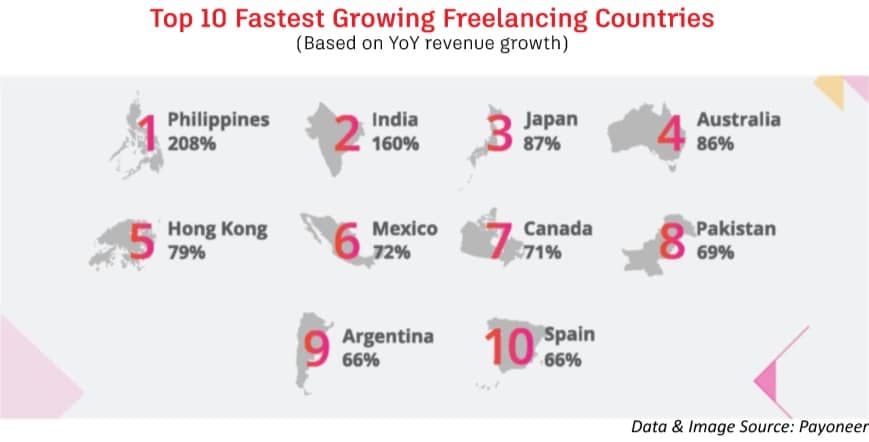
The Gig is up despite pandemic


このストーリーは、PCQuest の July 2021 版からのものです。
Magzter GOLD を購読すると、厳選された何千ものプレミアム記事や、10,000 以上の雑誌や新聞にアクセスできます。
すでに購読者ですか? サインイン
PCQuest からのその他のストーリー

PCQuest
When Software Drives the Machine Need for Enterprise-Grade Software
Cars used to fail because of broken parts.Now they fail because of broken code. As vehicles become rolling computers, enterprise-grade software, ruthless testing, and fail-safe architecture decide one thing: whether a car keeps moving safely at 100 km/h

2 mins
March 2026

PCQuest
AI on the ground Practical use cases of AI in large enterprise operations
AI isn't a side project anymore, it's the quiet operator inside global giants. It reads invoices, senses machine fatigue, tailors every customer moment, flags risk in real time, and feeds leaders sharper instincts. Scale just got smarter
3 mins
March 2026

PCQuest
From AI experiments in 2025 to enterprise scale in 2026: Why data foundations will decide the winners
Everyone's betting big on Al, but most are burning cash instead of building value. The hidden culprit? Dirty data, clunky processes, and missing context. What if fixing your foundation, not your algorithms, was the real AI game-changer?
4 mins
March 2026

PCQuest
How automation at the periphery is accelerating digital transformation
Digital transformation is not tearing down the core anymore. It is happening at the edges. With AI and automation layered onto existing systems, companies are cutting costs, boosting productivity by up to 40%, and scaling smarter without risking operational chaos
2 mins
March 2026

PCQuest
When AI moves from chips to racks
AI performance is no longer just about faster chips. It is about how racks, power, networking, and orchestration work together. As agentic AI grows, infrastructure must become predictable, open, and built for scale from day one
4 mins
March 2026

PCQuest
Designing enterprise AI systems that stay fair
In 2026, bias is no longer treated as a communications issue or a public relations headache.
6 mins
March 2026

PCQuest
HALO smart sensor
What if bathrooms, locker rooms, and isolated spaces could become safer without adding cameras?
2 mins
March 2026

PCQuest
Building enterprise AI that doesn't discriminate
Bias in enterprise AI is not a side issue. It starts in data pipelines, training systems, product design, and engineering workflows. As AI scales, fairness, transparency, and accessibility are becoming core software requirements
4 mins
March 2026

PCQuest
Bias travels faster than code
Bias in enterprise AI is not a surface issue. It enters through data, features, model training, APIs, and UI logic, then spreads across the stack. The technical response is shifting from audits to architecture, observability, and deployment controls
6 mins
March 2026

PCQuest
How hospitals can use AI without risking patient data
With the fast pace of adoption of Artificial Intelligence (AI) and digital health systems in Indian hospitals, issues related to the security of patient data are also increasing at an equal rate.
2 mins
March 2026
Translate
Change font size