試す 金 - 無料
Short Term Food Relief Does Not Fill Up B12 Stores
Scientific India
|May - June 2022
During the period when children were provided with food relief, their B12 levels increased, before decreasing considerably once we stopped the programme.
-

Despite provisioning them with food relief for three months, their stores remained far from topped up. This, when a typical food relief programme only runs for four weeks.
Even after three months of food relief, one third of the children continued to have low or marginal levels of B12 stored. The unfortunate explanation is that there is a cap on how much B12 can be absorbed.
A child's gut can only absorb 1 microgram of B12 per meal. So, if a child is lacking 500 micrograms, it will take much longer than the few weeks that they have access to emergency food relief, explains Vibeke Brix Christensen, a pediatrician and medical advisor to Médecins Sans Frontières and co-author of the study.
Furthermore, longer-term relief programmes aren't realistic, as humanitarian organizations are trying to reduce the duration of treatment regimens with the aim of being able to serve a larger number of children for the same amount of money.


このストーリーは、Scientific India の May - June 2022 版からのものです。
Magzter GOLD を購読すると、厳選された何千ものプレミアム記事や、10,000 以上の雑誌や新聞にアクセスできます。
すでに購読者ですか? サインイン
Scientific India からのその他のストーリー
Scientific India
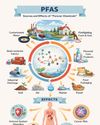
Global Fight Against PFAS Pollution: A Turning Point in Regulation and Justice
Per-and polyfluoroalkyl substances (PFAS), a group of over 10,000 synthetic chemicals known for their extreme persistence in the environment and the human body, have become one of the most challenging pollution issues of our times.

2 mins
January - February 2026

Scientific India
CRISPR-Cas Technology: Revolutionizing the future of modern disease diagnosis and healthcare
The accurate and rapid detection of human pathogens is critical for public health.
3 mins
January - February 2026
Scientific India
Ecology to Epidemiology: How Forest Loss Is Increasing Mosquitoes Thirst for Human Blood
Forests are not only important for climate regulation and biodiversity conservation they are also critical for maintaining ecological balance and protecting human health.
3 mins
January - February 2026

Scientific India
The 10 biggest science stories of 2025
The year 2025 was marked by remarkable scientific achievements that pushed the boundaries of medicine, genetics, and biotechnology. Breakthroughs once considered futuristic moved from theory to real-world application, offering new hope for patients and redefining the limits of innovation.
6 mins
January - February 2026

Scientific India
Just two days of oatmeal cut bad cholesterol by 10%
Eating mostly oatmeal for just two days may significantly reduce cholesterol, according to a clinical trial from the University of Bonn published in Nature Communications.
3 mins
January - February 2026

Scientific India
Artificial Trees: The Technology Breathe for the Globe
Global raising concern over for clean air due to progression of population, industrialization, urbanization, vehicular emission are pushed air pollution and atmospheric carbon dioxide to alarming level.
4 mins
January - February 2026

Scientific India
Five outstanding physics research in 2025
This year has been vibrant for physics research; scientists of various sub disciplines have uncovered many unknowns, from the discovery of single naked black holes to the invention of 2D metallic sheets.
5 mins
January - February 2026

Scientific India
Top 10 Science Stories of India in 2025
The year 2025 has been a landmark for Indian science, characterized by \"firsts\" in space, indigenous computing, and breakthroughs in lifesaving genetics. Here are the top 10 science and technology stories from India in 2025:
4 mins
January - February 2026

Scientific India
Extremophiles Microbes from Hot Springs - Identified as a Potential Source of Next Generation Biobased Sunscreens
Protection from harmful ultraviolet (UV) radiation is essential for human health.
3 mins
January - February 2026
Scientific India
Global Fight Against PEAS Pollution: A Turning Point in Regulation and Justice
Per- and polyfluoroalkyl substances (PFAS), a group of over 10,000 synthetic chemicals known for their extreme persistence in the environment and the human body, have become one of the most challenging pollution issues of our times.
2 mins
January - February 2026
Translate
Change font size