
Magzter GOLDで無制限に
10,000以上の雑誌、新聞、プレミアム記事に無制限にアクセスできます。
‘Vapour on Venus will tell us if it's alive'
Down To Earth
|June 16, 2021
More than two-and-a-half decades after its last missions to Venus, NASA has planned a trip to Earth’s nearest neighbour. On June 2, the US space agency announced DAVINCI+ and VERITAS missions to the planet in 2028-30 under its Discovery Program, going on since 1992. Space agencies have explored Venus since the 1960s, but focus shifted around mid-1990s. Venus regained interest after researchers from the UK detected phosphine, a gas released through organic processes, in the Venusian atmosphere. A week after NASA, the European Space Agency announced a Venus mission later this decade. India and Russia, too, have been planning Venus probes. Described as Earth’s twin due to its similar size and density, Venus’s atmosphere is full of carbon dioxide and clouds of sulphuric acid with a surface temperature hot enough to melt lead. NASA’s DAVINCI+ (Deep Atmosphere Venus Investigation of Noble gases, Chemistry, and Imaging) will drop a descent sphere to measure the gases in Venus’ air, while VERITAS (Venus Emissivity, Radio Science, InSAR, Topography, and Spectroscopy) will orbit the planet to map its geological features. We’ll also learn about phosphine, THOMAS P WAGNER, who leads the Discovery Program, tells DAKSHIANI PALICHA in an interview. Excerpts:
-

NASA’s last mission to Venus, Magellan, ended in 1994. What renewed your interest in the planet after 27 years?
The Venus missions had been proposed primarily for NASA's New Frontiers programme, and then for Discovery, but they did not get picked. This is not because there wasn’t a desire to go back to Venus, it’s just that other proposals—for example, the Juno mission to Jupiter or the Osiris Rex, Lucy and Psyche missions aimed for asteroids—beat them. Venus was also not as big a priority as Mars, where people were eager to detect signs of life.
However, between Magellan and now, there has been amazing technological development. Radars are more sophisticated, as are the radiometers that will map the composition of Venus’s surface and measure the light it emits into space. The chemical instrumentation to measure the composition of the atmosphere is phenomenal; we can now measure components that are present in minute amounts, like noble gases, which are important in understanding the history of the atmosphere. This is why we picked missions to Venus now.
What scientific return do you expect from DAVINCI+ and VERITAS?
The missions we pick face strict competition. The process began two years ago; we had 18 proposals and we evaluated their science and implementation plans. We then narrowed them down to four. These teams then planned their missions at an even higher level of detail. We looked at their implementability, cost, NASA's budget, among other things. So while evaluating their scientific return, we do not just consider the science, but also how it would fit with our portfolio. Right now, we do not have other missions to Venus; we are also going to launch the James Webb Space Telescope to study exoplanets [planets that exist outside the solar system] soon. These missions would help with that.


このストーリーは、Down To Earth の June 16, 2021 版からのものです。
Magzter GOLD を購読すると、厳選された何千ものプレミアム記事や、10,000 以上の雑誌や新聞にアクセスできます。
すでに購読者ですか? サインイン
Down To Earth からのその他のストーリー
Down To Earth
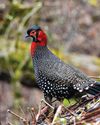
KING OF BIRDS
Revered for centuries, western tragopan now needs protection as its forests shrink, human pressures mount

3 mins
December 16, 2025

Down To Earth
WHISKERS ALL AQUIVER
Climate change threatens creatures that have weathered extreme environments for thousands of years
2 mins
December 16, 2025

Down To Earth
GOLDEN SPIRIT
Survival of the shy primate is closely tied to the health of Western Ghats
3 mins
December 16, 2025

Down To Earth
RINGED EYES IN THE CANOPY
Rapid habitat destruction forces arboreal langur to alter habits
2 mins
December 16, 2025

Down To Earth
HANGING BY THE CLIFF
The Himalaya's rarest wild goat is on the brink of local extinction
2 mins
December 16, 2025
Down To Earth
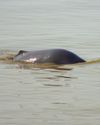
ANGEL OF THE BEAS
Conservation reserves, citizen science, and habitat protection give the Indus River dolphin a fighting chance in India
2 mins
December 16, 2025

Down To Earth
UNDER MOONLIT SCRUB
Survival of this hidden guardian tells us whether our scrublands still breathe
2 mins
December 16, 2025

Down To Earth
SYMBOL OF SILENT VALLEY
Lion-tailed macaque remains vulnerable despite past victories
2 mins
December 16, 2025

Down To Earth
THE APE IN OUR STORIES
India's only non-human ape species is a cultural icon threatened by forest fragmentation
2 mins
December 16, 2025
Down To Earth
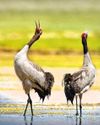
SENTINEL OF THE HIGH COLD DESERT
The bird's evocative call may not continue to roll across the cold desert valley for long
3 mins
December 16, 2025
Translate
Change font size