試す 金 - 無料
Poor Despite ₹5,800 Crore
Down To Earth
|June 16, 2017
Plan and plan well is the message from the first independent evaluation of India's ambitious resource-sharing plan for mining districts

IN 2015, the Union government amended the Mines and Minerals (Development and Regulation) Act, 1957, to set up a District Mineral Foundation (DMF) in every mining district of the country. The idea was to create a mechanism to share mining revenue for the benefit of mining-affected people in these districts. Two years on, the DMF coffers are flush with funds, but have the people benefitted?
To understand this, Delhi-based non-profit Centre for Science and Environment (CSE) undertook the country’s first independent evaluation of DMFS. The evaluation covered 50 big mining districts in 11 states. The results show that money has started to flow in and some districts are putting it to good use, but a majority of the districts are still lagging.
The Act mandates that DMFS, to be established as non-profit trusts, should “work for the interest and benefit of persons and areas affected by mining related operations”. The mining companies are required to pay a sum—determined on the basis of their royalty payments—to the DMF trust of the district. For all major minerals (such as coal and iron ore), the contribution is 10 per cent of the royalty paid to the state government for mining leases granted on or after January 12, 2015, and 30 per cent of the royalty for leases before that. For minor minerals (such as sand and stones), the payments are decided by the states.
The Union government also launched Pradhan Mantri Khanij Kshetra Kalyan Yojana (PMKKKY) in September 2015 to implement developmental projects and welfare programmes in mining-affected areas using funds generated by DMFS. The scheme seeks to negate the adverse impacts of mining on people and the environment, and create sustainable livelihood opportunities for those affected by mining activities.
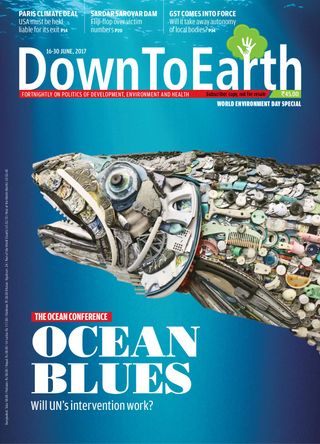

このストーリーは、Down To Earth の June 16, 2017 版からのものです。
Magzter GOLD を購読すると、厳選された何千ものプレミアム記事や、10,000 以上の雑誌や新聞にアクセスできます。
すでに購読者ですか? サインイン
Down To Earth からのその他のストーリー

Down To Earth
THE GREAT PIVOT
China's moves to transition to clean energy offer critical lessons to India

4 mins
March 01, 2026

Down To Earth
COAL V CORRIDOR
A proposal to mine coal along a corridor that links two tiger reserves in central India is a step away from getting final clearance. The move could affect movement and genetic diversity of tiger populations in the region
8 mins
March 01, 2026

Down To Earth
India's challenging AI predicament
Hobbled by lack of innovation and AI skills in its crucial technology sector, India is focusing on a ruinous plan to host data centres
4 mins
March 01, 2026
Down To Earth
China to implement zero tariffs across Africa
CHINA ON February 14 announced that it will implement zero tariffs for imports from all the 53 African nations it has diplomatic relations with, starting from May 1.
1 min
March 01, 2026
Down To Earth
Poverty, sans the threshold
MEASUREMENT OF poverty is a fundamental exercise, needed to direct development programmes.
2 mins
March 01, 2026

Down To Earth
A bridge across forever
For two decades, a Chhattisgarh village remains stuck in a loop of building temporary river crossings to access markets and sell forest produce
4 mins
March 01, 2026
Down To Earth
Liveable cities need a new model
CRY FOR my Delhi. This is my city—my family records many generations who have lived here.
3 mins
March 01, 2026

Down To Earth
Real impacts of the changing seasons
This refers to the article \"1,500 days, and an alarm for new climate\" (1-15 December, 2025).
1 mins
March 01, 2026

Down To Earth
‘It’s a systematic effort by US to dismantle climate policy’
The US, the world's largest historical emitter of greenhouse gases, has overturned its “endangerment finding”, the legal foundation for regulating emissions under the Clean Air Act since 2009.
4 mins
March 01, 2026
Down To Earth
Amazon turned carbon source in 2023 drought
EXTREME DROUGHT and a prolonged heatwave in 2023 pushed parts of the Amazon rainforest from acting as a carbon sink to becoming a carbon source for three months, according to a February 13 study published in the journal AGU Advances of the American Geophysical Union.
1 min
March 01, 2026
Translate
Change font size