試す 金 - 無料
Our Daily Dose Of Antibiotics
Down To Earth
|June 16, 2020
As dairy farmers inject antibiotics in their livestock, chances are high that these are passed on to humans through milk, finds Delhi-based non-profit Centre for Science and Environment

Khairati Lal Chokra, a dairy farmer at Fatehabad in Haryana, injects heavy doses of antibiotics to treat his sick cows and buffaloes. He repeats it every two to three days for a week. Saurabh Shrivastav, another dairy farmer of Jhansi in Uttar Pradesh, injects antibiotics for three consecutive days. They do this to treat their cattle whose mammary glands have swollen due to an infection. The milk emits a strange odour and changes colour. “At times it turns curdy or has blood in it,” says Shrivastav. Selling milk is their livelihood and they have to keep their cattle healthy. Chokra has 20 cows and buffaloes and Shrivastav has 92 of them.
In 2018, when Food Safety and Standards Authority of India (FSSAI) tested milk samples from organised and unorganised sectors across the country, it found 77 of them had antibiotic residues beyond permissible limits. But the food regulator did not disclose the antibiotics that were detected or names of the brands tested. Delhi-based non-profit Centre for Science and Environment (CSE) filed a Right to Information application but did not receive clear answers despite several follow-ups and an appeal. To understand the reasons for antibiotic misuse and its presence in milk, CSE spoke to a wide range of stakeholders across the country, including farmers of high milk-producing states—Punjab, Haryana, Uttar Pradesh, Rajasthan, Karnataka and Tamil Nadu.
BURDEN OF DISEASE

このストーリーは、Down To Earth の June 16, 2020 版からのものです。
Magzter GOLD を購読すると、厳選された何千ものプレミアム記事や、10,000 以上の雑誌や新聞にアクセスできます。
すでに購読者ですか? サインイン
Down To Earth からのその他のストーリー
Down To Earth
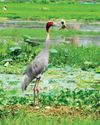
MAJESTIC SARUS STAGES COMEBACK
Involvement of farmers in conservation helps the sarus crane population soar in eastern Uttar Pradesh over the past decade

5 mins
June 16, 2026

Down To Earth
Global resistance to AI data centres hardens
India must learn how to regulate environmentally disastrous data centres that guzzle more water and power than entire nations
4 mins
June 16, 2026

Down To Earth
SUMMER SMOG
Ground-level ozone is one of the national capital's least appreciated public health threat
1 mins
June 16, 2026

Down To Earth
A FOREST IN WAIT
For five decades, Abujhmad in Chhattisgarh was closed to the country. Now, as the region opens up, ANIL ASHWANI SHARMA travels to villages in its dense forests to see how isolation has impacted the people and development
6 mins
June 16, 2026
Down To Earth
DON'T WASTE THE FUTURE
Policymakers may need to focus less on expanding programmes and more on improving their effectiveness and reach, suggests the latest NFHS-6 data
3 mins
June 16, 2026
Down To Earth
NEED A FOREST TRIBUNAL
A tribunal will provide people a dedicated independent forum where they will have a statutory right to approach
2 mins
June 16, 2026
Down To Earth
Moment or movement
ONE DEFINITION of the word metamorphosis in the dictionary is “a striking alteration in appearance, character, or circumstances”.
2 mins
June 16, 2026

Down To Earth
El Niño, amplified
As a possible super El Niño looms in 2026, scientists warn of devastations that may extend into 2027
6 mins
June 16, 2026

Down To Earth
A mindless denial
District level bodies are increasingly refusing tribal population's rights over resources guaranteed by the forest rights Act
5 mins
June 16, 2026

Down To Earth
TOOR TOUR
What makes pigeon pea so ubiquitous across cuisines in India
4 mins
June 16, 2026
Translate
Change font size