試す 金 - 無料
ETCHED IN FOSSIL
Down To Earth
|September 16, 2020
Prehistoric climate change damaged the ozone layer and led to a mass extinction

MASS EXTINCTIONS are very important to how life evolved on Earth. For example, when an asteroid hit the Earth 66 million years ago, the resulting dinosaur extinction led mammals to take their place. My colleagues and I have published new research on the mass extinction that took place 359 million years ago at the boundary between the Devonian and Carboniferous geological periods. There have been many previous speculations as to the cause of this event, including volcanic eruptions, asteroid impacts, climate change, sea level changes, wildfires and the rise of the first forests.
But we have shown that the extinctions on land at this time may have been caused by a catastrophic thinning of the ozone layer that let in damaging levels of ultraviolet radiation. Something similar contributed to the mass extinctions at the end of the Permian and Triassic periods, but these events were caused by volcanic eruptions. Our research suggests the Earth has a natural internal process triggered by a warming climate that can destroy the ozone layer, a serious warning for our own period of climate change.
The Late Devonian extinction played a significant role in the development of vertebrate life. It included the loss of the dominant group of armoured freshwater fish. The survivors were the sharks and the rather minor group of bony fish that subsequently spread out to dominate our younger oceans.
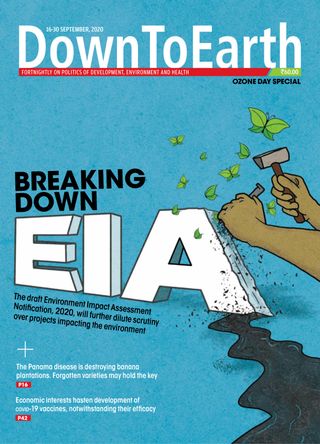

このストーリーは、Down To Earth の September 16, 2020 版からのものです。
Magzter GOLD を購読すると、厳選された何千ものプレミアム記事や、10,000 以上の雑誌や新聞にアクセスできます。
すでに購読者ですか? サインイン
Down To Earth からのその他のストーリー

Down To Earth
THINK TWICE BEFORE FELLING SAL TREES
Many trees considered to be affected by sal borer in the 1990s are still alive today

1 mins
February 16, 2026

Down To Earth
EDGE OF SURVIVAL
Caste divides deny marginalised communities land, resources and essential aid, leaving them more vulnerable to climate disasters
6 mins
February 16, 2026

Down To Earth
A WISH LIST?
Union Budget for 2026-27 conveys the impression of a roll-call of intentions and ambitious proposals, with little detail on their formulation
6 mins
February 16, 2026
Down To Earth
Break down the gender wall
THE RULING National Democratic Alliance (NDA) government has been heavily invested in the goal to make India a developed economy by 2047.
2 mins
February 16, 2026

Down To Earth
MENSTRUAL HEALTH, NOW A FUNDAMENTAL RIGHT
In a landmark judgement, the Supreme Court has recognised menstrual health and hygiene as a fundamental right under Article 21 of the Constitution of India, which guarantees the right to life and dignity.
8 mins
February 16, 2026

Down To Earth
Of devolution and new disasters
The 16th Finance Commission pushes for changes in view of new fiscal and climatic conditions
11 mins
February 16, 2026
Down To Earth
Rising risks of plastics
NEGATIVE IMPACTS on human health due to emissions linked to the plastic lifecycle could double by 2040, according to a study published in The Lancet Planetary Health in January.
1 min
February 16, 2026

Down To Earth
GAP BETWEEN EPIDEMICS NARROWING
A watershed-based and landscape-level approach is needed to address forest degradation
2 mins
February 16, 2026
Down To Earth
WAITING TO STRIKE
Sal heartwood borer is considered the biggest threat to forestry in India, especially to the sal tree, where it lives and breeds.
11 mins
February 16, 2026

Down To Earth
A SPRING DELIGHT
Mustard flowers are not meant only for the eyes. Invite them to your plate once in a while
3 mins
February 16, 2026
Translate
Change font size