試す 金 - 無料
BLACK BUSINESS
Down To Earth
|August 16, 2020
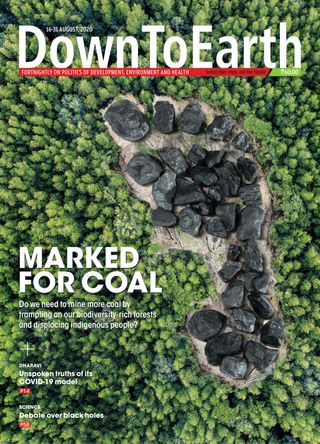
On June 18, Prime Minister Narendra Modi, speaking at an event to auction 41 coal blocks for commercial mining, said that India needs to use its domestic coal for energy needs.

The event marked the move to open up the sector to private players—100 per cent Foreign Direct Investment (FDI) and no restrictions on the end-use of coal. Till now, miners were not allowed to trade coal in the market. Coal was mined either by the public sector Coal India Limited or by other companies given mining rights for their captive use through allotment or by auction.
Energy security tops the government agenda in post-COVID-19 times. The prime minister stressed that this auction “would bring the coal sector out of many years of lockdown”. India, he said, “has the fourth largest coal reserves in the world, and is the second largest producer. So why can we not become the largest producer in the world?”
To make coal “green”, the government has announced to invest ₹20,000 crore in four projects to convert 100 million tonnes of coal into gas by 2030. The problem is coal reserves are found ensconced in the deepest and densest of forests, where very poor people, mostly tribals, live. This means when the country begins mining new areas for more coal, the casualty will be the pristine forests and the dwellers within.
The question is why does India need to dig more for coal? Are the country’s current coal mines insufficient? Or, does it need to replace domestic coal with imported coal? What is that internal logic that drives this policy?

このストーリーは、Down To Earth の August 16, 2020 版からのものです。
Magzter GOLD を購読すると、厳選された何千ものプレミアム記事や、10,000 以上の雑誌や新聞にアクセスできます。
すでに購読者ですか? サインイン
Down To Earth からのその他のストーリー
Down To Earth
Popular distrust
THE WORLD seems to be going through a period of stasis despite facing an unfathomable polycrisis.

2 mins
February 01, 2026

Down To Earth
CONSERVE OR PERISH
Periyar Tiger Reserve has rewritten Indian conservation by turning poachers into protectors and conflict into coexistence
5 mins
February 01, 2026

Down To Earth
'Rivers need to run free'
From Tibet to West Bengal, the Brahmaputra is the pulse of communities and ecosystems along its course. But what are the risks the river faces through human interventions, particularly dams, discusses journalist, author and filmmaker SANJOY HAZARIKA in his new book, River Traveller.
4 mins
February 01, 2026

Down To Earth
India is facing up to its innovation lag
There are signs now that India is acknowledging the superior strides made by China in a frontier technology like Al
4 mins
February 01, 2026

Down To Earth
Competing concerns
What are the repercussions of the EU-Mercosur pact that have made European farmers protest against the free trade agreement?
4 mins
February 01, 2026

Down To Earth
From fryer to flight
Sustainable fuel made from used cooking oil can play a pivotal role in helping India achieve its aviation emission reduction goals. Measures to collect this oil must be revamped
4 mins
February 01, 2026

Down To Earth
ACCESS OPEN
An amendment to India's nodal forest conservation law opens up forests across India to commercial exploitation by the paper industry
6 mins
February 01, 2026
Down To Earth
DRINK FROM TAP CAN BE A REALITY
As cities across India struggle to supply safe piped water, Odisha offers a success story
2 mins
February 01, 2026

Down To Earth
GREAT DRYING
The Earth is hotter than at any point in the past 100,000 years, with 2023-25 becoming the warmest three-year period on record and also breaching the 1.5°C threshold for the first time. One fallout is dwindling freshwater.
22 mins
February 01, 2026

Down To Earth
Green redemption
Restoration of grasslands of Kerala's Pampadum Shola National Park, once dominated by invasive Australian wattles, see a return of streams and native species
1 mins
February 01, 2026
Translate
Change font size