
Magzter GOLDで無制限に
10,000以上の雑誌、新聞、プレミアム記事に無制限にアクセスできます。
試す 金 - 無料
From particles to parsecs
BBC Sky at Night Magazine
|May 2022
Toby Friend considers how the development of astronomy and cosmology on the largest of scales, and particle physics on the very smallest; has often been intertwined

Аt a glance, physics can seem a radically unfocused discipline. In a single research department you'll find particle physicists investigating the smallest and most ubiquitous objects we know of, like quarks, leptons and bosons. But you'll also find astronomers (including astrophysicists and cosmologists) investigating the largest and most distant things that we know of, like galaxies, nebulae and black holes. No other science comes close to matching interests on such a range of scales. So why do both extremes count within the remit of doing physics?
One suggestion is that physicists are interested in the small and big, the near and far, just because they are interested in everything. At least that's what the many physicists trying to find a 'grand unifying theory of everything' might tell you. But the notion of everything' in this context can't really mean everything we might possibly want a scientific theory for. Physicists do not, for example, aspire to theorise about the zebra population of the Serengeti or about the rock strata in the Grand Canyon. Those phenomena are within the remit of ecology and geology, not physics.
The search by physicists for a theory of everything is really a quest for a theory of the behaviour of the constituents of everything. That explains the continuing interest by physicists in the ever smaller, but why do planets and stars remain of interest? The reason, I suggest, is that the investigation of the far away big stuff is often of benefit to our ability to theorise about the nearby small stuff, and vice versa.
A division of labour


このストーリーは、BBC Sky at Night Magazine の May 2022 版からのものです。
Magzter GOLD を購読すると、厳選された何千ものプレミアム記事や、10,000 以上の雑誌や新聞にアクセスできます。
すでに購読者ですか? サインイン
BBC Sky at Night Magazine からのその他のストーリー
BBC Sky at Night Magazine
The Giant Leap: Why Space is the Next Frontier in the Evolution of Life
“Earth is the cradle of humanity, but one cannot live in the cradle forever,” wrote Konstantin Tsiolkovsky in 1911.

1 mins
February 2026
BBC Sky at Night Magazine
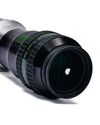
Tele Vue Nagler Type-7 series eyepieces
These premium optics were inspired by Apollo - and deliver a giant leap to your views
4 mins
February 2026
BBC Sky at Night Magazine
Once Upon a Time in Space
While the Space Race of the Cold War years was ultimately a geopolitical contest between the USA and the Soviet Union, the rivalry sparked rapid innovation and inspired multiple generations to look skyward.
1 mins
February 2026
BBC Sky at Night Magazine
The Multiverse: When One Universe Isn't Enough
The concept of a 'multiverse' – the idea that our Universe may be just one of many – is widespread in science fiction and a common thread of online discussions.
1 mins
February 2026

BBC Sky at Night Magazine
Q&A WITH A GAMMA RAY SPECIALIST
In 2025, astronomers detected a blast from space that lasted seven hours. Now they're uncovering the strange processes behind the exceptional outburst
3 mins
February 2026

BBC Sky at Night Magazine
Astronomy Photographer of the Year
The world-leading astrophotography competition returns. Could your image take the top prize of £10,000?
2 mins
February 2026
BBC Sky at Night Magazine
MOONWATCH
February's top lunar feature to observe
2 mins
February 2026

BBC Sky at Night Magazine
NOVAStar Scarlet A62Q 62mm f/8.4 quadruplet achromatic refractor
Well-built and capable, this beginner scope punches well above its bargain price
4 mins
February 2026
BBC Sky at Night Magazine
STAR OF THE MONTH
Rasalas, Leo the Lion's metal-rich crown
1 min
February 2026
BBC Sky at Night Magazine
Comet 24P/Schaumasse
Having reached perihelion on 8 January, comet 24P/ Schaumasse is now fading. Starting the month at a small-telescope-friendly mag. +10.5, it dims throughout February to below 12th magnitude.
1 min
February 2026
Translate
Change font size