試す 金 - 無料
THE INTERNATIONAL SPACE STATION: WHY IS IT BEING RETIRED AND WHAT WILL HAPPEN TO IT?
BBC Science Focus
|March 2022
The last decade of the ageing space station's life will feature private occupants, movies and an eventual watery grave

“There are some adults who can now say that there has been someone in space for every single day of their lives"
It is one of the most iconic pieces of space hardware in history, but the days of the International Space Station are now officially numbered. NASA has announced that the curtain will finally fall on the ISS in 2031. The football-pitch-sized orbit outpost will be decommissioned and brought crashing back to Earth before splashing down in the Pacific Ocean.
HOW LONG HAS THE ISS BEEN UP THERE?
The ISS has a rich history. The first segment was launched in 1998 and it has been continuously inhabited since November 2000, with crews of astronauts swapping in and out for typical six-month stays. There are some adults who can now say that there has been someone in space for every single day of their lives.
It was designed as a home from home. A tentative first toe into the celestial waters. A place to test out how to live in space for months at a time, while relatively close to the safety of the Earth. The lessons we've learned about living in microgravity have set us up with the confidence to return to the Moon later this decade and then to venture out to Mars after that.
WHY IS IT BEING DECOMMISSIONED?


このストーリーは、BBC Science Focus の March 2022 版からのものです。
Magzter GOLD を購読すると、厳選された何千ものプレミアム記事や、10,000 以上の雑誌や新聞にアクセスできます。
すでに購読者ですか? サインイン
BBC Science Focus からのその他のストーリー

BBC Science Focus
HEALTH: Eating oats could lower your cholesterol in just two days
The health benefits of a two-day porridge diet lasted for weeks afterwards

1 mins
April 2026

BBC Science Focus
Most people are too sure they can identify fake human faces
Even 'super recognisers' struggle with the challenge. Can you do better?
1 min
April 2026

BBC Science Focus
WHAT'S THE WORST THING YOU CAN DO FOR THE PLANET ONLINE?
Human beings can barely move a muscle without some kind of deleterious effect on the environment around us.
2 mins
April 2026
BBC Science Focus
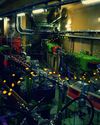
A bug in the system
The complex arrangement of equipment you see here is part of a particle accelerator.
1 min
April 2026
BBC Science Focus
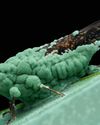
Snug as a bug in a rug
At first glance, you might feel envious of this little leafhopper, swaddled beneath the folds of what appears to be a luxurious fur blanket.
1 min
April 2026

BBC Science Focus
WHY DO WE ROOT FOR THE VILLAIN IN MOVIES?
Whether it's Darth Vader or Cruella de Vil, we all have a favourite movie villain.
1 mins
April 2026

BBC Science Focus
A TURN TO DISPERSE
Why a fart walk after dinner does more than release your gas
3 mins
April 2026
BBC Science Focus
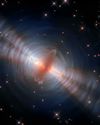
Hatching a nebula
Welcome to the Egg Nebula, an enigmatic structure formed by ejected stardust in the Cygnus constellation around 1,000 light-years from Earth.
1 min
April 2026

BBC Science Focus
7 TIMES AI GOT IT SPECTACULARLY WRONG
For the past four years, AI has been reshaping how we work and live. But its failures are proving just as transformative as its triumphs
8 mins
April 2026
BBC Science Focus
CHARLES ADCOCK, VIA EMAIL: COULD DARK MATTER BE ALL AROUND PLANET EARTH BUT UNDETECTABLE?
Astronomers have gathered overwhelming evidence that 80 per cent of all matter in the Universe is invisible.
1 min
April 2026
Translate
Change font size