試す 金 - 無料
SPIDERS: SHOULD I BE WORRIED ABOUT BEING BITTEN BY A FALSE WIDOW?
BBC Focus - Science & Technology
|July 2021
A study has found that numbers of the spiders are increasing, along with the number of people being bitten. But what risk do they really pose?

You could be forgiven for thinking that the UK is in the grip of a spider emergency. With “spider numbers surging” and “dangerous bite warnings” being issued in the media, people are being “terrorised” and even hospitalised.
These headlines have been building for a few years, and the species behind the media arachnid obsession is the noble false widow spider, Steatoda nobilis.
A relative newcomer to the UK, the species is from the Canary Islands and Madeira. First reported from a site near Torquay in 1879, it spread through southern England, building up from the 1980s to become quite abundant, particularly in urban areas.
It has also been expanding its range northwards. So, although the lurid headlines are recent, the species has been around in many parts of the country for some time.
FANGS A LOT
If we want to get to the truth behind the headlines then there are several questions we need to answer. First, can noble false widows actually bite? There are not many UK species of spiders with fangs that are able to pierce our skin, but the noble false widow’s fangs certainly can.

このストーリーは、BBC Focus - Science & Technology の July 2021 版からのものです。
Magzter GOLD を購読すると、厳選された何千ものプレミアム記事や、10,000 以上の雑誌や新聞にアクセスできます。
すでに購読者ですか? サインイン
BBC Focus - Science & Technology からのその他のストーリー

BBC Science Focus
HEALTH: Eating oats could lower your cholesterol in just two days
The health benefits of a two-day porridge diet lasted for weeks afterwards

1 mins
April 2026

BBC Science Focus
Most people are too sure they can identify fake human faces
Even 'super recognisers' struggle with the challenge. Can you do better?
1 min
April 2026

BBC Science Focus
WHAT'S THE WORST THING YOU CAN DO FOR THE PLANET ONLINE?
Human beings can barely move a muscle without some kind of deleterious effect on the environment around us.
2 mins
April 2026

BBC Science Focus
A bug in the system
The complex arrangement of equipment you see here is part of a particle accelerator.
1 min
April 2026
BBC Science Focus
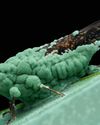
Snug as a bug in a rug
At first glance, you might feel envious of this little leafhopper, swaddled beneath the folds of what appears to be a luxurious fur blanket.
1 min
April 2026

BBC Science Focus
WHY DO WE ROOT FOR THE VILLAIN IN MOVIES?
Whether it's Darth Vader or Cruella de Vil, we all have a favourite movie villain.
1 mins
April 2026

BBC Science Focus
A TURN TO DISPERSE
Why a fart walk after dinner does more than release your gas
3 mins
April 2026

BBC Science Focus
Hatching a nebula
Welcome to the Egg Nebula, an enigmatic structure formed by ejected stardust in the Cygnus constellation around 1,000 light-years from Earth.
1 min
April 2026

BBC Science Focus
7 TIMES AI GOT IT SPECTACULARLY WRONG
For the past four years, AI has been reshaping how we work and live. But its failures are proving just as transformative as its triumphs
8 mins
April 2026

BBC Science Focus
CHARLES ADCOCK, VIA EMAIL: COULD DARK MATTER BE ALL AROUND PLANET EARTH BUT UNDETECTABLE?
Astronomers have gathered overwhelming evidence that 80 per cent of all matter in the Universe is invisible.
1 min
April 2026
Translate
Change font size