試す 金 - 無料
The Mythology Of Racial Progress
The Atlantic
|September 2020
Believing that things are always getting better actually makes them worse.

For two days in early June, as America was updating in sustained protests over the killing of a Black man, George Floyd, by police in Minneapolis, the most-watched movie on Netflix was The Help. The 2011 film—which depicts Black servants work-'g in affluent white households in 1960s Mississippi, and centers on a white female journalist—won acclaim in some quarters. But it has also been criticized as a sentimental and simplistic portrayal of racism—and redemption—amid the cruelties of Jim Crow. To ask what was going on here—why people started watching The Help at a moment of deep racial trauma—is to risk tumbling down a rabbit hole. That the movie was newly available on Netflix does not explain everything. One reality that the Help phenomenon makes us recognize is the enduring power of mythology when it comes to American racism. Mythology takes many forms. Sometimes it involves a desperate grasping for affirmation. Sometimes it involves a gauzy nostalgia. Sometimes it involves a willful ignorance. All of these strains, and others, are woven into a larger and enduring narrative— the mythology of racial progress.
This is uniquely American mythology. Since the nation’s founding, its prevailing cultural sensibility has been optimistic, future-oriented, sure of itself, and convinced of America’s inherent goodness. Despite our tragic racial history, Americans generally believe that the country has made and continues to make steady progress toward racial equality. Broad acceptance of this trajectory underlies the way our leaders talk. It also influences the way racism is treated in popular culture.
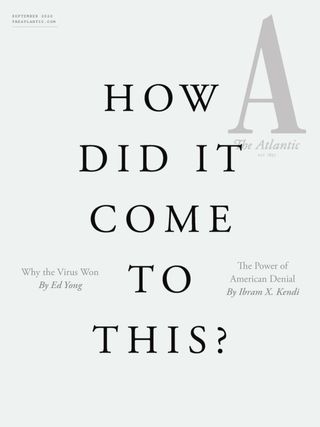

このストーリーは、The Atlantic の September 2020 版からのものです。
Magzter GOLD を購読すると、厳選された何千ものプレミアム記事や、10,000 以上の雑誌や新聞にアクセスできます。
すでに購読者ですか? サインイン
The Atlantic からのその他のストーリー

The Atlantic
Deadlier Than Gettysburg
How the cruelty of the Confederacy's prison camps gave rise to the rules of war

10 mins
March 2026

The Atlantic
THE MAN WHO BROKE PHYSICS
One of the pleasures of watching Ilia Malinin, apart from his indifference to gravity, is to witness him becoming.
16 mins
March 2026

The Atlantic
How Toni Morrison Saw History
In her novels, she located the missing story of Black America.
12 mins
March 2026

The Atlantic
The Madness of Lord Tennyson
The Victorian poet was startlingly modern.
5 mins
March 2026

The Atlantic
THE PLOT AGAINST THE HUMANITIES
What is the Andrew W. Mellon Foundation doing to higher education?
22 mins
March 2026

The Atlantic
Why Do Democrats Hate Winning?
Ken Martin has one of those resting dread faces, as if he's bracing for someone to dump a bucket of rocks on his head.
37 mins
March 2026

The Atlantic
ROD DREHER'S DEMONS
HE DERIDES THE ENLIGHTENMENT, SECULARISM, AND THE MODERN WORLD. CONSERVATIVES-INCLUDING THE VICE PRESIDENT-ARE JOINING HIM ON A MARCH BACK TO THE MIDDLE AGES.
20 mins
March 2026

The Atlantic
Every Nation for Itself
President Trump wants to return to the 19th century's international order. He will leave America less prosperous—and the whole world less secure.
19 mins
March 2026

The Atlantic
The Secrets of Indigenous Art
Major exhibits are upending the way people understand Native American and Aboriginal artists.
14 mins
March 2026

The Atlantic
The Novel as Extended Op-Ed
If anyone could write good fiction about immigration, it would probably be Lionel Shriver. Instead, her latest book goes off the rails.
10 mins
March 2026
Translate
Change font size