
Magzter GOLDで無制限に
10,000以上の雑誌、新聞、プレミアム記事に無制限にアクセスできます。
試す 金 - 無料
The Sea Where the Sun Rises
Outlook
|January 16, 2017
How Japan Plans to Keep its Seas Open and Free , With more than just American Help.
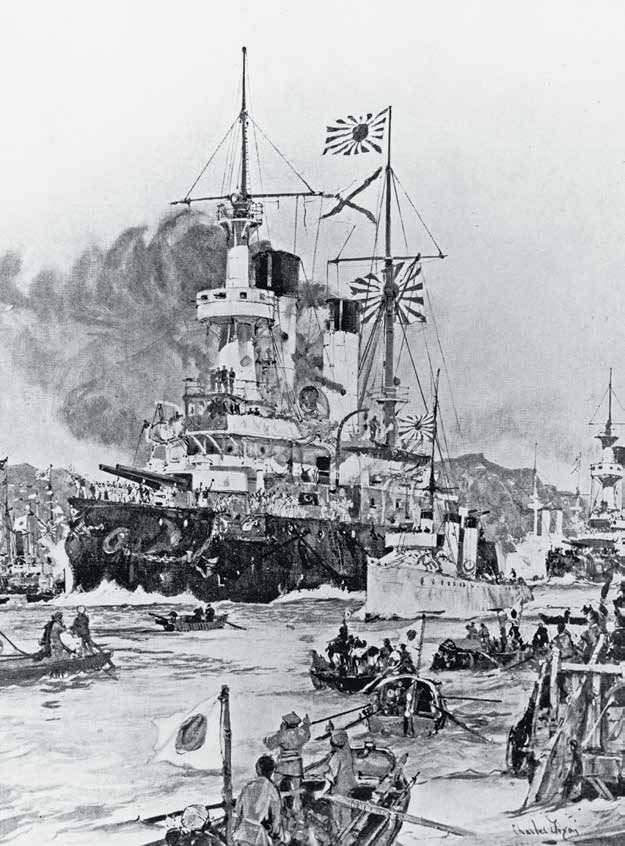
As an island nation, the sea defines Japanese identity. For centuries, the sea separated those who lived on the main four islands from those who lived in the thousands of smaller islands that make up the archipelago. The history of how Edo (or modern-day Tokyo) reached out to incorporate all these islands provides a fascinating glimpse into how Japan became a modern nation—Japan’s modernisation.
Pre-modern Japan may have isolated itself from the outside world, but to the south, the Ryukyu kingdom, a peaceful nation of traders and navigators, traversed Asia’s waters in search of resources. Lords in Satsuma and Choshu saw the profits to be had in Ryukyu trade and, within decades, the new Meiji state had colonised what is today Okinawa prefecture. Similarly to the north, Japanese traders and fishermen crossed the frigid seas from Hokkaido to its outer islands to lay claim on what the Japanese today call the Northern Territories, four islands rich in fisheries and natural resources—islands which, after repeated wars, are now occupied by Russia.
For much of Japan’s modern history, the sea has protected the Japanese from their neighbours. Isolationist Edo wanted nothing to do with outsiders, but a few intrepid Japanese left their country to sail the seas and became memorable in the story of Japan’s rise to power. Only the Western naval nations had the ability to burst Edo’s fiction of impermeability, and the arrival of Commodore Perry in 1853 with his “black ships” sent the feudal government into a tailspin that ultimately changed the trajectory of modern Japanese history. A shipwrecked young man, picked up and educated by the captain of an American ship, facilitated the diplomacy that led to the commercial treaty sought by Perry.


このストーリーは、Outlook の January 16, 2017 版からのものです。
Magzter GOLD を購読すると、厳選された何千ものプレミアム記事や、10,000 以上の雑誌や新聞にアクセスできます。
すでに購読者ですか? サインイン
Outlook からのその他のストーリー

Outlook
'Why GDP Growth Doesn't Always Translate Into Votes'
The recent election results have once again shown that economic growth alone does not guarantee electoral victory.

3 mins
June 06, 2026

Outlook
Lights, Camera, Othering
The establishment of Israel has been accompanied by a national cinema devoted to negating and erasing the Palestinian Other
5 mins
June 06, 2026

Outlook
Goodbye to All That
Booker-winning British author Julian Barnes' Departure(s) is a unique hybrid work: playful, philosophical, whimsical
4 mins
June 06, 2026

Outlook
Collapse of Trust
As the NEET-UG 2026 paper leak forced the cancellation of India’s biggest medical entrance exam, more than 22 lakh aspirants find themselves trapped in uncertainty
11 mins
June 06, 2026

Outlook
NO LONGER A TWELFTH MAN
Bihar cricket, which has languished in the shadows for long, is all set to improve its strike rate, thanks to Vaibhav Sooryavanshi, the new Bihari kid on the block
5 mins
June 06, 2026

Outlook
BLAZE OF GLORY
The challenges of being a celebrity cricketer at a young age can be tough to handle
5 mins
June 06, 2026

Outlook
THE SWASHBUCKLERS
A new generation of fearless stars is emerging and finding its feet at the very top of an extremely competitive cricketing environment
5 mins
June 06, 2026

Outlook
THE TEEN TORNAD
At the age of 15, Vaibhav Sooryavanshi is already a cricketing legend
10 mins
June 06, 2026

Outlook
A Journey to Remember
The prerecorded message crackled over the din in the compartment: ‘Welcome to the Shatabdi Express.
4 mins
June 06, 2026

Outlook
Crossing Borders
Ruth Martin is the translator of German-Iranian author Shida Bazyar’s novel The Nights are Quiet in Tehran (originally written in German), which has been shortlisted for the 2026 International Booker Prize.
4 mins
June 06, 2026
Translate
Change font size