試す 金 - 無料
The Coming Caste Wars
Outlook
|October 31, 2016
The growing clamour for reservation to society's shrinking ability to fulfil the dreams globalisation unleashes
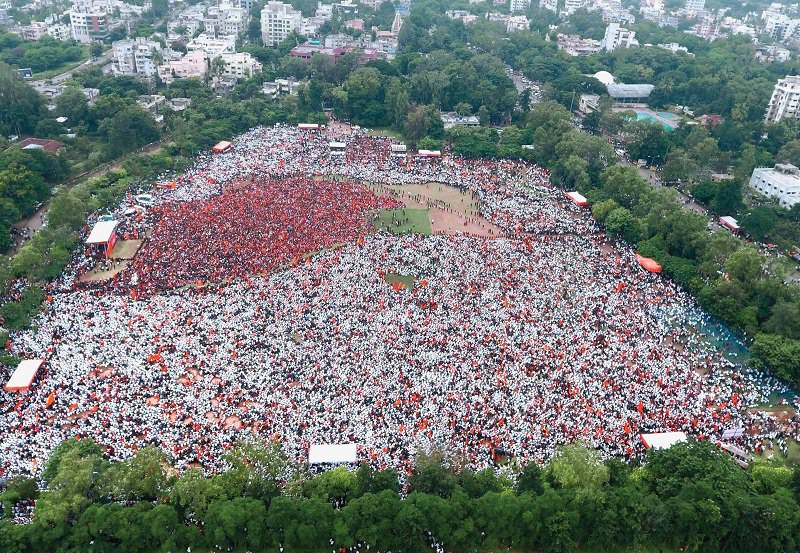
FROM violence to silent marches, the unlikely warriors —the intermediate castes of north and west India, in particular, Jats, Patels and Marathas—are on the war path over reservations. So, the nagging questions emerge: why does everyone want ‘reservations’? Why have certain communities become restless at the present juncture? Where do we go from here?
A short detour of ‘Mandal’ is necessary to put things in perspective. OBC reservations and share in power were the essence of the Mandal issue, though the latter point was not formally part of the recommendations or the policies. By the latter half of the 1990s, it looked as though a consensus had finally emerged on the Mandal (or OBC) question. No political party was opposing OBC reservations and all of them were also keen to accommodate the political claims of communities identified as OBC.
Mandal, of course, was a double-edged weapon. It had possibilities of transcending caste by building caste blocs and opportunity for democratic expansion. Yet it also contained the possibility of strengthening caste awareness and narrowing the concept of democracy to group claims. Its supporters (this writer was among them) expected the former to happen. The way politics played out over the past quarter of a century, the former possibilities were outweighed by the latter. Thus,the unintended consequences of Mandal constitute the larger context in which the present spate of agitations by the middle peasantry castes needs to be understood.
Four processes have coincided in producing the present moment of unrest. Let us first look at the process not directly involving caste. Nobody seems to be wanting to talk about this aspect—the effects of the economic policy process. But it is relevant at two levels.
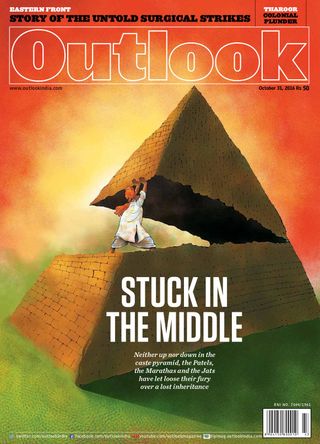

このストーリーは、Outlook の October 31, 2016 版からのものです。
Magzter GOLD を購読すると、厳選された何千ものプレミアム記事や、10,000 以上の雑誌や新聞にアクセスできます。
すでに購読者ですか? サインイン
Outlook からのその他のストーリー
Outlook
'Why GDP Growth Doesn't Always Translate Into Votes'
The recent election results have once again shown that economic growth alone does not guarantee electoral victory.

3 mins
June 06, 2026

Outlook
Lights, Camera, Othering
The establishment of Israel has been accompanied by a national cinema devoted to negating and erasing the Palestinian Other
5 mins
June 06, 2026

Outlook
Goodbye to All That
Booker-winning British author Julian Barnes' Departure(s) is a unique hybrid work: playful, philosophical, whimsical
4 mins
June 06, 2026

Outlook
Collapse of Trust
As the NEET-UG 2026 paper leak forced the cancellation of India’s biggest medical entrance exam, more than 22 lakh aspirants find themselves trapped in uncertainty
11 mins
June 06, 2026

Outlook
NO LONGER A TWELFTH MAN
Bihar cricket, which has languished in the shadows for long, is all set to improve its strike rate, thanks to Vaibhav Sooryavanshi, the new Bihari kid on the block
5 mins
June 06, 2026

Outlook
BLAZE OF GLORY
The challenges of being a celebrity cricketer at a young age can be tough to handle
5 mins
June 06, 2026

Outlook
THE SWASHBUCKLERS
A new generation of fearless stars is emerging and finding its feet at the very top of an extremely competitive cricketing environment
5 mins
June 06, 2026

Outlook
THE TEEN TORNAD
At the age of 15, Vaibhav Sooryavanshi is already a cricketing legend
10 mins
June 06, 2026
Outlook
A Journey to Remember
The prerecorded message crackled over the din in the compartment: ‘Welcome to the Shatabdi Express.
4 mins
June 06, 2026

Outlook
Crossing Borders
Ruth Martin is the translator of German-Iranian author Shida Bazyar’s novel The Nights are Quiet in Tehran (originally written in German), which has been shortlisted for the 2026 International Booker Prize.
4 mins
June 06, 2026
Translate
Change font size