試す 金 - 無料
Diets Sans Diversity
FRONTLINE
|November 8, 2019
Ensuring a diverse diet for all and not fortification of staples with chemicals should be the public policy objective to ensure that children do not go malnourished.

ONE OF THE STARKEST FINDINGS OF THE recently released data of the Comprehensive National Nutrition Survey (2016-18) (CNNS) is that only 6 per cent of the children in the 6-23 months age group received what is defined as a “minimum acceptable diet” in accordance with World Health Organisation (WHO) norms. However, this information is not entirely new. The National Family Health Survey-4 (2015) had alerted us to this issue not too long ago, has found that only about 9.6 per cent of the children in the 6-23 months age group were fed the minimum acceptable diet. (The minimum acceptable diet indicator measures both the minimum meal frequency and the minimum dietary diversity, that is, food from four or more food groups.)
While the data for young children are particularly disheartening, dietary diversity is of major concern for all age groups. For instance, among two- to four-year-old children, only about 32 per cent consumed any legumes and nuts in the previous 24 hours; 16 per cent consumed eggs; 19 per cent any flesh food. Sixty-two per cent had consumed dairy products and 56 per cent vitamin-A-rich fruits and vegetables. Among five- to nine-year-old children, about 35 per cent had an egg at least once a week, and fewer than 40 per cent had fruits at least once a week. The data for 10- to 19-year-old adolescents tell a similar story. Food frequency questionnaires typically do not deal with quantity. Thus these data are likely to be concealing even higher levels of dietary deprivation.
Broken down, what this essentially means, in simple terms, is that despite the supposed attention paid to food and hunger, very few receive food that has the minimum quality considered decent for human life and health. This seems to be reinforced also by the fact that India ranks 102 in the Global Hunger Index in 2019, out of a total of 117, and is the lowest-ranking country in the South Asian region.
IMPACT OF SOCIO-ECONOMIC FACTORS

このストーリーは、FRONTLINE の November 8, 2019 版からのものです。
Magzter GOLD を購読すると、厳選された何千ものプレミアム記事や、10,000 以上の雑誌や新聞にアクセスできます。
すでに購読者ですか? サインイン
FRONTLINE からのその他のストーリー

FRONTLINE
How Not To Handle An Epidemic
The lockdowns were meant to buy time to put in place appropriate health measures and contain the coronavirus’ spread, but they have failed to achieve the objective and heaped immense misery on the marginalised sections of society. India is still in the exponential phase of the COVID-19 infection and community transmission is a reality that the government refuses to accept.

9 mins
June 5, 2020
FRONTLINE
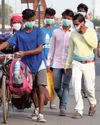
Tragedy on foot
As the COVID-19-induced lockdown cuts the ground beneath their feet in Tamil Nadu, thousands of migrant workers are trudging along the highway to the relative safety of their upcountry homes.
11 mins
June 5, 2020
FRONTLINE
Sarpanchs as game changers
Odisha manages to keep COVID-19 well under control because of the strong participation of panchayati raj institutions and the community at the grass-roots level under the leadership of Chief Minister Naveen Patnaik.
7 mins
June 5, 2020

FRONTLINE
Scapegoating China
As the COVID-19 death rate spikes and the economy tanks in the United States, Donald Trump and his advisers target China and the World Health Organisation with an eye to winning the forthcoming presidential election.
10 mins
June 5, 2020

FRONTLINE
New worries
Kerala’s measured approach to the pandemic and lockdown has yielded results. But it still has to grapple with their huge economic impact on its economy, which it feels the Centre’s special financial relief package does little to alleviate.
9 mins
June 5, 2020
FRONTLINE
No love lost for labour
Taking advantage of the lockdown and the inability of workers to organise protests, many State governments introduce sweeping changes to labour laws to the detriment of workers on the pretext of reviving production and boosting the economy.
8 mins
June 5, 2020
FRONTLINE
Capital's Malthusian moment
In a world that needs substantial reorienting of production and distribution, Indian capital is resorting to a militant form of moribund neoliberalism to overcome its current crisis. In this pursuit of profit, it is ready and willing to throw into mortal peril millions whom it adjudicates as not worth their means—an admixture of social Darwinism born of capital’s avarice and brutalism spawned by Hindutva. .
14 mins
June 5, 2020
FRONTLINE
Understanding migration
When governments and their plans are found to be blatantly wanting in addressing reverse migration, exercises such as the Ekta Parishad’s survey of migrant workers throughout India can be useful to work out creative long-lasting solutions.
10 mins
June 5, 2020
FRONTLINE
Waiting for Jabalpur moment
The Supreme Court’s role in ensuring executive accountability during the ongoing lockdown leaves much to be desired. Standing in shining contrast is the record of some High Courts.
15 mins
June 5, 2020
FRONTLINE
An empty package
The Modi regime, which has been unable to control the COVID-19 infection, restore economic activity and provide relief to millions exposed to starvation, trains its sights on Indian democracy, making use of the panic generated by fear and a lockdown that forecloses paths of resistance.
17 mins
June 5, 2020
Translate
Change font size