Techlife News
|July 24,2016
-

Experts say the development of self-driving cars over the coming decade depends on an unreliable assumption by many automakers: that the humans in them will be ready to step in and take control if the car’s systems fail.
Instead, experience with automation in other modes of transportation like aviation and rail suggests that the strategy will lead to more deaths like that of a Florida Tesla driver in May.
Decades of research shows that people have a difficult time keeping their minds on boring tasks like monitoring systems that rarely fail and hardly ever require them to take action. The human brain continually seeks stimulation. If the mind isn’t engaged, it will wander until it finds something more interesting to think about. The more reliable the system, the more likely it is that attention will wane.
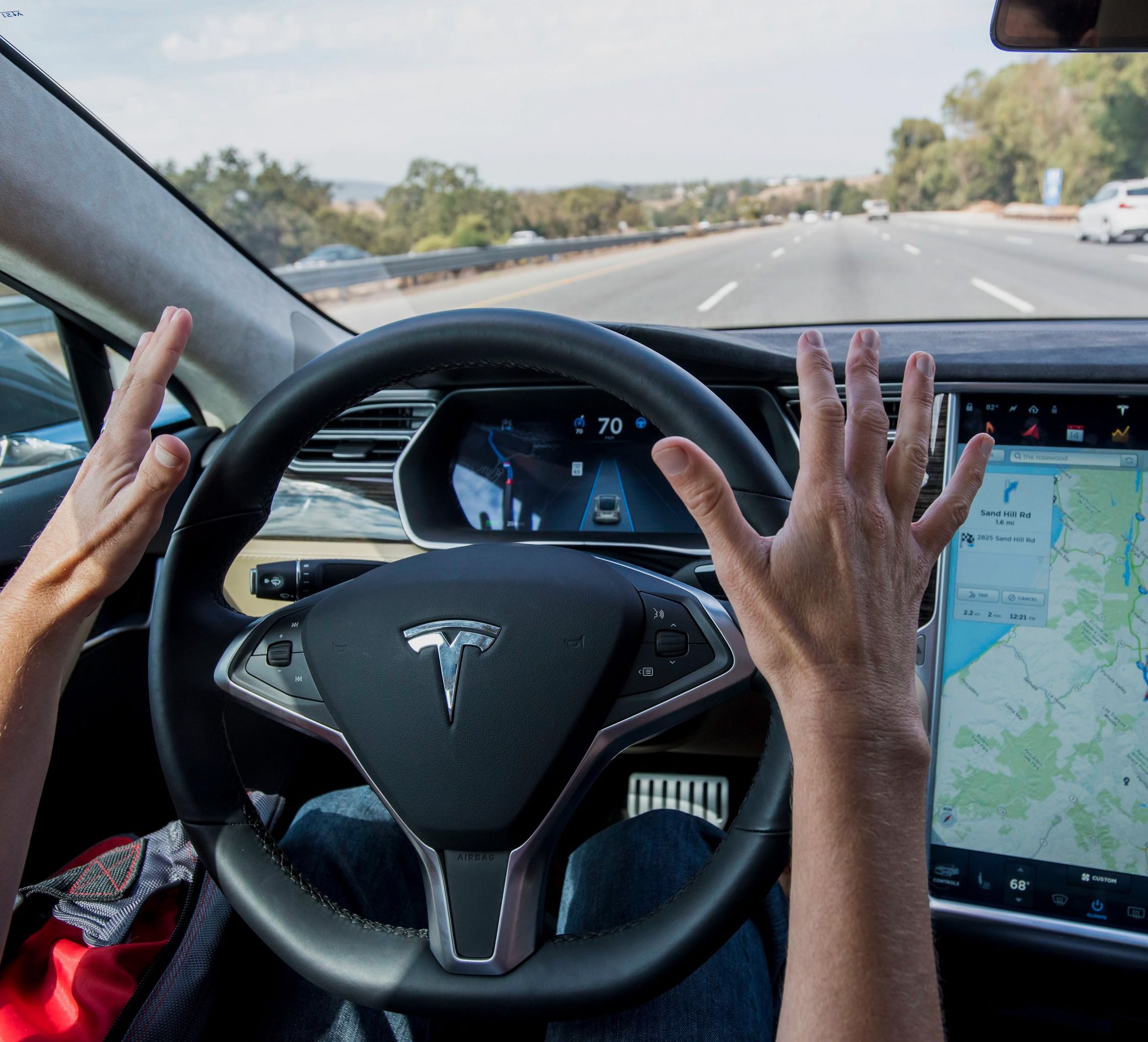
Automakers are in the process of adding increasingly automated systems that effectively drive cars in some or most circumstances, but still require the driver as a backup in case the vehicle encounters a situation unanticipated by its engineers.
Tesla’s Autopilot, for example, can steer itself within a lane and speed up or slow down based on surrounding traffic or on the driver’s set speed. It can change lanes with a flip of its signal, automatically apply brakes, or scan for parking spaces and parallel park on command.


このストーリーは、Techlife News の July 24,2016 版からのものです。
Magzter GOLD を購読すると、厳選された何千ものプレミアム記事や、10,000 以上の雑誌や新聞にアクセスできます。
すでに購読者ですか? サインイン
Techlife News からのその他のストーリー

Techlife News
Series 11
THE MOST REFINED LINEUP YET FOR HEALTH MONITORING & DAILY WELLNESS

4 mins
January 03, 2026

Techlife News
Vision Pro
THE NEW-GEN BRINGS IMPORTANT IMPROVEMENTS IN PROCESSING POWER & COMFORT
5 mins
January 03, 2026

Techlife News
AI Unleashed
A BROADER, DEEPER AI REVOLUTION TAKES SHAPE ACROSS INDUSTRIES
5 mins
January 03, 2026
Techlife News
NVIDIA PLANS BILLIONS FOR U.S. CHIP PRODUCTION OVER FOUR YEARS
Picture a sun-soaked stretch of Arizona desert, where a sprawling plant hums with the pulse of tomorrow's tech, silicon wafers gleaming under the watchful eyes of engineers.
3 mins
January 03, 2026

Techlife News
GOOGLE UNVEILS PROJECT SUNCATCHER TO POWER ORBITAL AI COMPUTE WITH CONCENTRATED SOLAR ENERGY
Google has revealed Project Suncatcher, an experimental initiative that reimagines how large-scale computing could evolve beyond Earth's surface.
3 mins
January 03, 2026

Techlife News
AI Actions
FINDING THE RIGHT BALANCE BETWEEN INTEGRATION, SAFETY, AND PRIVACY
7 mins
January 03, 2026

Techlife News
AirPods Pro 3
THE NEXT LEVEL OF IMMERSIVE AUDIO, NOISE CANCELLATION, AND ACTIVITY INSIGHTS
5 mins
January 03, 2026

Techlife News
AI STARTS SHAPING HOLIDAY SHOPPING AS RETAILERS INTRODUCE NEW TOOLS AND CUSTOMERS TEST THEIR LIMITS
AI systems are beginning to influence how people search, compare and buy gifts during the holiday season as retailers experiment with new recommendation models and customers look for quicker ways to navigate crowded online catalogs.
4 mins
January 03, 2026

Techlife News
Al Cinema
THE NEW ERA OF AI-GENERATED MOVIES AND SERIES STARTS NOW
5 mins
January 03, 2026

Techlife News
ELON MUSK PLEDGES HUNDREDS OF THOUSANDS OF AUTONOMOUS TESLAS ON U.S. ROADS BY 2026
Elon Musk, Tesla's visionary CEO, made a bold promise earlier this week during a CNBC interview, vowing to deploy “hundreds of thousands, if not over a million” fully self-driving Tesla vehicles across U.S. roads by the end of 2026.
4 mins
January 03, 2026
Translate
Change font size