
Magzter GOLDで無制限に
10,000以上の雑誌、新聞、プレミアム記事に無制限にアクセスできます。
試す 金 - 無料
HOME AND HARBOUR
Country Life UK
|July 01, 2020
The huge expanse of the London Docklands has become a fashionable residential area. John Goodall considers the history of this area in the natural flood plain of the Thames

THERE could be no more powerful physical evidence of the former importance of maritime trade to London than its vast docklands. These extend over an area of about nine square miles on both sides of the River Thames, downstream from Tower Bridge to Greenwich and Woolwich. It’s an area that has completely changed its character over the past 40 years, from an industrial to a residential district. Over the same period, the Thames itself has been transformed from a thoroughfare and open drain to a public amenity.
The first London docks were developed over the course of the 17th century and included the offices and dockyard of the wealthy East India Company at Blackwall, constructed in 1612–14. It was not until the 18th century, however, that the sheer volume of shipping began to overwhelm the existing quays and wharves of the City. By the 1770s, the Upper Pool of London, the area downstream of London Bridge, had become a bottleneck. Such was the pressure of shipping that it was possible to be stuck here for weeks at a time, with goods vulnerable to pilfering. Secure quays and warehouses capable of operating free from the constraints of the tide became essential.
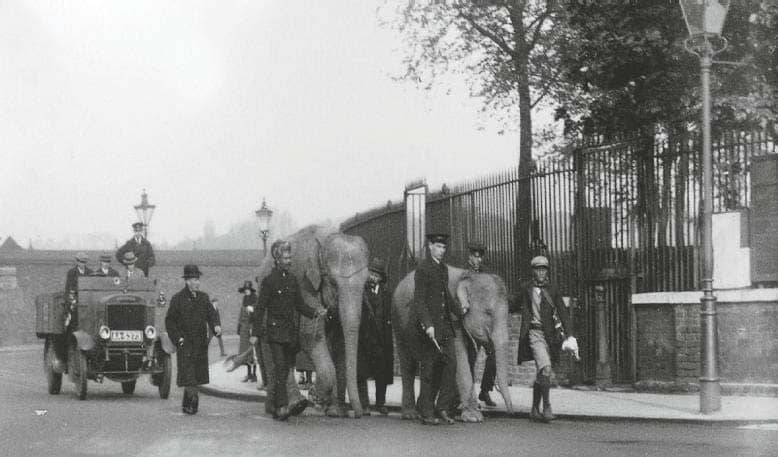
The first major facility of this kind was West India Docks—begun in 1799 and completed in 1802. As a surviving inscription set into the massive perimeter wall explains, it was built ‘for the distinct purpose of complete security and ample accommodation (hitherto not afforded) to the shipping and produce of the West Indies… an undertaking which under the favour of God, shall contribute stability, increase and ornament to British commerce’.


このストーリーは、Country Life UK の July 01, 2020 版からのものです。
Magzter GOLD を購読すると、厳選された何千ものプレミアム記事や、10,000 以上の雑誌や新聞にアクセスできます。
すでに購読者ですか? サインイン
Country Life UK からのその他のストーリー
Country Life UK
Opposites can attract
As a big bookcase designed by Peter Waals proves large pieces of furniture can do well, a notable collection shows harmony can be born from difference

3 mins
June 03, 2026
Country Life UK
His green and pleasant land
Few artists travelled as little as John Constable, but his deep knowledge of the parts of England he loved gave him insights that others missed. Susan Owens explores the places that delighted him
6 mins
June 03, 2026
Country Life UK
Dreaming of roses
A thousand English roses now bloom in the restored walled garden that forms the heart of this 27-acre estate, writes Charles Quest-Ritson
4 mins
June 03, 2026

Country Life UK
Ring for peace
A COPIOUS quantity of apple strudel became the unintended consequence of a winter walking holiday in the Austrian Tyrol.
2 mins
June 03, 2026

Country Life UK
Best of the pests
Pity the feral pigeon: long campaigned against as an urban nuisance, it is the descendant of birds lured into human service, some of which distinguished themselves in wartime
3 mins
June 03, 2026

Country Life UK
Red alert
The time is ripe for tomatoes in every form. We are days into British Tomato Fortnight (June 1–14) and weeks from Royal Ascot (June 16–20), where Bright Tomato has been declared the inaugural Colour of the Year by Ascot creative director Daniel Fletcher.
1 mins
June 03, 2026

Country Life UK
Totally tropical
I FIRST grew pineapple guava, also called feijoa (Acca or Feijoa sellowiana) almost a quarter of a century ago, when there were few nurseries stocking them.
3 mins
June 03, 2026

Country Life UK
Brewed awakening: where London learnt to talk
Rupert Clague explores how caffeine-fuelled conversation in Hanoverian London’s ‘penny universities’ helped shape the modern world—and where that same spirit still lingers today
5 mins
June 03, 2026

Country Life UK
The legacy Percy Shaw and cat's eyes
BEHIND the retina in a cat’s eyes lurks the tapetum lucidum, a layer of tissue that acts as a mirror, or a retroreflector, and allows the animal to see in the dark.
1 mins
June 03, 2026

Country Life UK
Britain is told to spill the beans
HOME-GROWN legumes have a vital role to play in strengthening national food security and reducing the UK's increasing reliance on imported food, the audience heard at last month's UK Legume Research Community Conference, held at the James Hutton Institute in Invergowrie, Perthshire.
2 mins
June 03, 2026
Translate
Change font size