
Magzter GOLDで無制限に
10,000以上の雑誌、新聞、プレミアム記事に無制限にアクセスできます。
Strategies to Tackle Debt
Kiplinger's Personal Finance
|January 2021
Millions of Americans facing furloughs and layoffs turned to credit cards to stay afloat. Here’s how to get out from under burgeoning balances.

WHEN THE PANDEMIC HIT AND the restaurant that Eric S. managed in Brighton, Mich., closed its doors temporarily, Eric filed for unemployment insurance benefits. When the business reopened a couple of months later and Eric returned to work, his hours were cut in half.
Although Eric and his wife managed to keep up with their mortgage payments, the couple found themselves strapped for cash and began to fall behind on their credit card bills. By September, they had accrued about $13,000 in credit card debt, and Eric’s credit score had dropped nearly 75 points, to the low 600s. “I felt like I was losing control,” he says. “It also put a lot of stress on our marriage.”
The couple sought out a credit counselor, who helped them retool their budget—getting rid of their Hulu and Netflix subscriptions alone saved them $70 a month—and begin paying down their debt. Just two months later they had shaved $3,000 off their total balance. “We’ve learned how to manage our money a lot better from this whole experience,” Eric says.
THE DEBT DIVIDE
The coronavirus crisis has been a double-edged sword for Americans in terms of debt. First, the good news: After receiving an infusion of cash from stimulus checks last spring, millions of consumers used their relief funds to pay down debt. On April 15, 2020, as the first major wave of checks hit Americans’ bank accounts, there was a near-instantaneous increase in debt payments, according to a TrueAccord study of data from 12 million U.S. consumers.
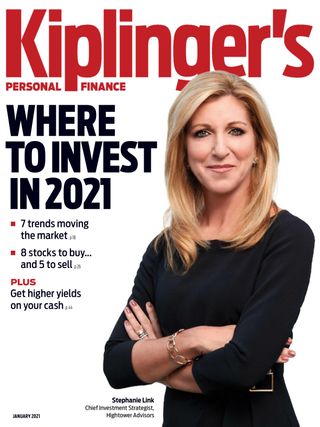

このストーリーは、Kiplinger's Personal Finance の January 2021 版からのものです。
Magzter GOLD を購読すると、厳選された何千ものプレミアム記事や、10,000 以上の雑誌や新聞にアクセスできます。
すでに購読者ですか? サインイン
Kiplinger's Personal Finance からのその他のストーリー

Kiplinger's Personal Finance
A Helping Hand for the Homeless
This nonprofit offers shelters, job programs, support in finding a home and more.

2 mins
January 2026

Kiplinger's Personal Finance
Downsizing Advice, Part II
My column on downsizing (see “Living in Retirement,” Oct.) struck a chord with readers. I heard from many who offered advice on successfully culling clutter.
2 mins
January 2026
Kiplinger's Personal Finance
WHY COMPANY GUIDANCE MATTERS
Understanding how corporate profit forecasts affect analysts' estimates and stock ratings can help you make investment decisions.
4 mins
January 2026

Kiplinger's Personal Finance
WHAT SCIENCE REVEALS ABOUT MONEY AND A HAPPY RETIREMENT
Whether you're still planning or already retired, these research-based insights point the way to your best post-work life.
12 mins
January 2026

Kiplinger's Personal Finance
WHAT TO KNOW ABOUT FLOOD INSURANCE
Even if your home is outside a high-risk area, you may want to purchase coverage.
2 mins
January 2026

Kiplinger's Personal Finance
My Retirement Learning Curve
THE NEW WORLD OF RETIREMENT
2 mins
January 2026
Kiplinger's Personal Finance
CREATE A FINANCIAL PLAN WITH THESE TOOLS
Online programs for do-it-yourselfers are better than ever-and they're affordable, too.
9 mins
January 2026

Kiplinger's Personal Finance
2026 MONEY CALENDAR
These key dates and tips will help you make the most of your money in the new year.
7 mins
January 2026
Kiplinger's Personal Finance
Should You Renew Your CD?
AFTER you put money in a certificate of deposit, you can sit back while it collects interest over its term. Once it reaches maturity, you'll face a decision: renew it or withdraw the funds.
1 mins
January 2026

Kiplinger's Personal Finance
GIVING THE BULL THE BENEFIT OF THE DOUBT
KIPLINGER: What do you see ahead for financial markets in 2026? Do you have a target price for the S&P 500?
5 mins
January 2026
Translate
Change font size