
Magzter GOLDで無制限に
10,000以上の雑誌、新聞、プレミアム記事に無制限にアクセスできます。
試す 金 - 無料
Lower Taxes on Your RMDs
Kiplinger's Personal Finance
|January 2022
When you turn 72, you’ll have to start taking minimum distributions from your IRA and 401(k). These strategies will help trim Uncle Sam’s take.

To prevent retirees from avoiding taxes forever, the IRS requires owners of traditional IRAs and other tax-deferred accounts, such as 401(k) plans, to take minimum withdrawals based on their life expectancy and the balance of their accounts at year-end. The Setting Every Community Up for Retirement Enhancement (SECURE) Act, which was signed into law in December 2019, increased the age at which you must begin withdrawing money from 70½ to 72. Legislation pending in Congress would gradually increase the age for required minimum distributions to 75 by 2032 (see the box on page 60).
But unless Congress decides to eliminate RMDs altogether, which seems unlikely, you (or your heirs) will eventually have to withdraw the money in your tax-deferred accounts. And that could be a problem, because as your untapped balance grows, so does the amount you’ll be required to withdraw, along with your tax bill. RMDs are taxed as income, so a large withdrawal could vault you into a higher tax bracket. In addition, more of your Social Security benefits could be taxed, you could lose out on certain deductions and credits tied to your modified adjusted gross income, and you could pay higher premiums for Medicare parts B and D.
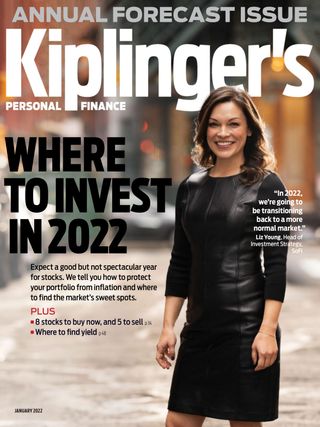

このストーリーは、Kiplinger's Personal Finance の January 2022 版からのものです。
Magzter GOLD を購読すると、厳選された何千ものプレミアム記事や、10,000 以上の雑誌や新聞にアクセスできます。
すでに購読者ですか? サインイン
Kiplinger's Personal Finance からのその他のストーリー

Kiplinger's Personal Finance
NAVIGATING MEDICARE ENROLLMENT
Failing to sign up on time can be a costly mistake.

2 mins
March 2026

Kiplinger's Personal Finance
HOW TO LOWER YOUR TAX BILL
The One Big Beautiful Bill Act brought a host of changes that could affect your 2025 tax return. We'll show you how to make the most of them and get other breaks that reduce what you owe-or maximize your refund.
13 mins
March 2026

Kiplinger's Personal Finance
Trim Your Child-Care Costs
Working parents can take advantage of tax breaks and local assistance programs.
5 mins
March 2026

Kiplinger's Personal Finance
Focus on Income First
EVERY reader knows I am unfazed at the sacrifice of a percentage point or two of share price or net asset value to secure a higher yield or cash distribution. That underscores my reverence for short-term high-yield bonds, packaged car leases and credit card bills, floating-rate corporate bank loans, and the many multisector and flexible exchange-traded and closed-end funds that own these assets or some of each. These investments reliably distribute upward of 5% and sometimes 7%. Add funds or ETFs that write options on stocks or stock indexes to pay out 8% or more, and you might easily overlook how the Federal Reserve has slashed the interest rate it controls to 3.5%—the low since September 2022—with further cuts to follow this year.
2 mins
March 2026
Kiplinger's Personal Finance
Cleaning Up the Paper Clutter
Once you hit retirement, keeping tax returns from decades ago can become unwieldy.
3 mins
March 2026

Kiplinger's Personal Finance
RESOLVE CONFLICTS WITH YOUR ADVISER
Knowing how to deal with a disagreement can improve both your finances and your relationship with your planner.
3 mins
March 2026
Kiplinger's Personal Finance
Longevity Advice for Women
IN recent columns, I have written about longevity literacy and the need for long-term-care planning (see “Living in Retirement,” Dec. 2025 and Feb. 2026). To see how women fit into this picture, I interviewed Maddy Dychtwald, cofounder of AgeWave, a research and consulting firm focused on aging, and author of Ageless Aging: A Woman’s Guide to Increasing Healthspan, Brainspan and Lifespan. Dychtwald interviewed dozens of researchers, scientists and physicians for her book, and these are some of her key takeaways.
2 mins
March 2026
Kiplinger's Personal Finance
MORE TOOLS TO BUILD A BOND LADDER
THE market for exchange-traded funds that help build bond ladders is growing.
1 mins
March 2026

Kiplinger's Personal Finance
MAKE LEARNING A LIFELONG AFFAIR
GOING back to live on a college campus, taking classes, and mixing and mingling with students young enough to be their grandchildren wasn't originally on Anna and Jeffry Young's retirement bingo card. Yet that's their life these days.
12 mins
March 2026

Kiplinger's Personal Finance
GREAT TRIPS FOR SOLO TRAVELERS
Planning a vacation for one? From mountain treks to wellness retreats, you can find a getaway that suits your style—and that builds in some companionship, too.
10 mins
March 2026
Translate
Change font size